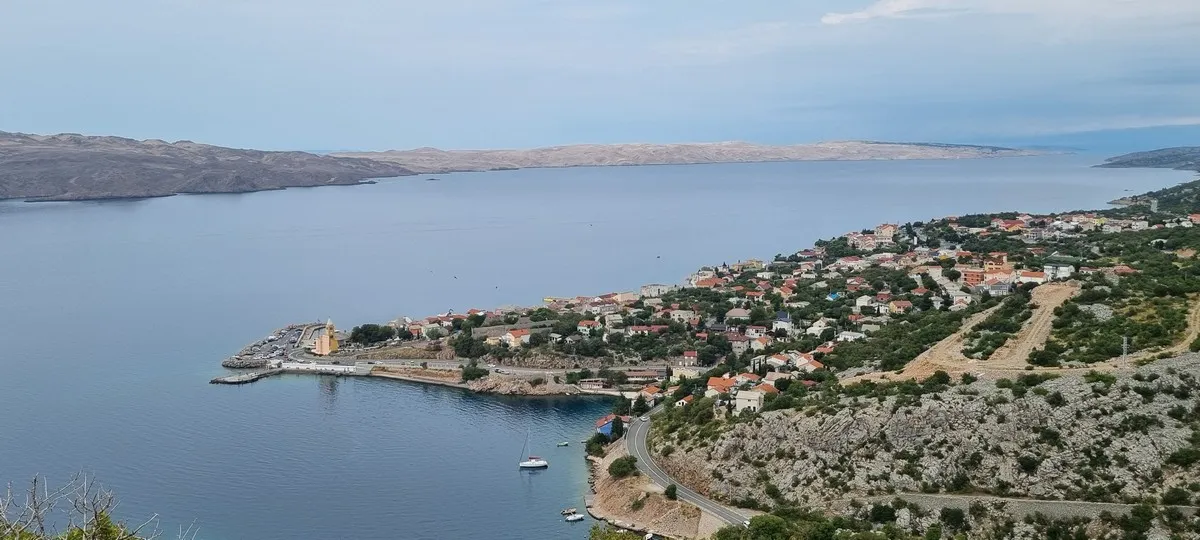
A view of Karlobag and the Adriatic Sea – peace and natural beauty in a single frame.


This interactive content is designed for use on a computer. For the full experience, open the Digital Heritage Museum of Karlobag on a computer with a larger screen.
Postcards, photographs, documents and historical artifacts
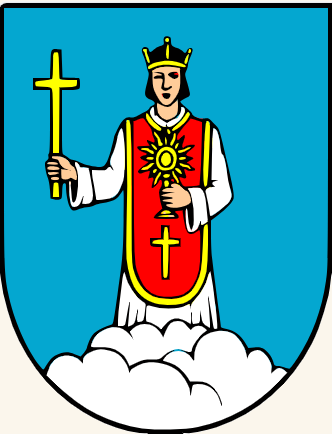
Welcome to the Digital Local History Museum of Karlobag, an online collection dedicated to preserving and presenting the historical heritage of Karlobag and the sub-Velebit region.
Gathered within these pages are old postcards, photographs, documents, maps, and other valuable historical materials that bear witness to the life, development, and identity of Karlobag throughout different periods of its past.
As a non-profit project that is continuously updated with new materials, this digital archive is available completely free of charge to all interested visitors, researchers, emigrants, and future generations for the purpose of ongoing promotion, learning, and preserving Karlobag's heritage.
We invite you to explore the rich history of Karlobag and join us in preserving its cultural and historical heritage.
A view of Karlobag and the Adriatic Sea – peace and natural beauty in a single frame.
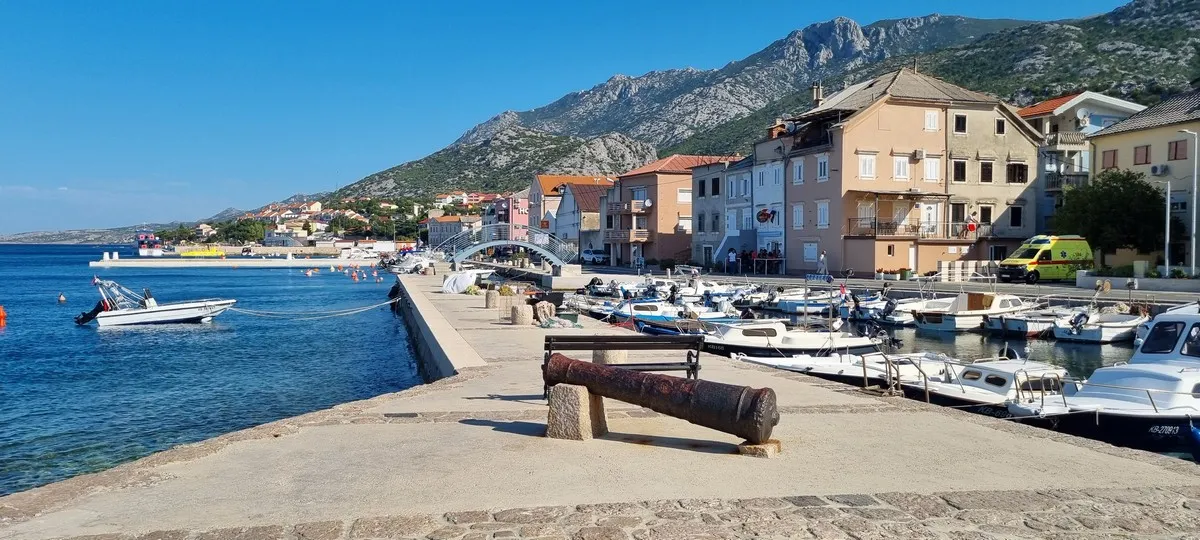
On the pier (molo), an old cannon recalls the rich history of this place, while small boats gently rock in the little harbor. In the background, the imposing Velebit peaks rise, lending the entire scene a dramatic yet gentle silhouette. Karlobag here acts as an ideal place where history, nature, and the Mediterranean spirit meet – a place that invites you to walk the waterfront, enjoy the view, and the silence of the sea.
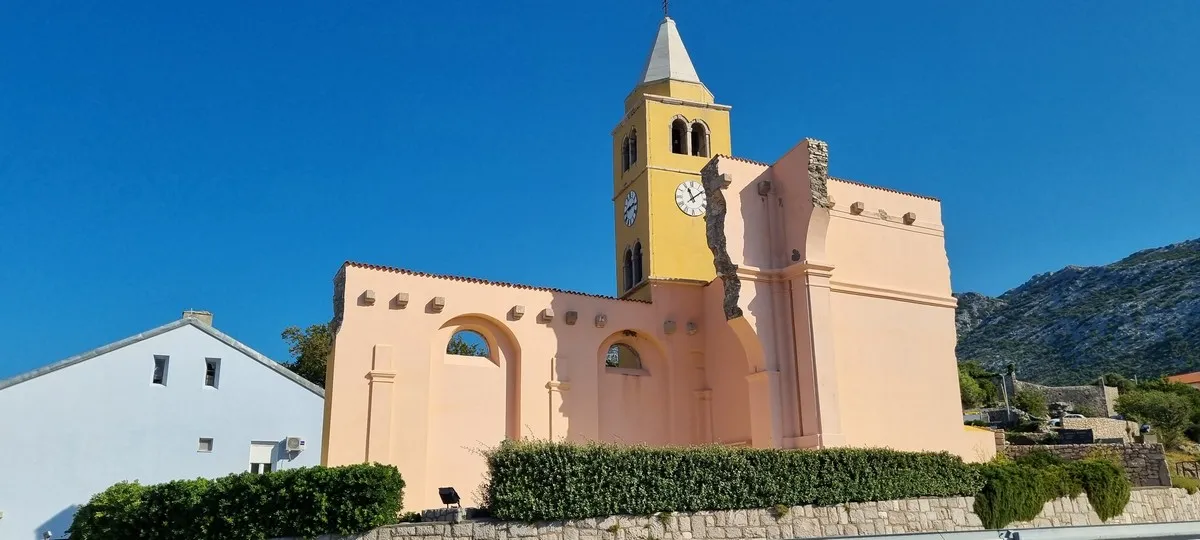
The Church of St. Charles Borromeo was built in 1710 on the foundations of the older Church of St. John. The church was heavily damaged during Allied bombing in 1944. When the construction of the new main road (magistral road) began in 1958, the church's external walls were demolished and its remains removed. Only the bell tower and one section of the wall were preserved. The bell tower and the remaining wall were restored, and their ceremonial opening was held on the feast day of St. Charles in 2000. Today, they form a memorial site and are protected as cultural heritage.
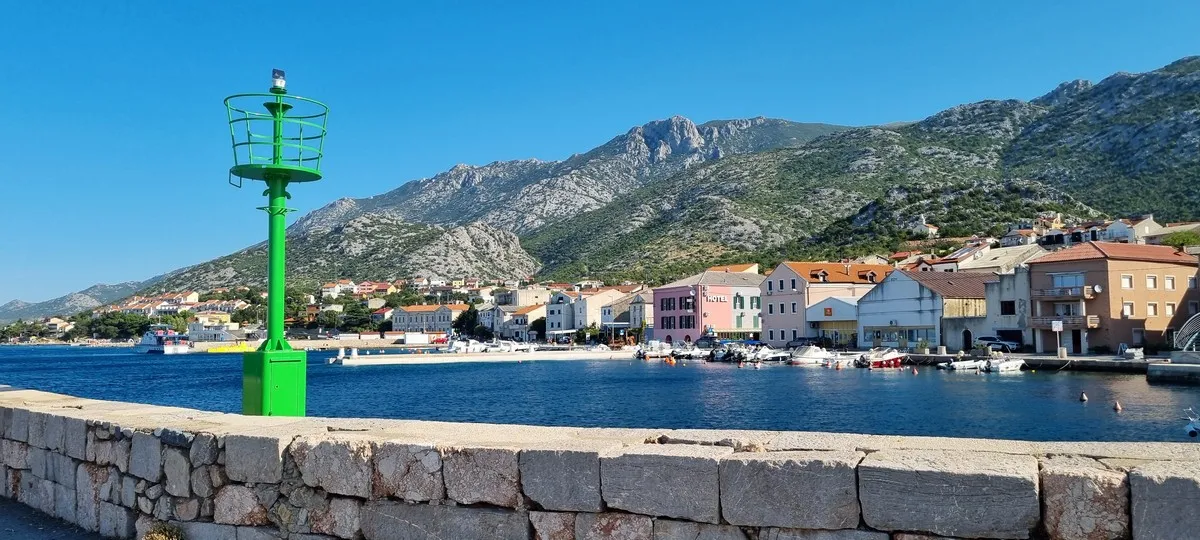
The lighthouse in Karlobag has for decades accompanied ships, withstood the Bura wind, the Jugo wind, the sea, and the salt, and safely sent off and welcomed many crews. For years, it would send off and welcome our "Vanga" as it emerged from the Pag Channel and slowly sailed towards it, and we, the children, would jump on the top of the pier (brac) and joyfully shout: "...there it is...".
The lighthouse was built in the 1970s in the Strojna Tovarna in Livarna in Ljubljana, and in 2025 it was replaced with a new, modern lighthouse.
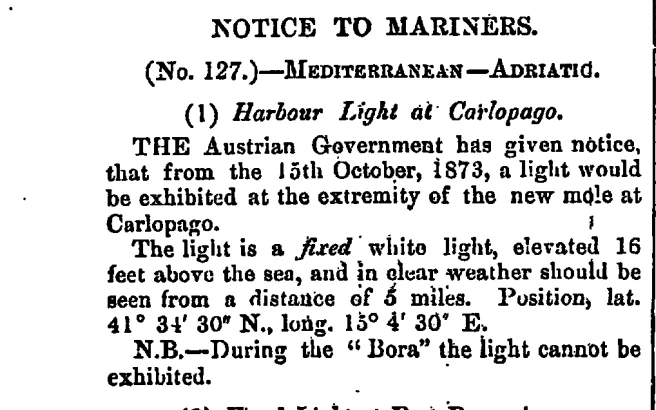
Translation of the Official Notice
NOTICE TO MARINERS.
(Br. 127.) — MEDITERRANEAN — ADRIATIC.
(1) Harbour Light at Karlobag (Carlopago). The Austrian Government has issued a notice that from the 15th of October 1873, a light will be exhibited at the extremity of the new mole at Karlobag.
The light is a fixed white light, elevated 16 feet above the sea, and should be visible in clear weather from a distance of 5 miles. Position: lat. 44° 31' 30'' N., long. 15° 4' 30'' E.
N.B. — During the "Bura" (strong northeasterly wind), the light cannot be exhibited.
These historical records from the British archives reveal the rise of Karlobag as an important trading port in the 19th century. The proclamation of the Austrian Government was published in The London Gazette, in the edition dated November 28, 1873.
The Crowning Work: The First Lighthouse
Following the completion of extensive modernization works on the port and the construction of the new pier (mole), Karlobag received its most vital navigational landmark.
The Challenge of the Velebit Bura
Even though the port was modernized with a new pier and light, nature remained relentless. Official notices to mariners, also published in the British press (The London Gazette), carried a crucial warning: during the "Bura", the light could not be shown. Despite the new infrastructure, the power of the wind beneath Velebit was often stronger than the technology of that era.
The newspaper excerpt has been taken from the official publication The London Gazette December 12 1873, Number 24039 for educational and informational purposes.
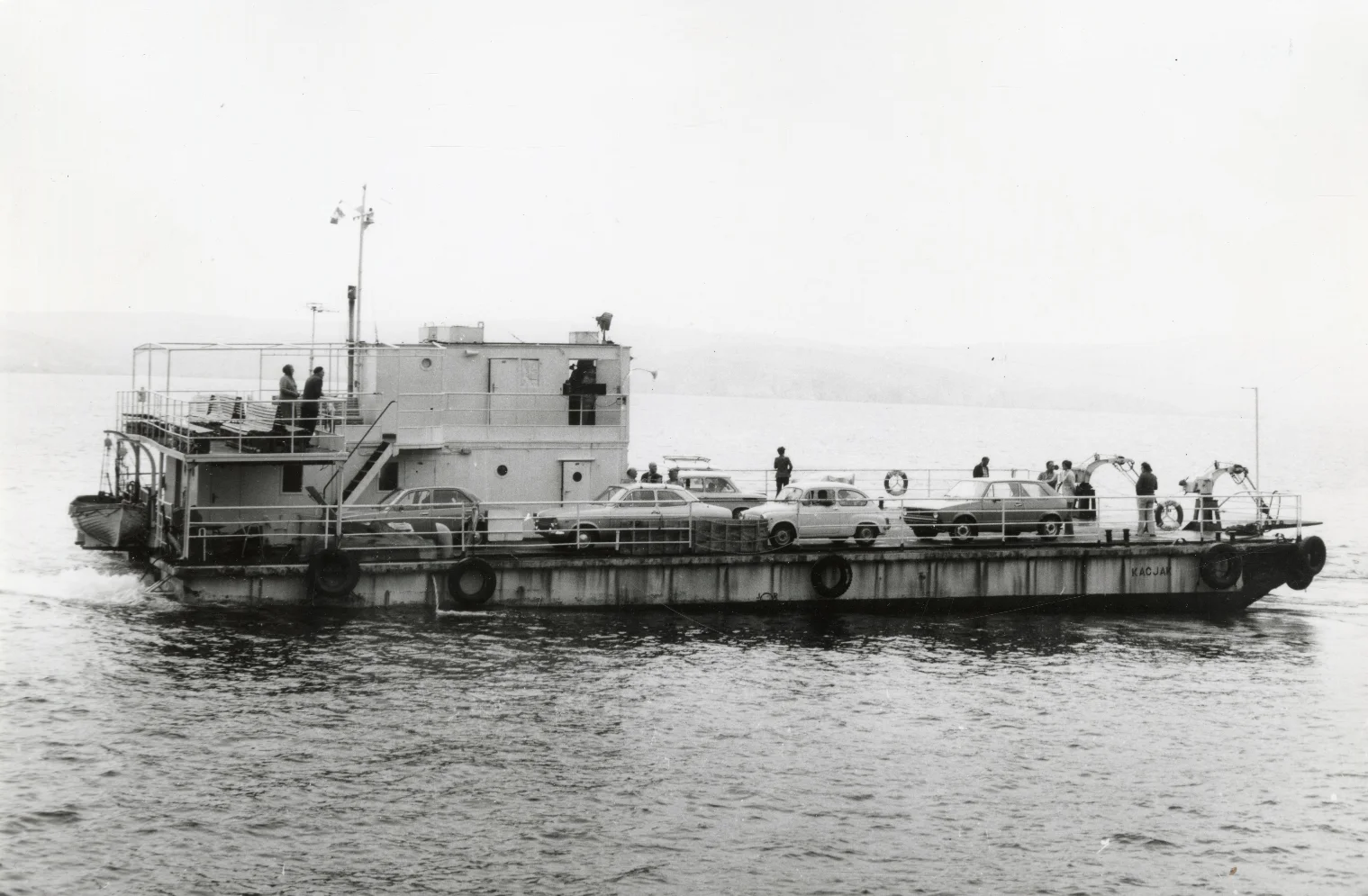
Motor Ferry "Kačjak" – Serial Number PDS 707
M/T Kačjak Rijeka - Jadrolinija (1970-1994). This ferry, originally a Yugoslav Navy (JRM) landing craft with serial number PDS 707, was built in Pula in 1954. In 1970, it was purchased by Jadrolinija and was one of the first of six identical "rafts" converted into ferries. In 1981, it was overhauled at the Punat shipyard. It served on the Karlobag-Pag line, and later on the Jablanac-Stara Novalja and Prizna-Stara Novalja routes, eventually operating between the new ferry ports of Prizna and Žigljen. On February 24, 1993, it arrived at the Novigrad Strait, where it was hit and disabled on February 25, 1993. In 1994, it was scrapped for metal in Punat.
The photograph “M/T Kačjak” was taken from the Maritime and Historical Museum of the Croatian Littoral, Rijeka, inventory number PPMHP 154761. It is used for educational/content purposes.
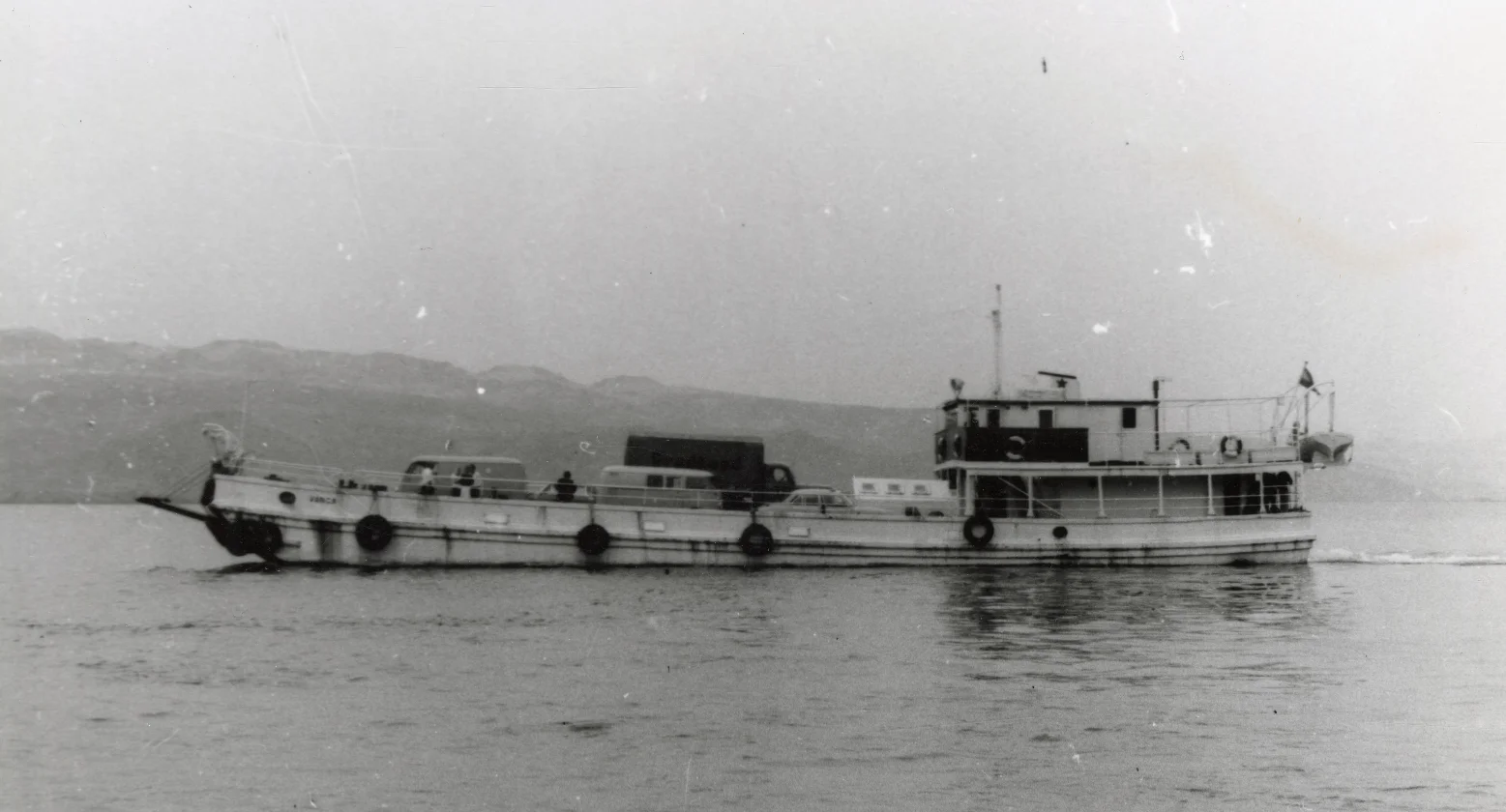
The "Vanga" Motor Ferry – The Story of a Lošinj Wooden Beauty
The photograph “M/T Vanga” was taken from the Maritime and Historical Museum of the Croatian Littoral, Rijeka, inventory number PPMHP 154759. It is used for educational/content purposes.
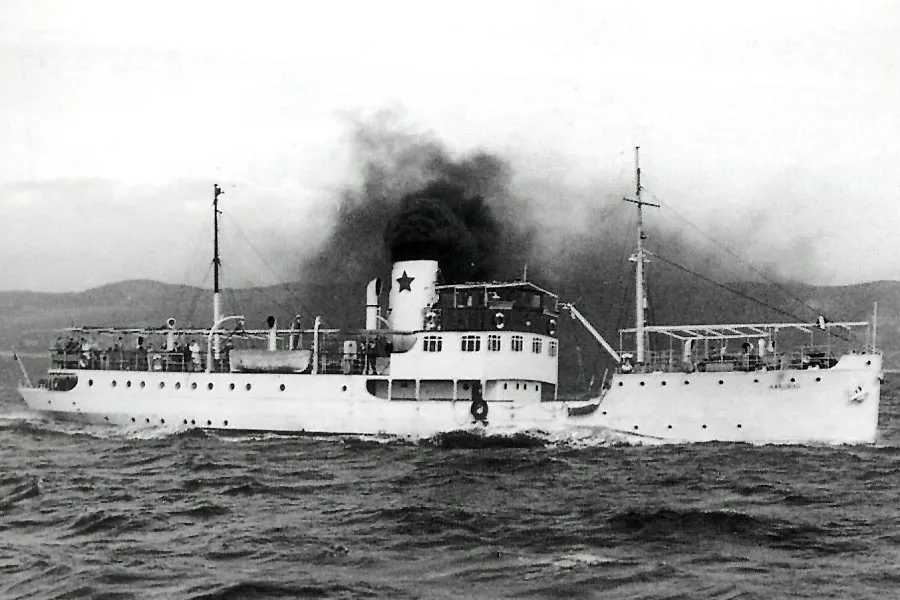
Various steamers have arrived in Karlobag since the beginning of the 19th century, among them the steamer Karlobag. During its rich history, the ship changed names and flags:
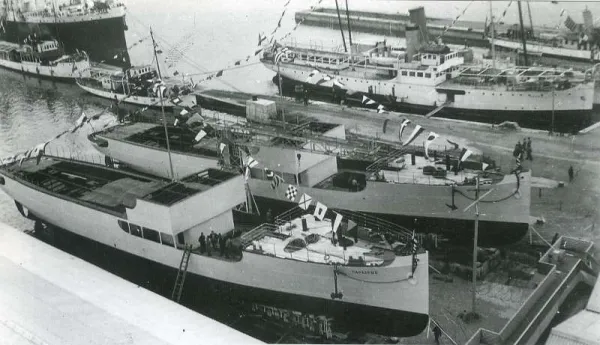
The image shows the ships Šumadija and Sarajevo during construction in “Jadranska brodogradilišta u Splitu” (Adriatic Shipyards in Split).
The photographs of the steamer Šumadija/Karlobag were taken from the internet for educational/content purposes
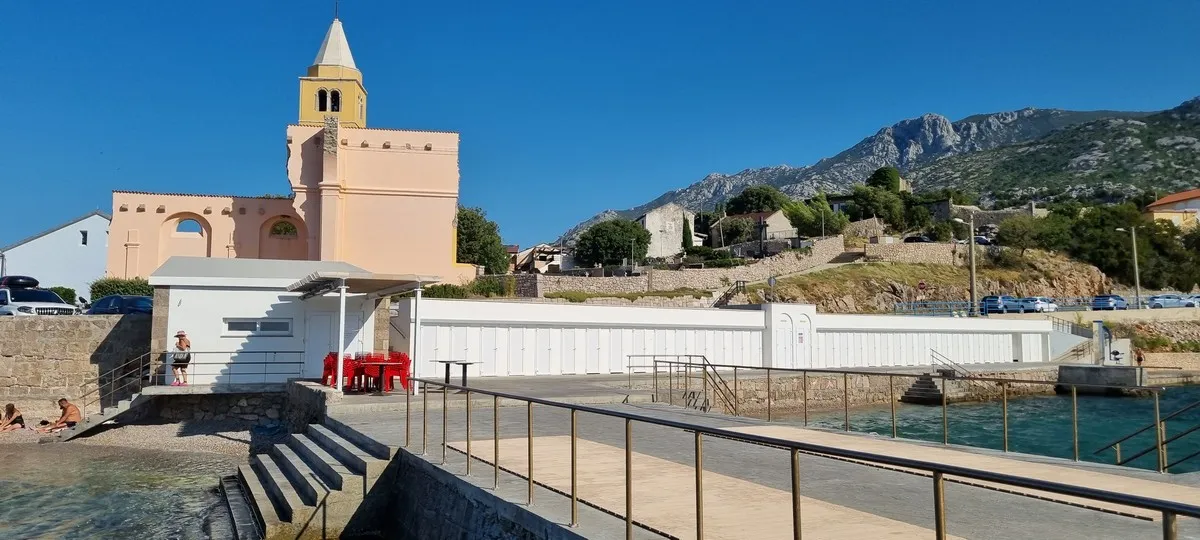
The city beach in Karlobag was built after the Austro‑Hungarian period. Precise data on the exact year of construction are not available, but it is known that it was created many years after the death of Anton Mollinarij. Although there is no solid evidence, tradition attributes the original idea for its construction to Mollinarij himself, who, during the Austro‑Hungarian Empire, built a school, a pier, and roads in Karlobag.
Thanks to its long tradition, the beach is considered one of the oldest urban swimming spots on the Adriatic. Today it is a popular place for leisure, recreation, and socializing for both local residents and visitors.
The Karlobag town beach was renovated and ceremoniously opened in 2023.
February 15, 2026:
February 17, 2026:
February 18, 2026:
April 26, 2026:
May 7, 2026:
May 22, 2026.
July 20, 2026:
July 22, 2026:
July 24, 2026:
July 25, 2026:
The postcard was sent in 1918.
Stamp of the Royal Hungarian Mail (within Austria-Hungary)
It depicts the Velebit Mountains and a panoramic view of the old part of Karlobag.
From private collection T. Potočnjak / Inv. br. ZTP-KB-1018
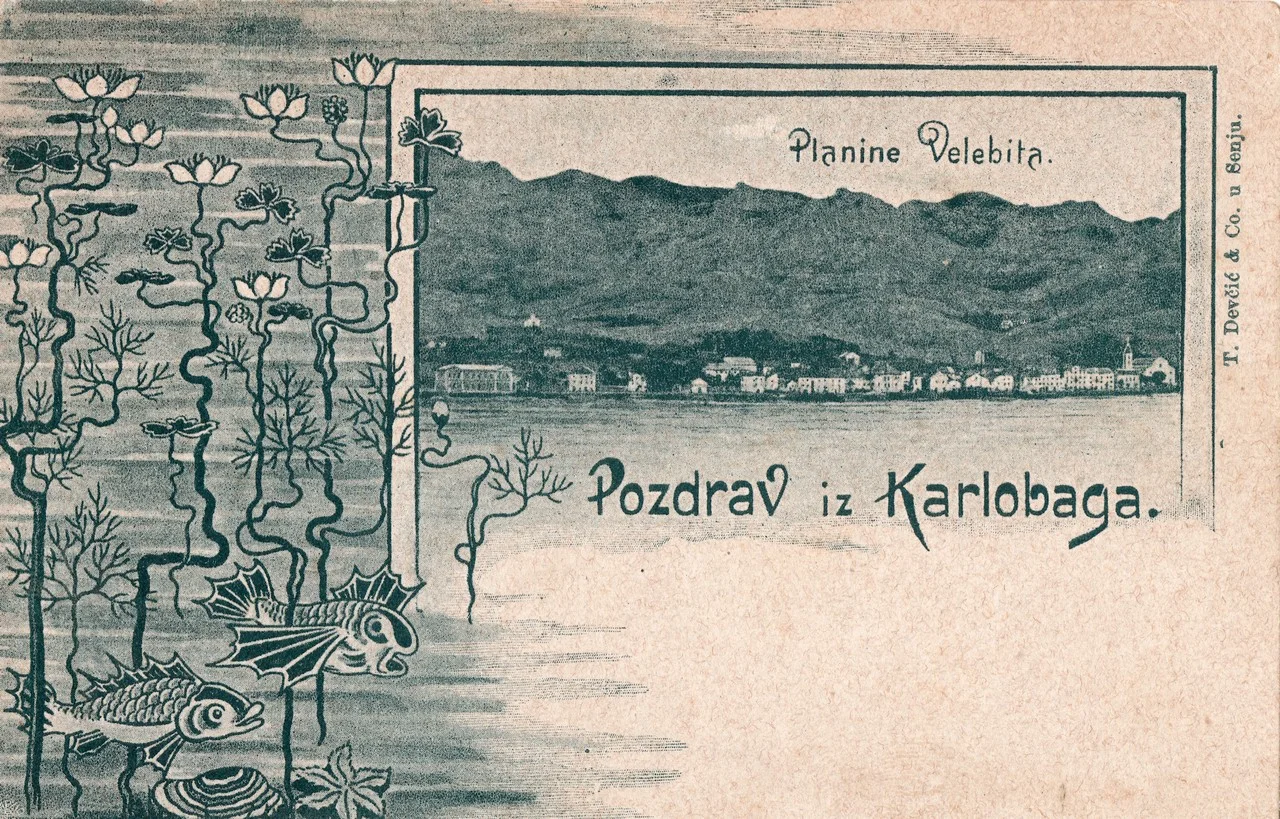
The postcard was sent in 1914.
Austro-Hungarian stamp
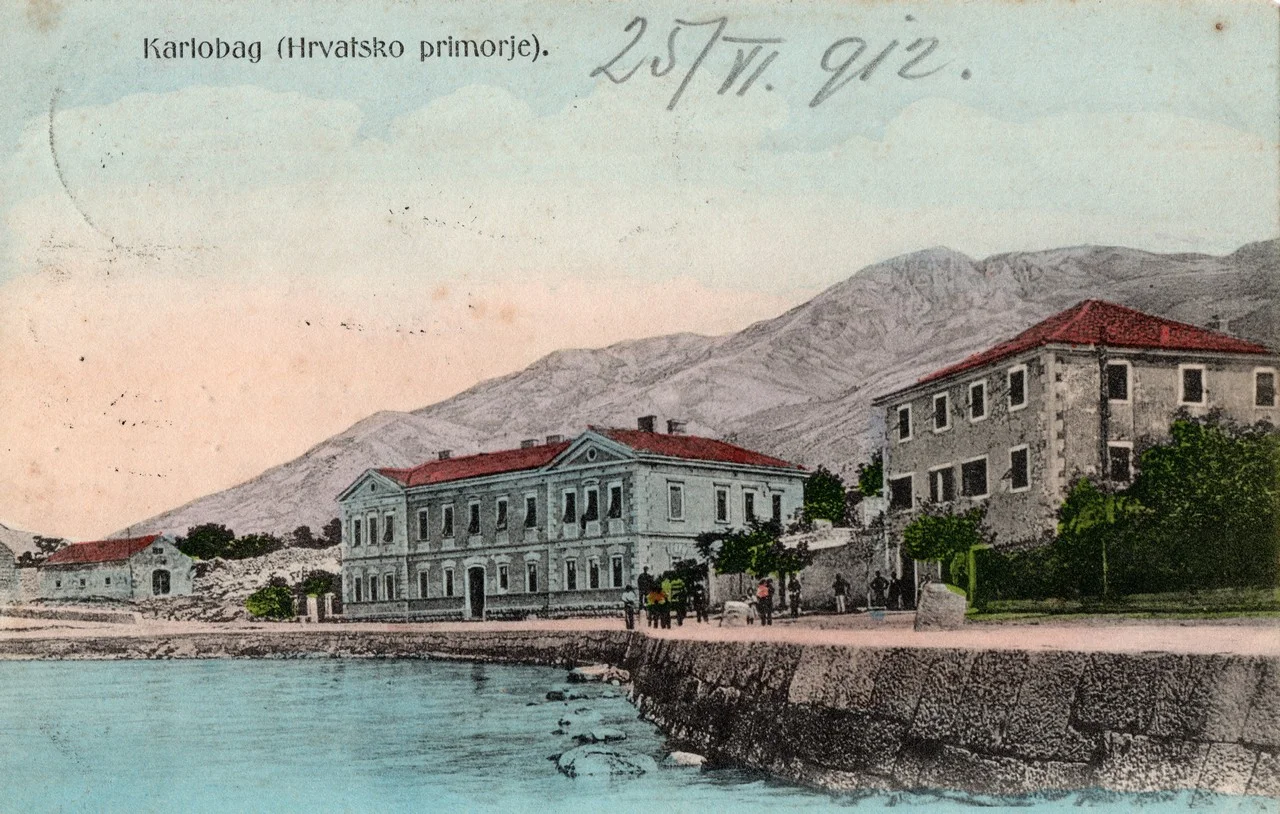
It depicts a panoramic view of the Civil Higher Elementary School (built in 1875) and the harbor.
Published by Nik Pavelić, Karlobag - Photog. Karl M. Gütler, Sušak.
From private collection T. Potočnjak / Inv. br. ZTP-KB-1019
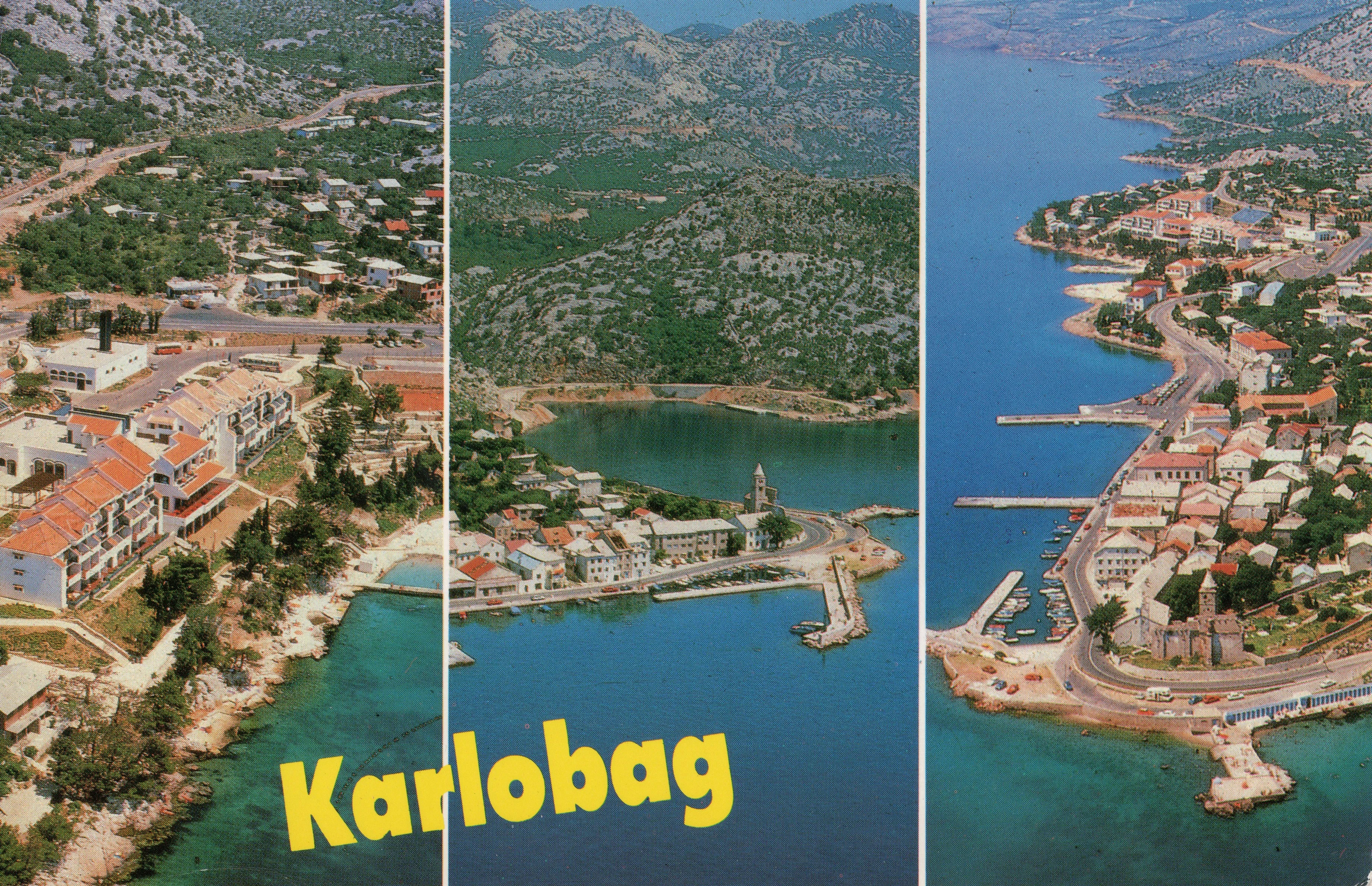
Period oko 1919. godine.
Markica Kraljevina Srba, Hrvata i Slovenaca
Pogled na kuće i crkvu sv. Karla Boromejskog (1710. godina).
From private collection T. Potočnjak / Inv. br. ZTP-KB-1020
Be the first to like and share us.