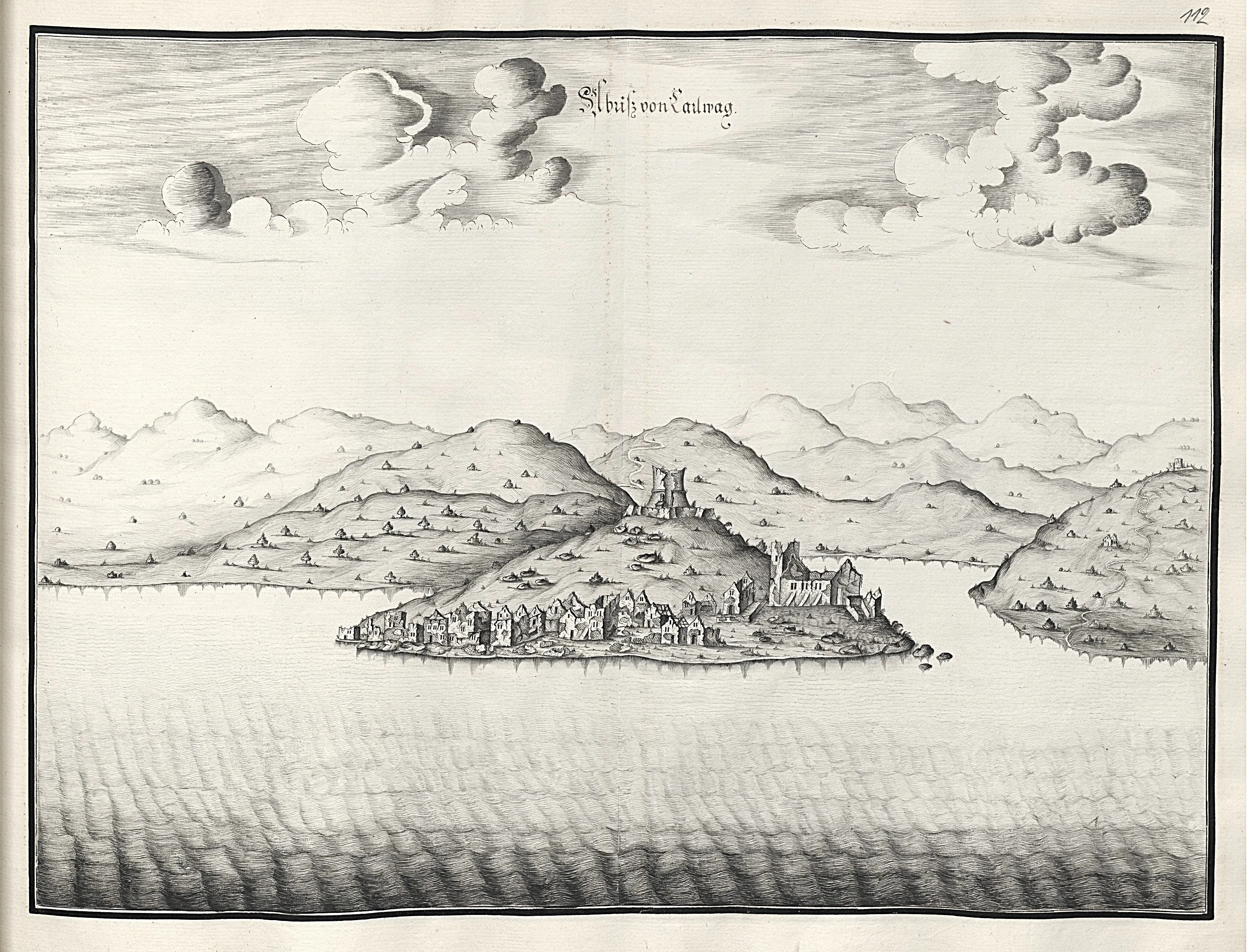
Martin Stier, 1660.
A view of Karlobag in ruins after its destruction by the Venetian general Almoro Tiepolo, produced as part of the documentation of coastal fortifications in the Littoral.
Source: Austrian National Library (ÖNB), Vienna.


Karlobag through the eyes of cartographers, draughtsmen and painters
This gallery presents historical and artistic views of Karlobag through the work of cartographers, draughtsmen and painters, including Martin Stier, M.T., Ivan Tišov and others.
Martin Stier, 1660.
A view of Karlobag in ruins after its destruction by the Venetian general Almoro Tiepolo, produced as part of the documentation of coastal fortifications in the Littoral.
Source: Austrian National Library (ÖNB), Vienna.
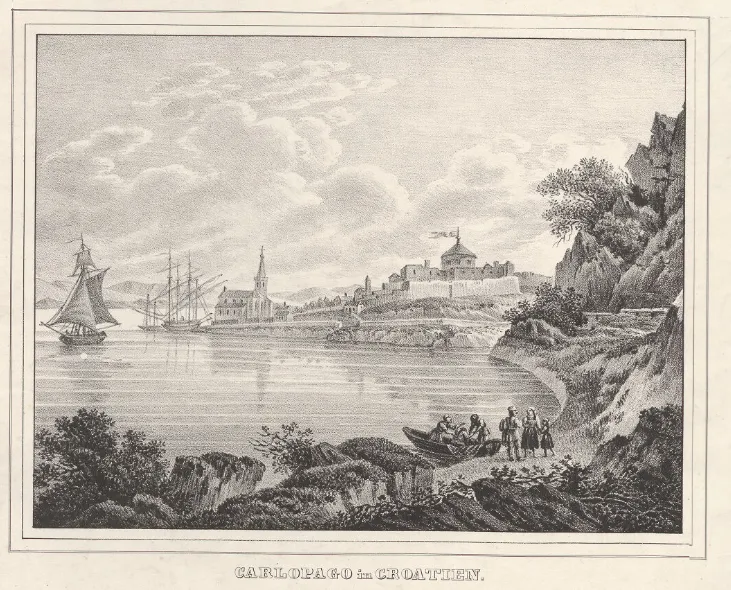
Unknown artist, circa 1840.
A view of the Church of St. Charles Borromeo and the Fortica fortress, documenting the town's urban and sacred landscape in the nineteenth century.
Source: Austrian National Library (ÖNB), Vienna, inv. no. KAR0511699.
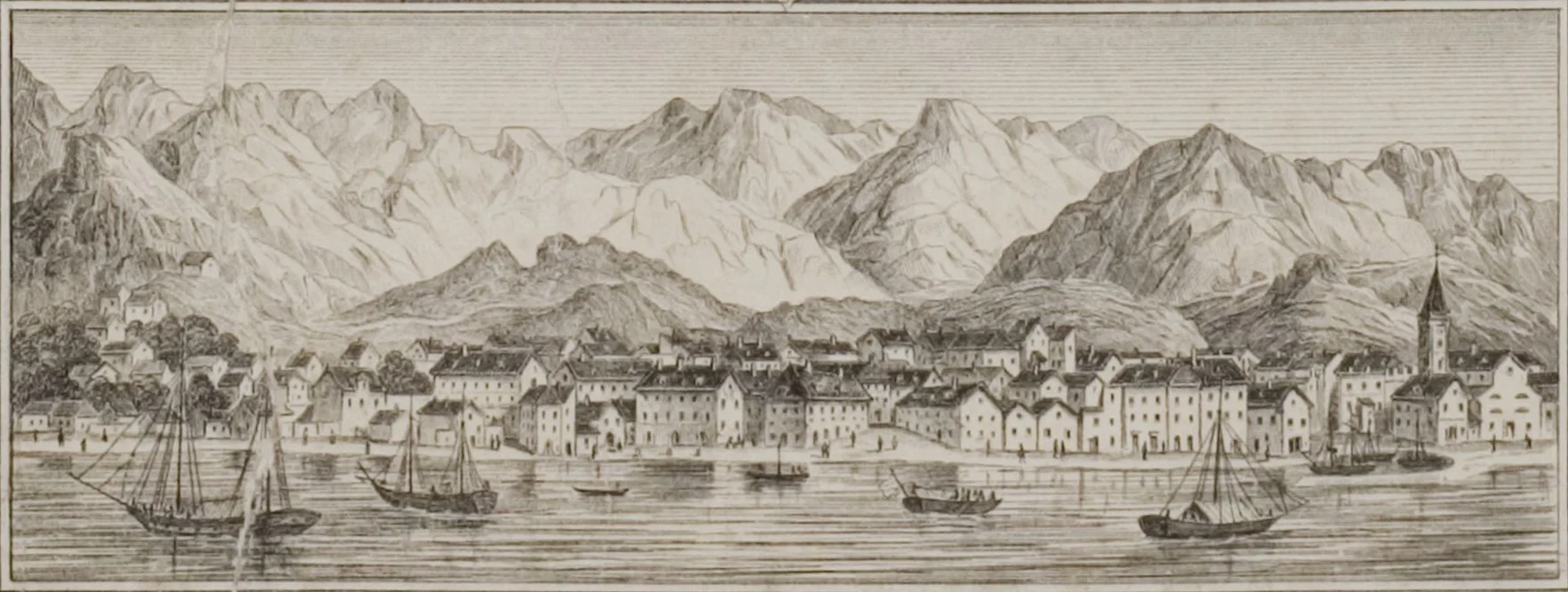
Franjo Vjekoslav Kružić, circa 1851.
A detailed panoramic view of Karlobag by Franz Alois Kruxich, dating from the mid-nineteenth century.
Source: Croatian State Archives (HDA), Zagreb, inv. no. 1805.
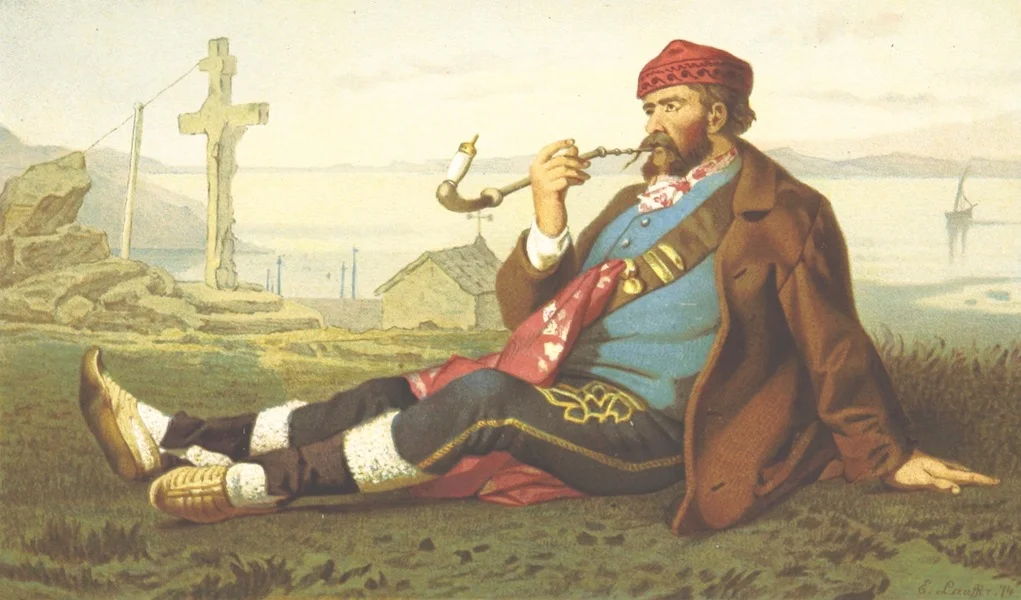
Unknown artist, 1870.
A man from the Velebit region in traditional folk costume, wearing the distinctive red cap and resting beside traditional stone architecture.
Source: History Archive.
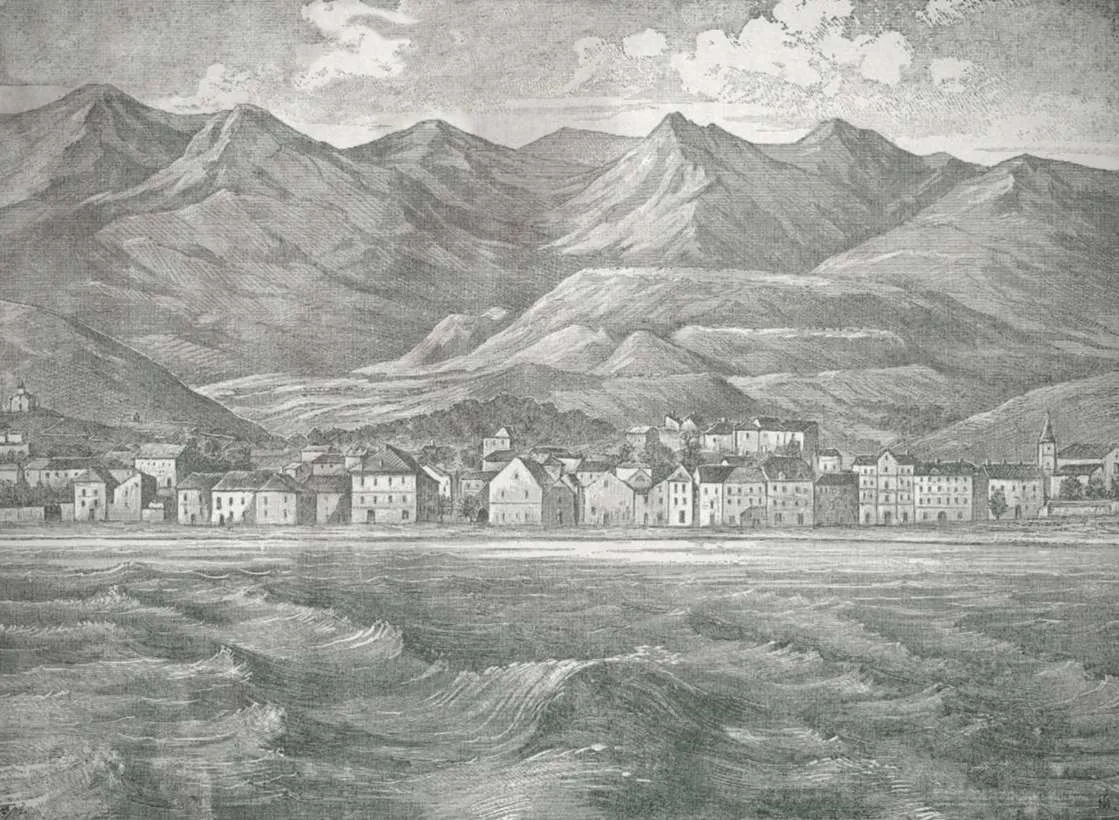
Initials M.T., 1884.
Karlobag viewed from the sea, with the coastal settlement framed by the surrounding landscape and the surviving remains of Fortica.
Source: Wikipedia (Croatian edition).
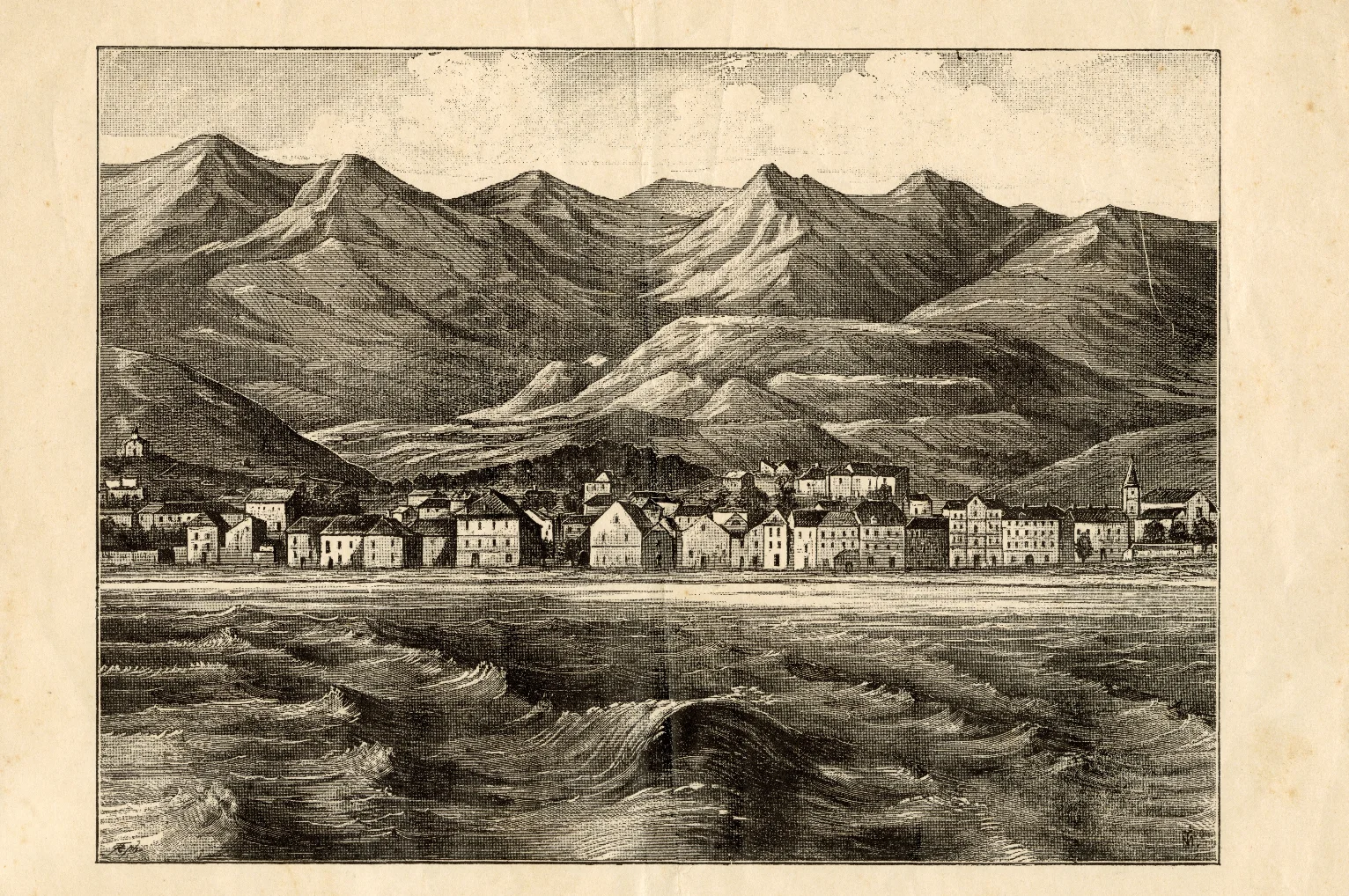
Initials M.T., 1884. (Version)
Karlobag viewed from the sea during a period of growing trade and coastal development at the foot of Velebit.
Source: Maritime and History Museum of the Croatian Littoral, Rijeka, inv. no. PPMHP 156521.
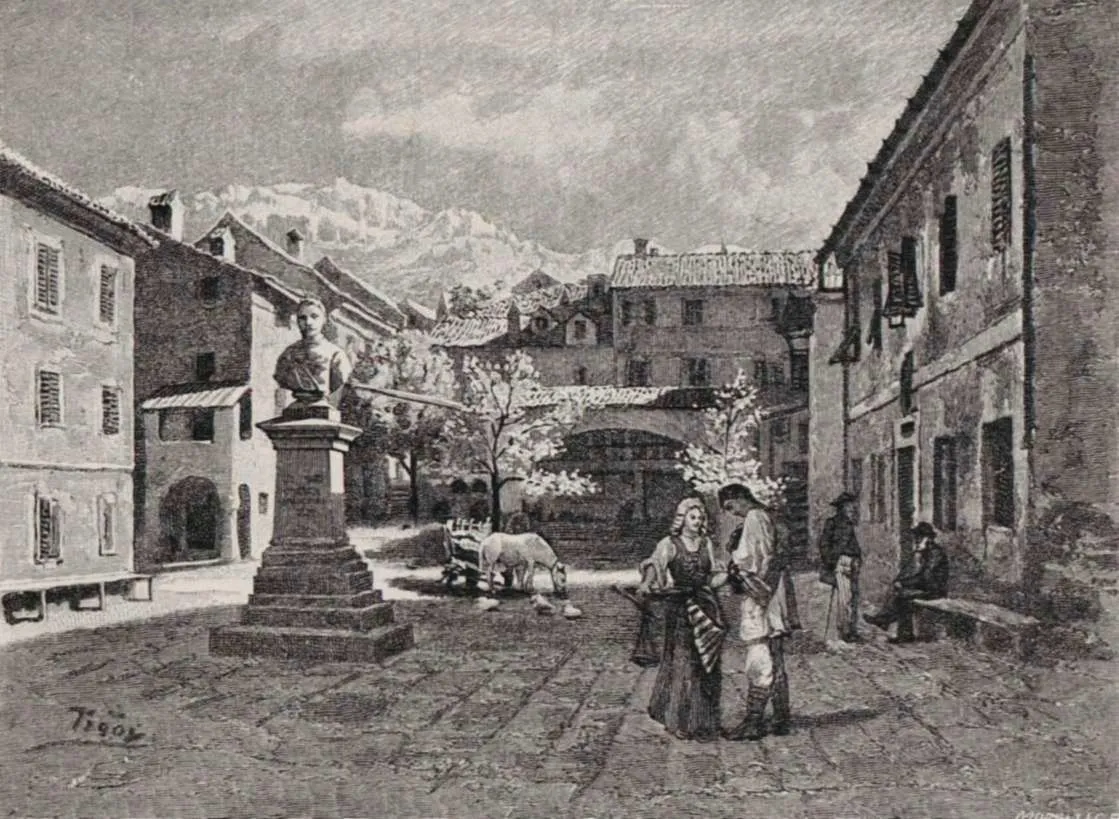
Ivan Tišov, 1902.
Ivan Tišov's 1902 drawing depicts Karlobag's main square with the monument to Baron Anton Mollinary as its dominant feature. The work records the appearance of the square at the beginning of the twentieth century and provides a valuable visual document of the town's public space and commemorative culture.
Source: Die österreichisch-ungarische Monarchie in Wort und Bild.
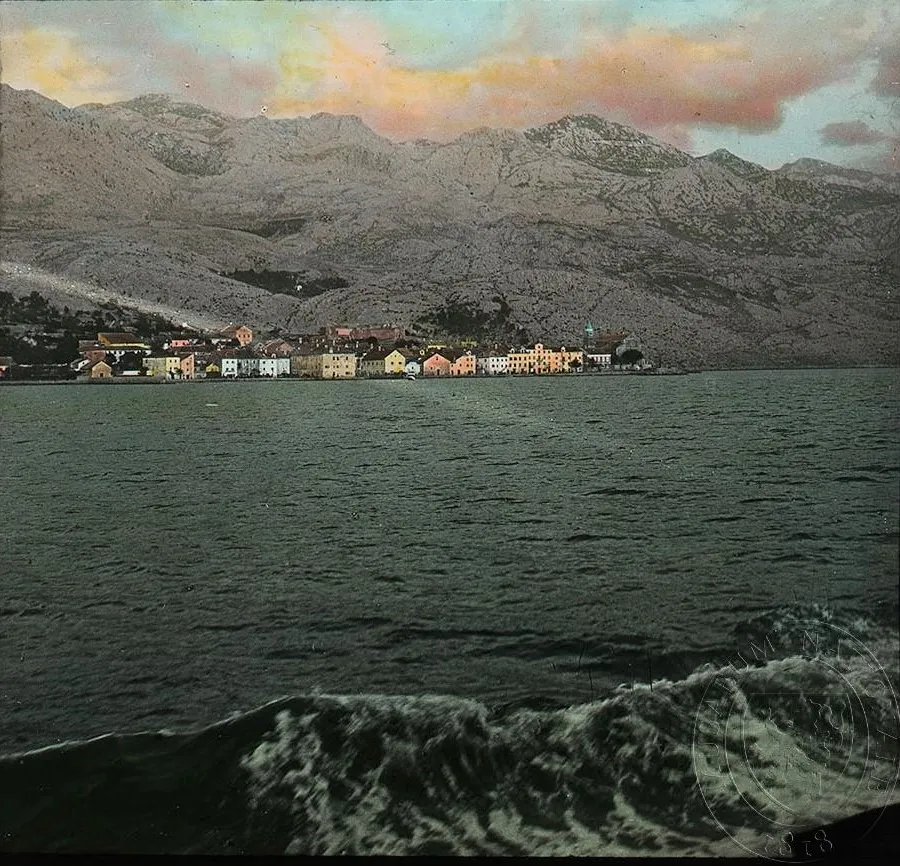
Unknown artist, 1910.
A drawing on glass showing Karlobag from the sea at the beginning of the twentieth century.
Source: National Museum, Prague, inv. no. PS 4773.
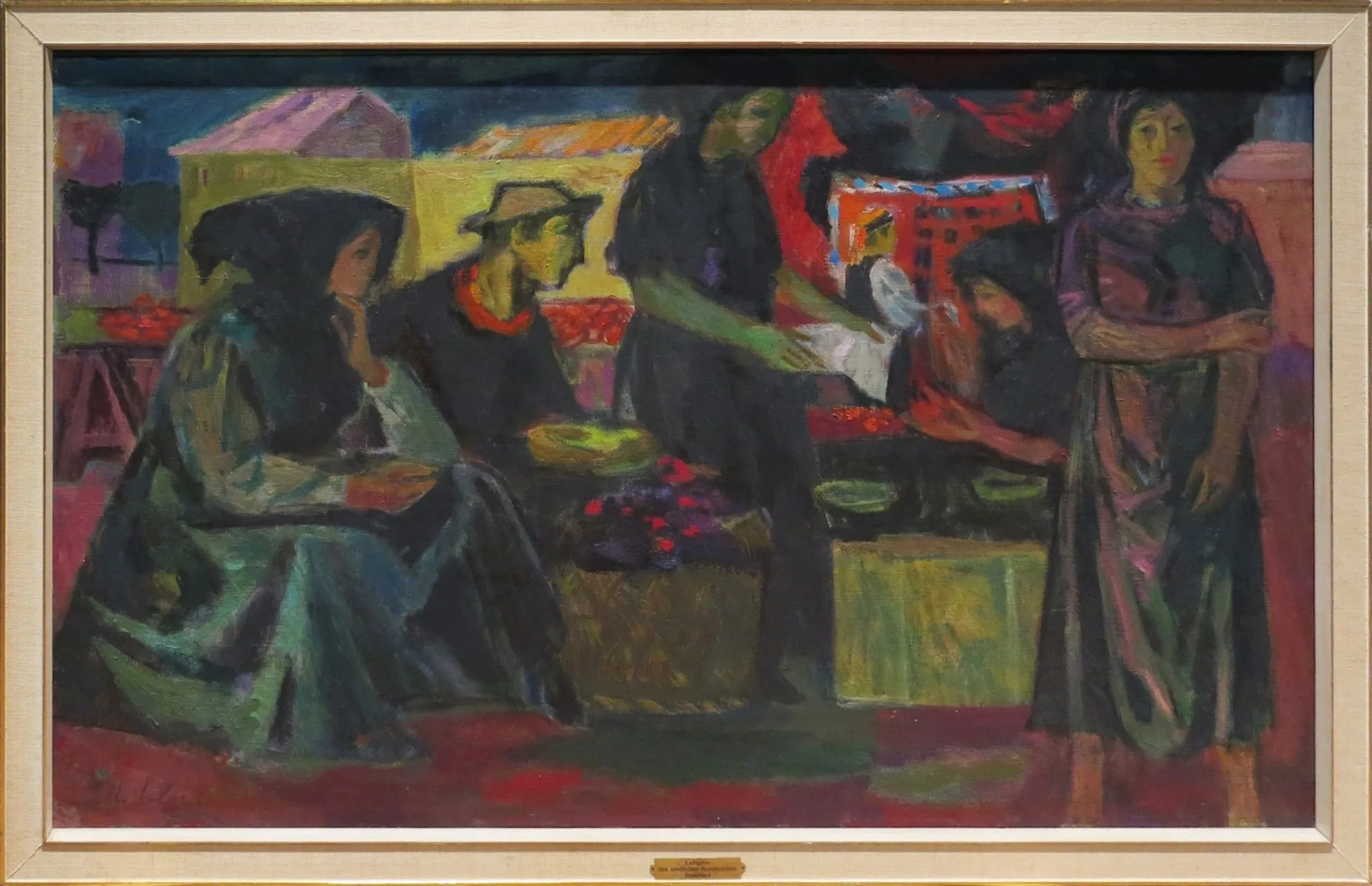
Ugo Cleis, 1962.
Market in Karlobag. This oil-on-canvas painting records the activity and everyday life of the town marketplace.
Source: Kunstkredit Collection, Switzerland (inv. no. K1.865).
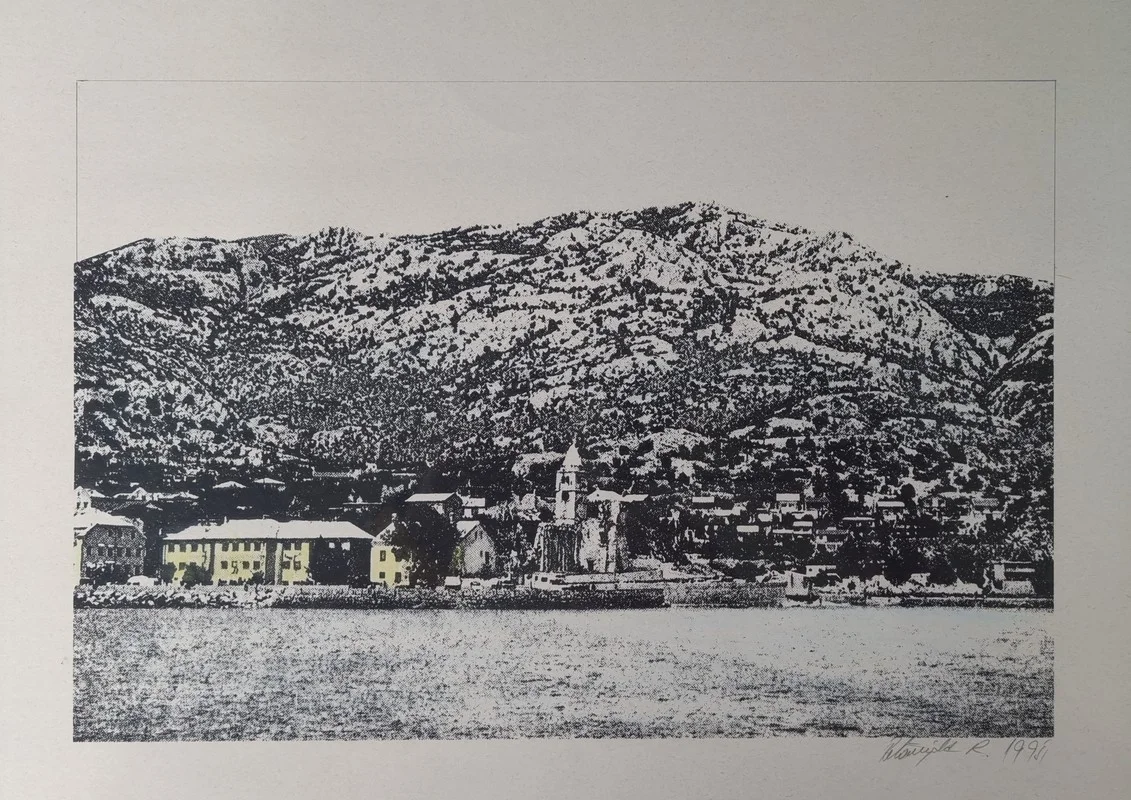
Ruža Potočnjak, 1995.
This 1995 graphic depicts Karlobag beneath the Velebit massif, using line and texture to emphasize the relationship between the town, the mountain and the Adriatic coast.
Source: Author's private archive.
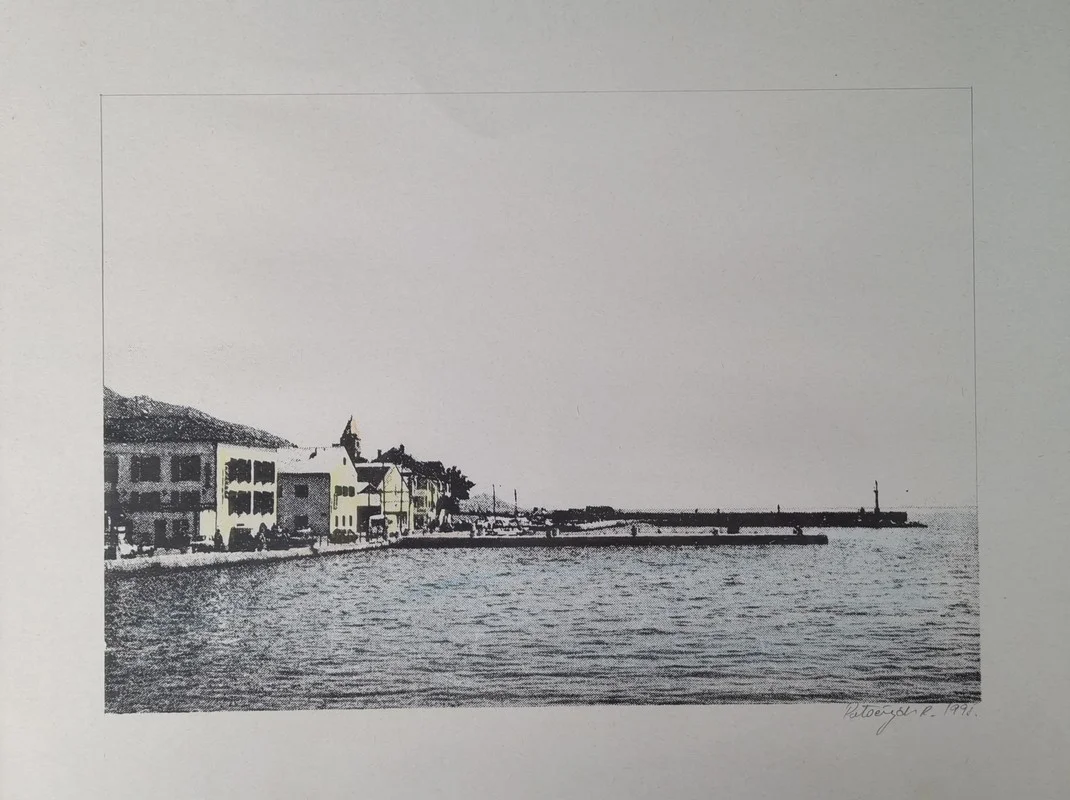
Ruža Potočnjak, 1995.
This graphic faithfully portrays the heart of Karlobag as seen from the sea. The historic Hotel Velinac, a symbol of Karlobag's tourism and architecture, dominates the foreground, while the Braci waterfront with its recognizable lighthouse extends beyond it. The piece exudes the tranquility of a coastal town, capturing a moment where the harbor becomes a safe haven at the foot of Velebit.
Source: Author's private archive.
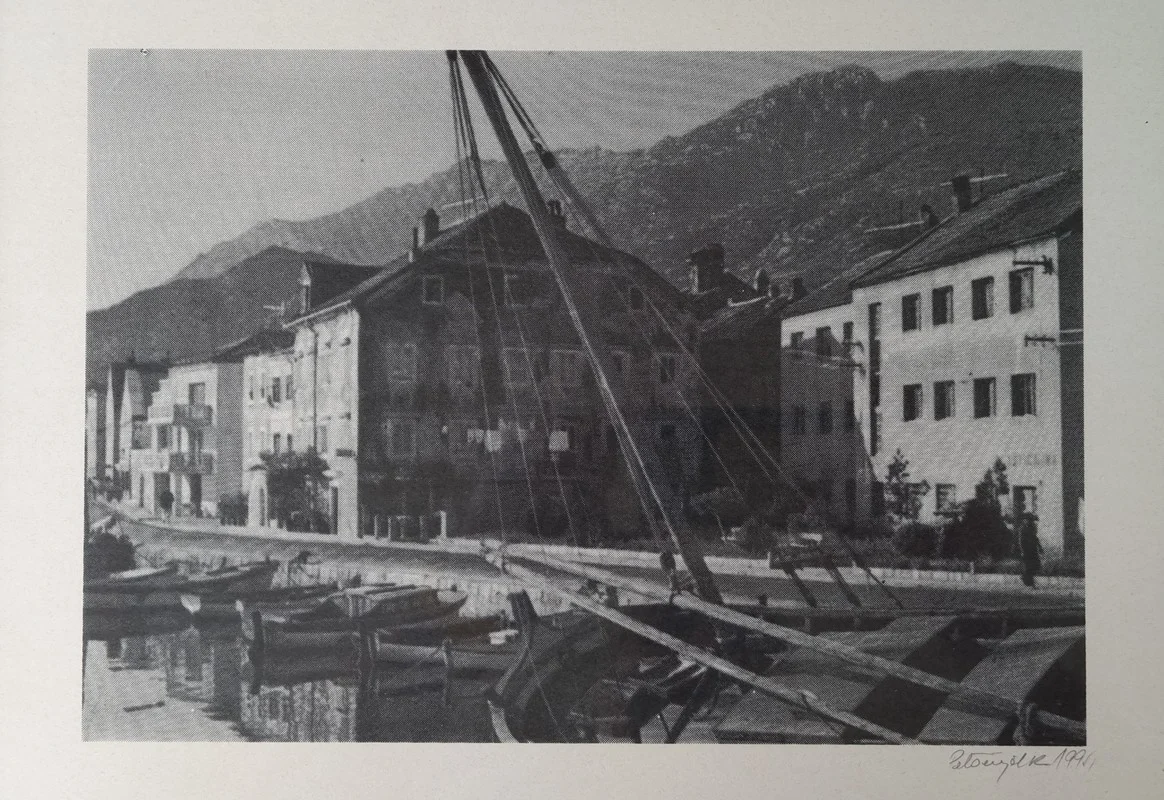
Ruža Potočnjak, 1995.
In the foreground, Karlić's bracera, a traditional sailing vessel, dominates the composition. Its masts rise above Karlobag harbour, while the slopes of Velebit form the background and reinforce the maritime character of the scene.
Source: Author's private archive.
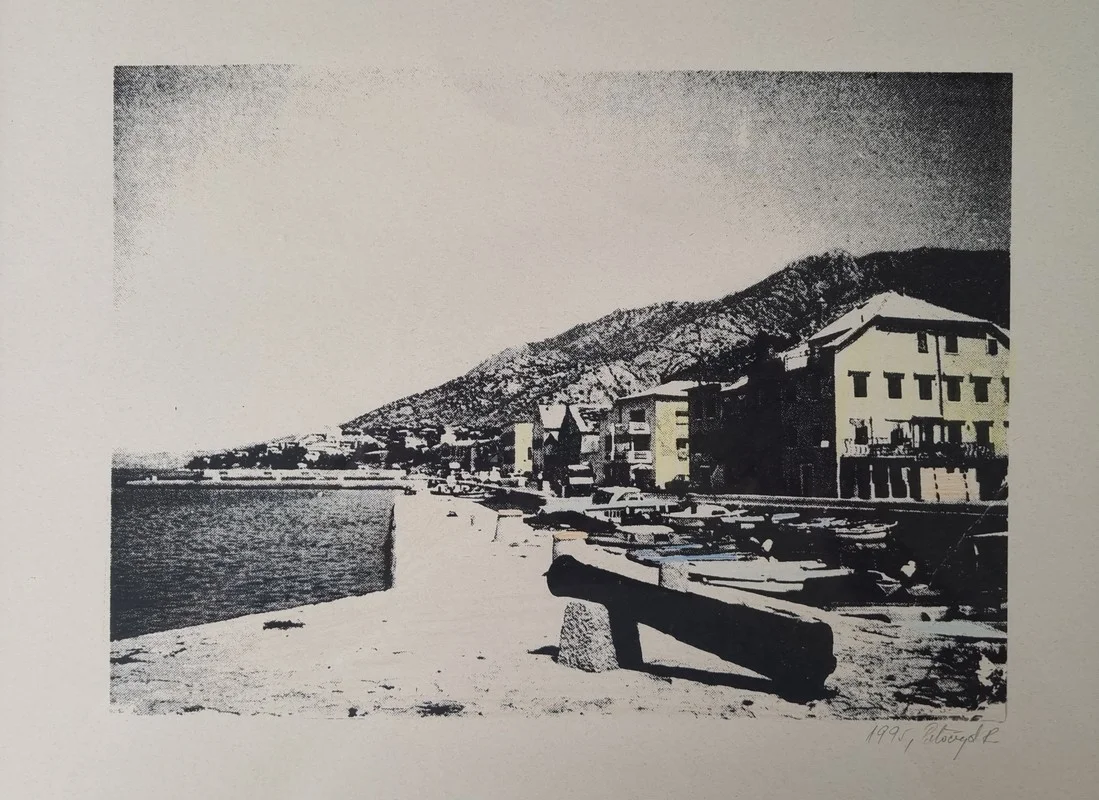
Ruža Potočnjak, 1995.
This graphic shows Karlobag's waterfront with an old cannon prominently positioned in the foreground. Light and shadow emphasize the coastal architecture and the close relationship between the town, Velebit and the sea.
Source: Author's private archive.
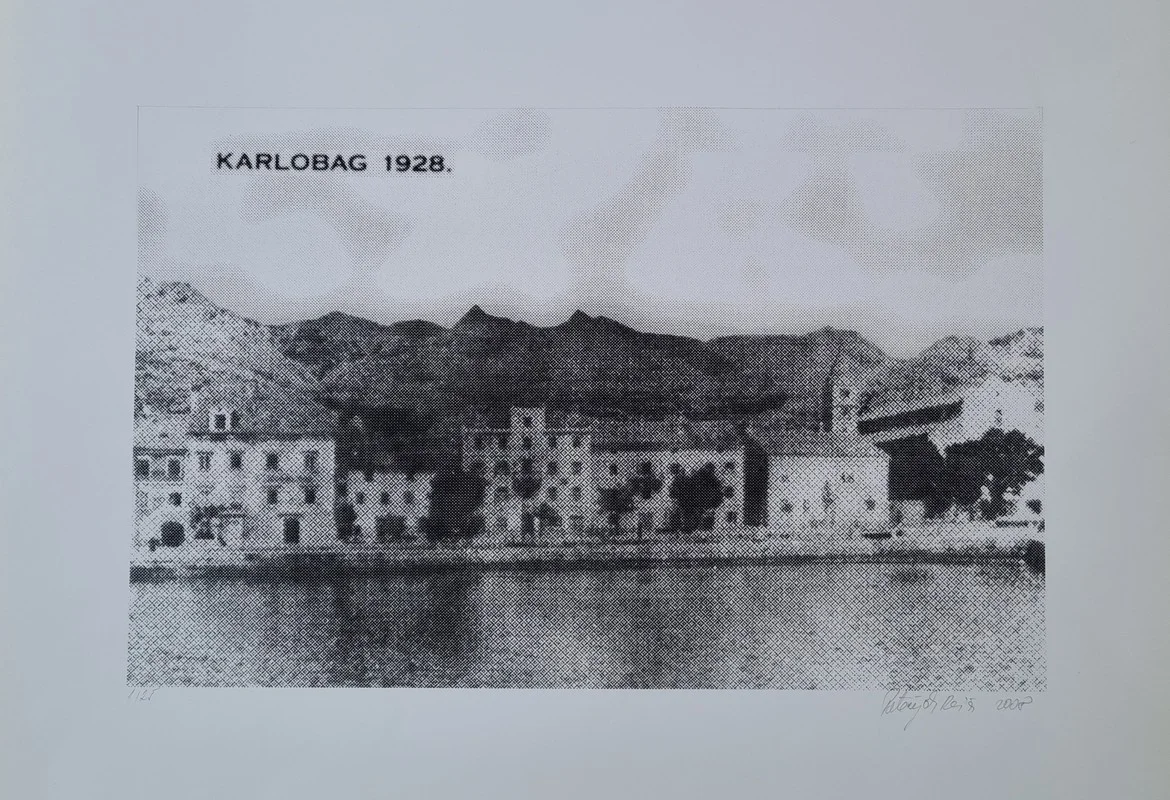
Ruža Potočnjak (work from 2008)
This graphic reconstructs the appearance of Karlobag's waterfront in 1928. As in other records from the period, the cannons later placed on the waterfront in the 1960s are not yet present.
Source: Author's private archive.
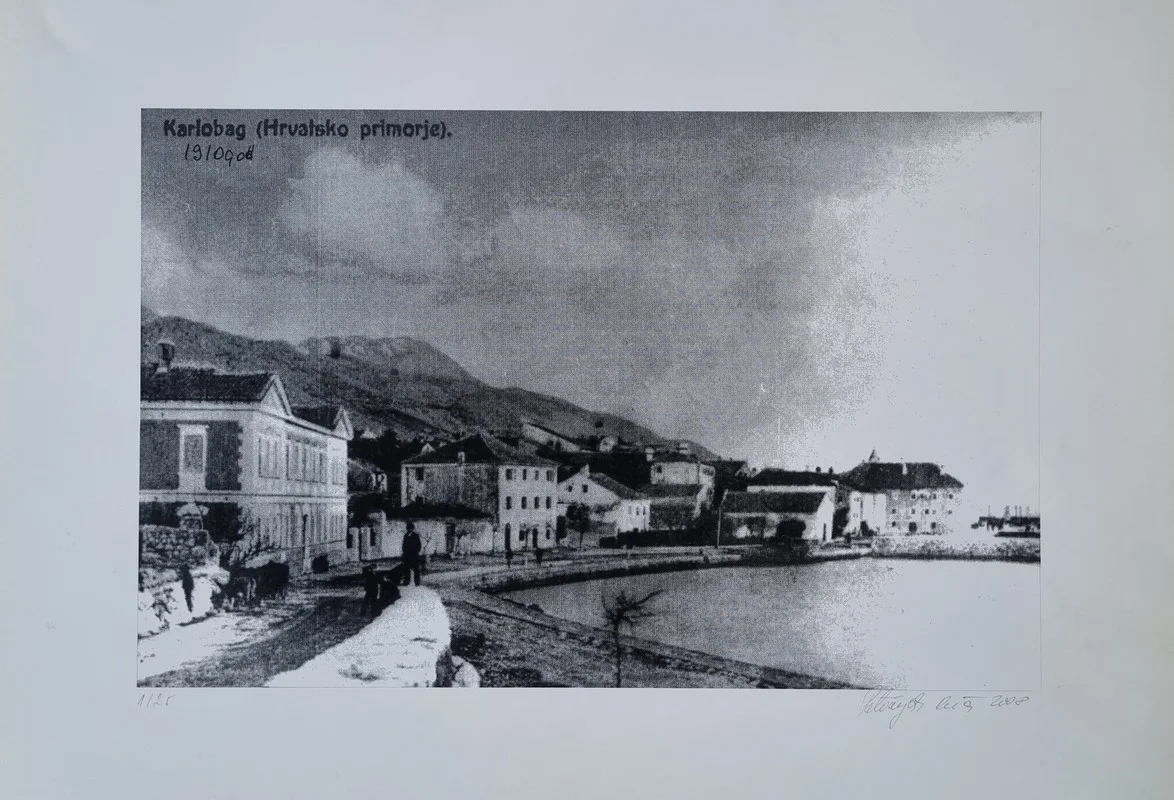
Ruža Potočnjak (work from 2008)
This work takes us further into the past, depicting Karlobag as it was in 1910. The composition offers a dynamic perspective from the coastal road leading toward the center of town, featuring human figures and horse-drawn carriages that evoke the slower rhythm of life at the beginning of the century.
Source: Author's private archive.
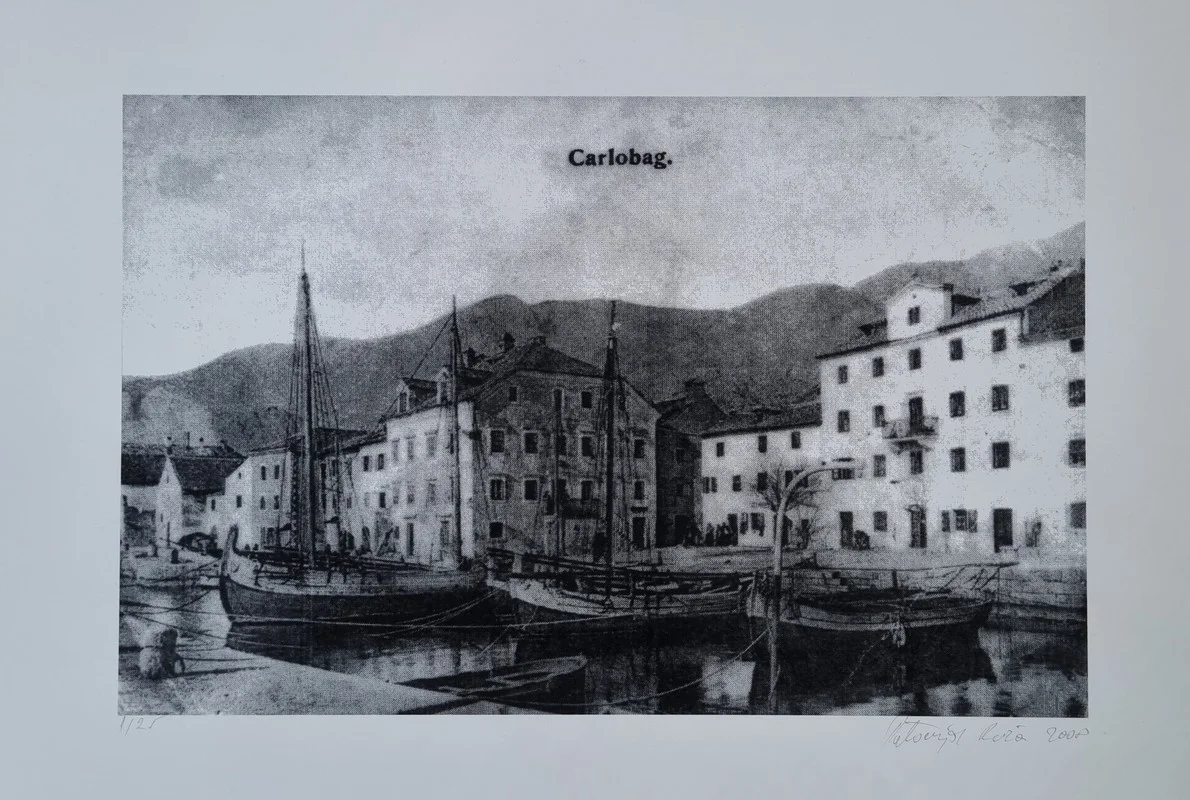
Ruža Potočnjak (work from 2008)
The focus of this graphic is on the old Karlobag harbor and its unbreakable connection to the sea. In the foreground are anchored wooden sailing ships whose masts intersect the vertical lines of the surrounding buildings, emphasizing the town's maritime tradition.
Source: Author's private archive.
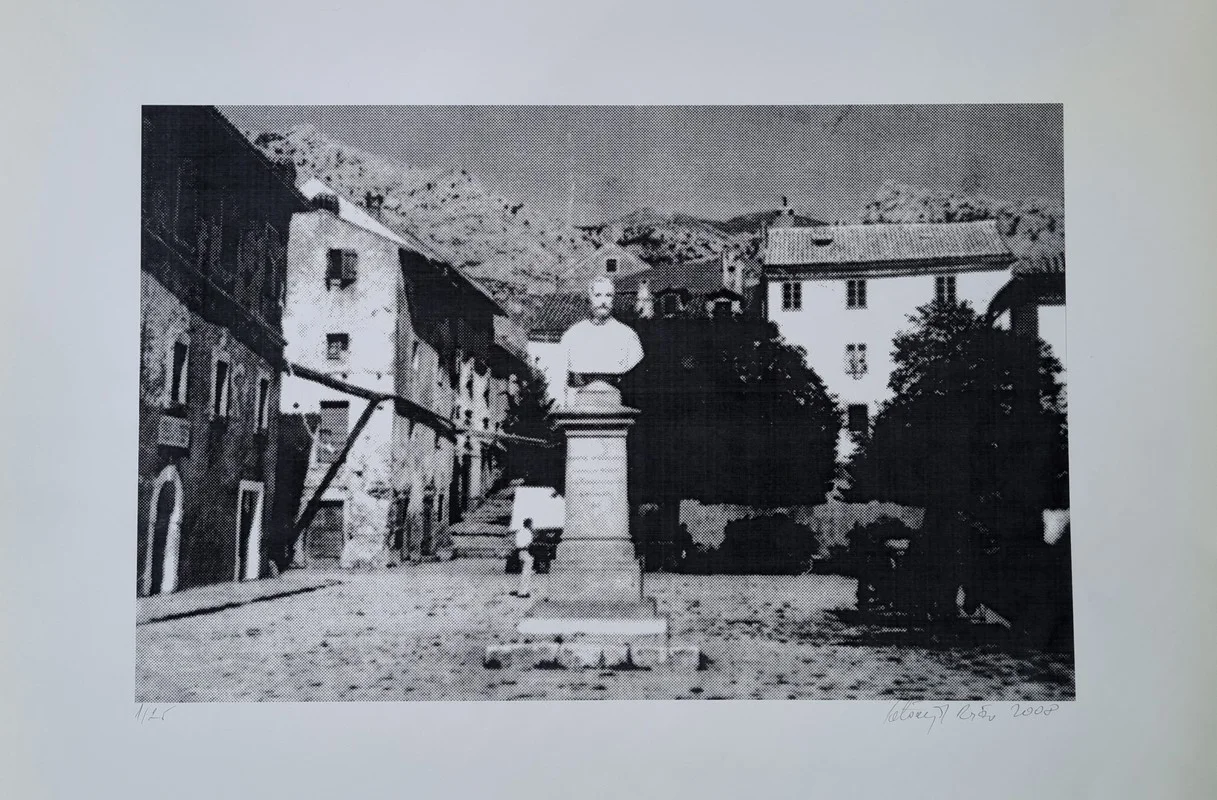
Ruža Potočnjak (work from 2008)
This graphic depicts the former appearance of Karlobag's main square with the monument to Baron Anton Mollinary. The composition records an important element of the square's earlier appearance and of Karlobag's commemorative heritage.
Source: Author's private archive.
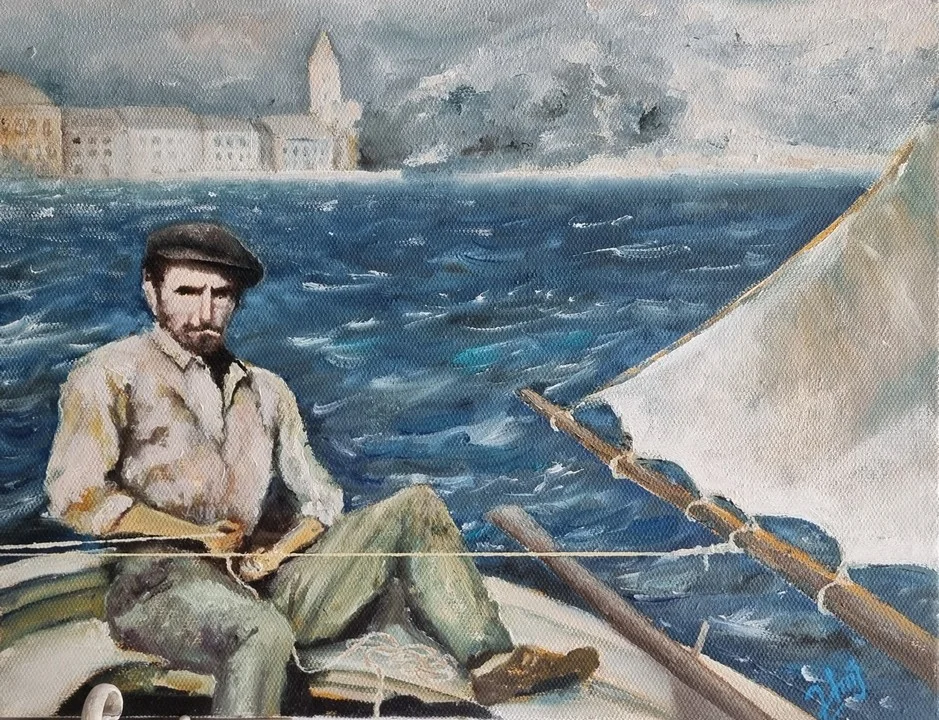
Zvonimir Smojver (early 2000s)
Blaž (Baja) Potočnjak is shown seated on the stern of the traditional boat "Tomislav", dressed in work clothes and wearing a cap locally known as a kepet. He holds the sheet while sailing through the Velebit Channel. In the background are Karlobag's church tower, stone houses and coastline beneath Velebit. The inscription on the boat and the carefully recorded local details give the painting strong documentary value for Karlobag's maritime heritage.
Source: Private collection of Ana and Marijana Popović.
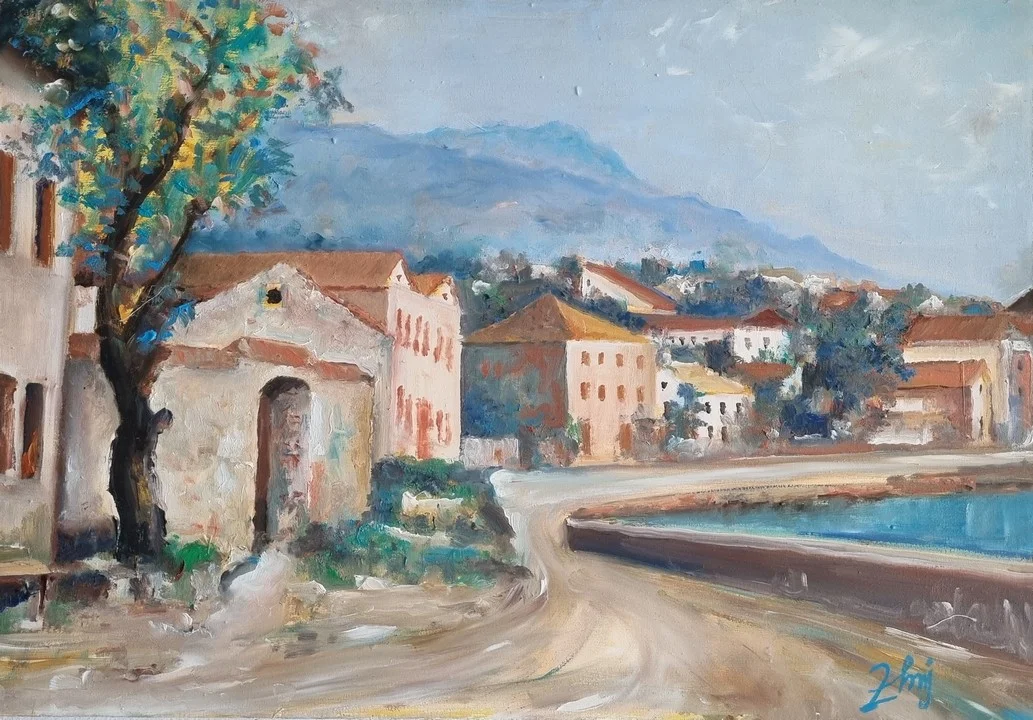
Zvonimir Smojver (early 2000s)
A view of the entrance to Karlobag, with the winding road leading toward the town centre. Old stone houses and a large tree stand to the left, while the coastline and sea extend to the right. The hills and Velebit appear in the distance beneath an open sky.
Source: Private collection of Ana and Marijana Popović.
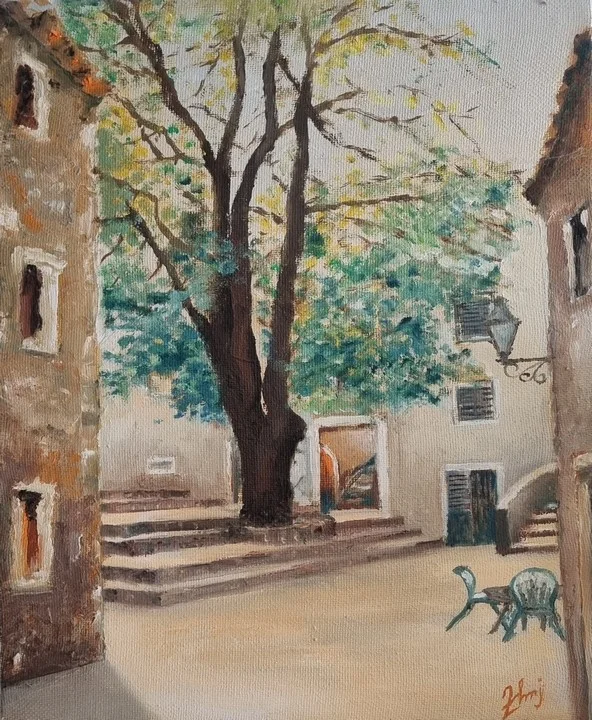
Zvonimir Smojver (early 2000s)
A view of a square in the old part of Karlobag, dominated by a large linden tree. The surrounding stone houses include the house of Branko (Brane) and Ivo Pilipić in the background. Wooden windows, doors, stone steps and a small table with chairs record details of everyday life in the square.
Source: Private collection of Ana and Marijana Popović.
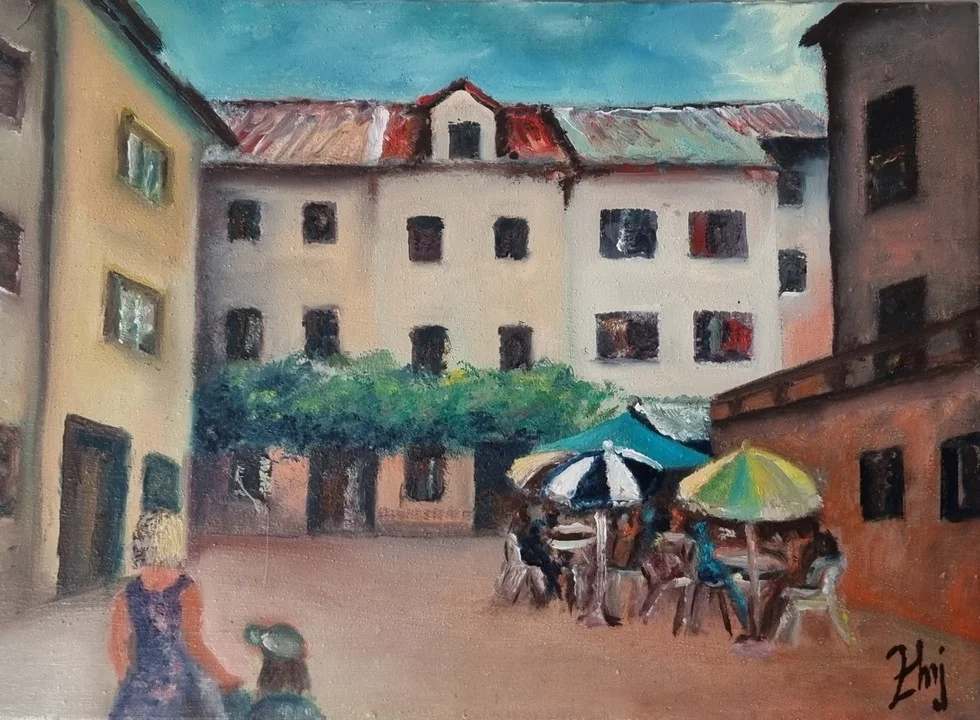
Zvonimir Smojver (early 2000s)
A view of the town square with the "Plavi 9" pastry shop, locally known as "Kod slatkog". Colourful parasols, the terrace and its guests occupy the right side of the square, while passing figures animate the foreground. Traditional coastal houses with red roofs and greenery form the background.
Source: Private collection of Ana and Marijana Popović.
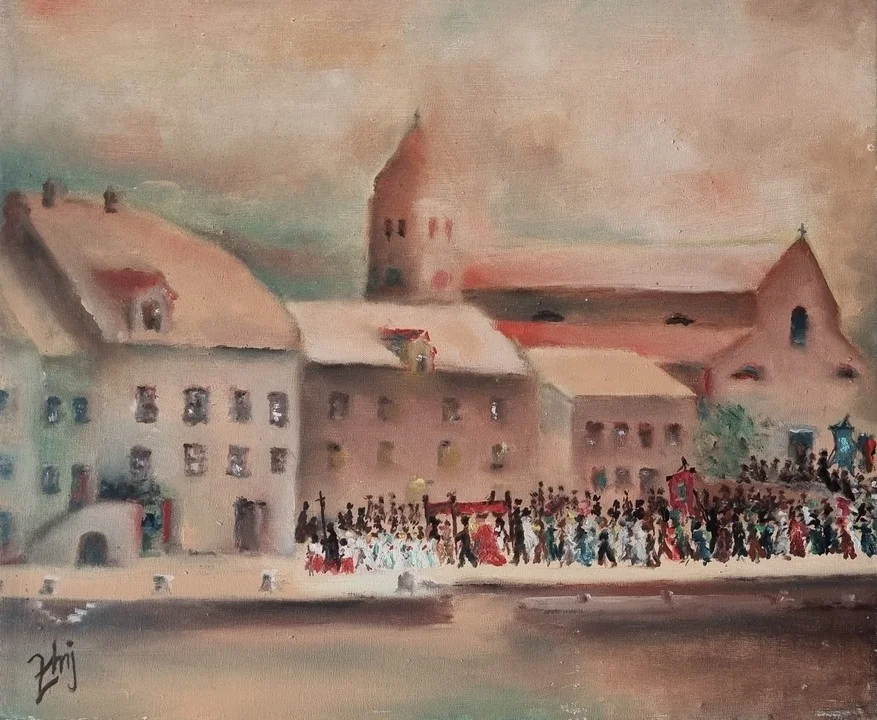
Zvonimir Smojver (early 2000s)
A traditional religious procession passes along the coast in front of the Church of St. Charles Borromeo in old Karlobag. The gathered townspeople, coastal houses, bell tower and church façade document an important element of local religious and communal life.
Source: Private collection of Ana and Marijana Popović.
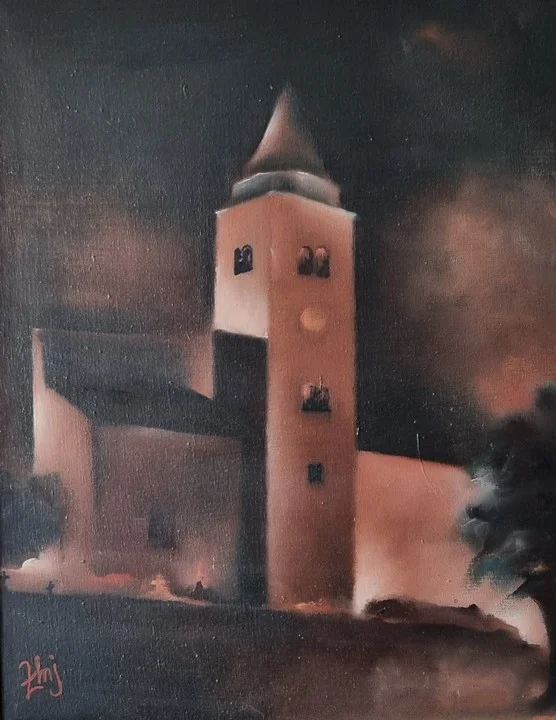
Zvonimir Smojver (early 2000s)
The bell tower and remains of the Church of St. Charles Borromeo are shown at night or twilight. Light falling across the building emphasizes the architectural lines of the tower and roof, while a tree silhouette appears in the lower right corner and the artist's signature in the lower left.
Source: Private collection of Ana and Marijana Popović.
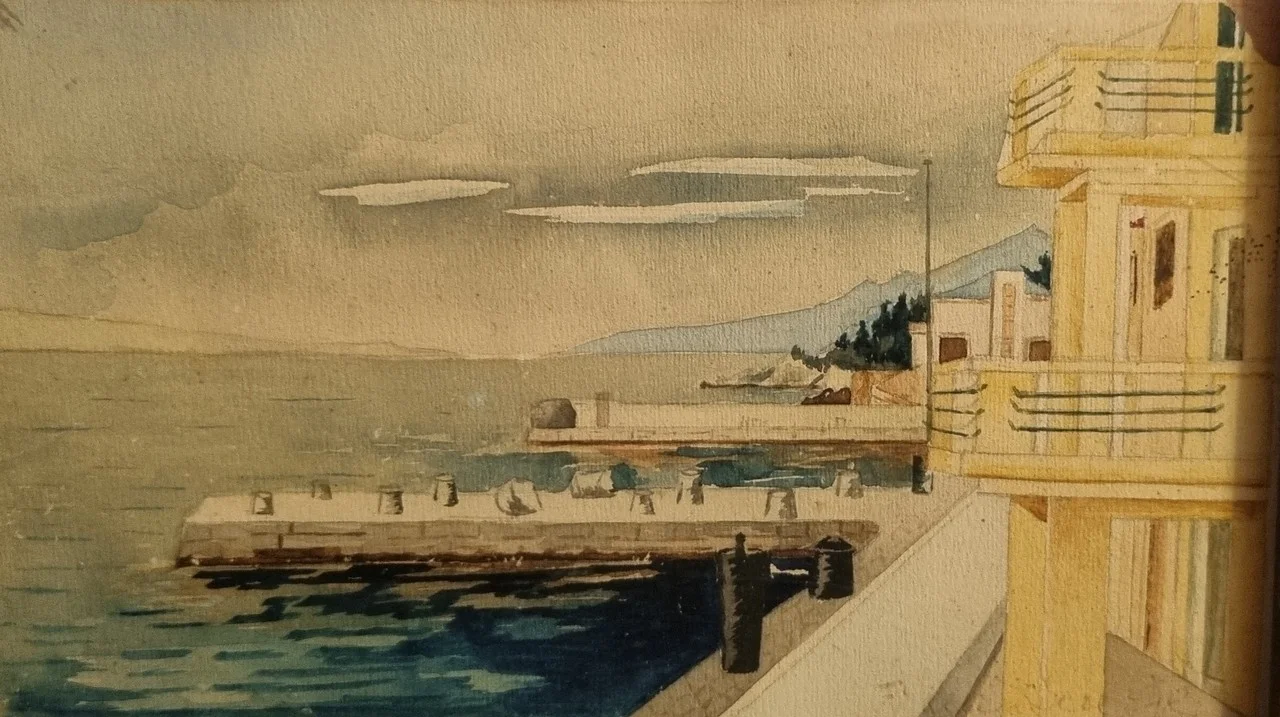
Zvonimir Smojver (early 2000s)
A view of Karlobag's waterfront and Palada, with old mooring bollards made from former cannons arranged along the pier. On the right stands the house of Zdeslav, who ran a tavern there and gave rise to the local expression "Di si? Kod Zdeslava!" ("Where are you? At Zdeslav's!"). The terraces, balconies and waterfront details preserve a recognizable image of Karlobag's maritime past.
Source: Private collection of Ana and Marijana Popović.
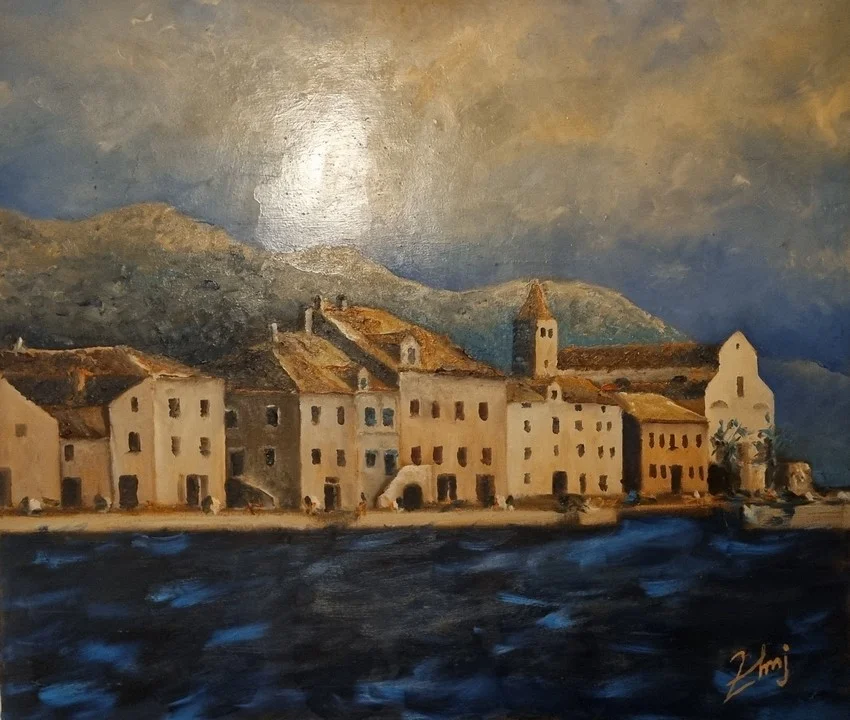
Zvonimir Smojver (early 2000s)
A panoramic view of old Karlobag from the coast, with a row of waterfront houses and the church tower beneath the slopes of Velebit. The dark sea in the foreground and the warm tones of the façades emphasize the contrast between the settlement and its rugged coastal setting.
Source: Private collection of Ana and Marijana Popović.
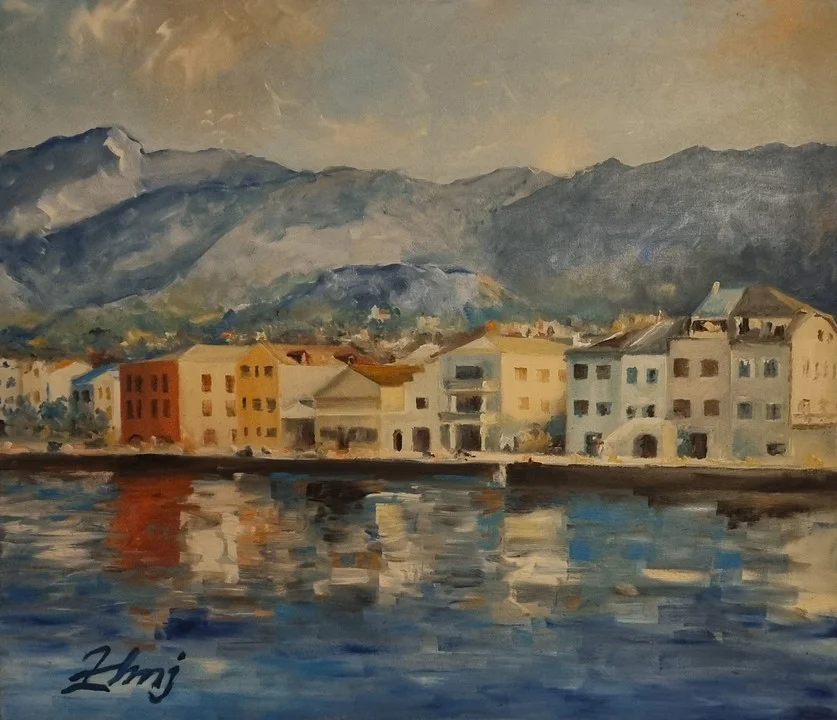
Zvonimir Smojver (early 2000s)
A panoramic view of Karlobag from the sea, showing a row of traditional coastal houses reflected on the calm water. The Velebit massif dominates the background beneath a broad sky.
Source: Private collection of Ana and Marijana Popović.
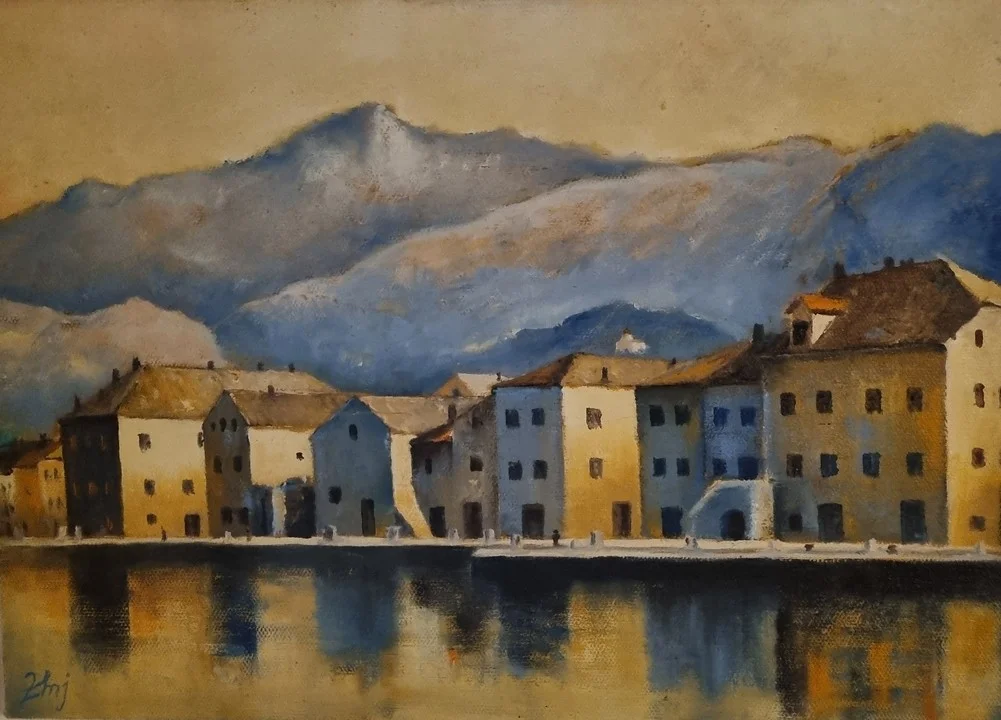
Zvonimir Smojver (early 2000s)
A panoramic view of Karlobag's old waterfront in muted tones. Traditional stone houses line the shore and are reflected on the calm sea, while the bluish slopes of Velebit dominate the background.
Source: Private collection of Ana and Marijana Popović.
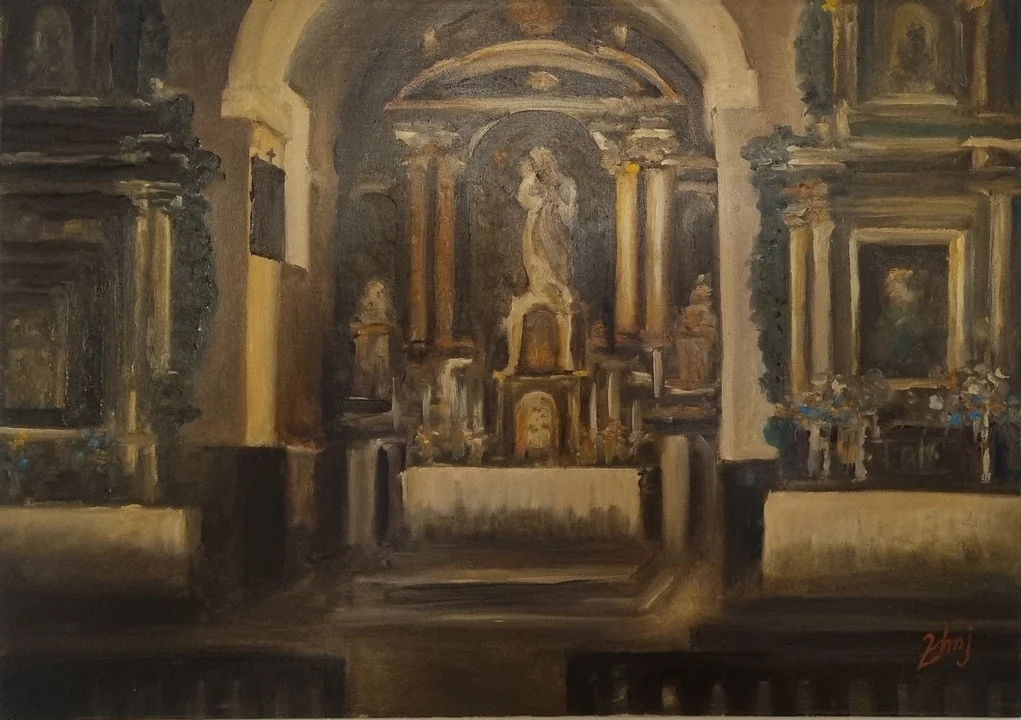
Zvonimir Smojver (early 2000s)
A view of the interior of St. Joseph's Church, focused on the richly decorated altar. The composition records its columns, sculptural elements and architectural details in warm, muted tones.
Source: Private collection of Ana and Marijana Popović.
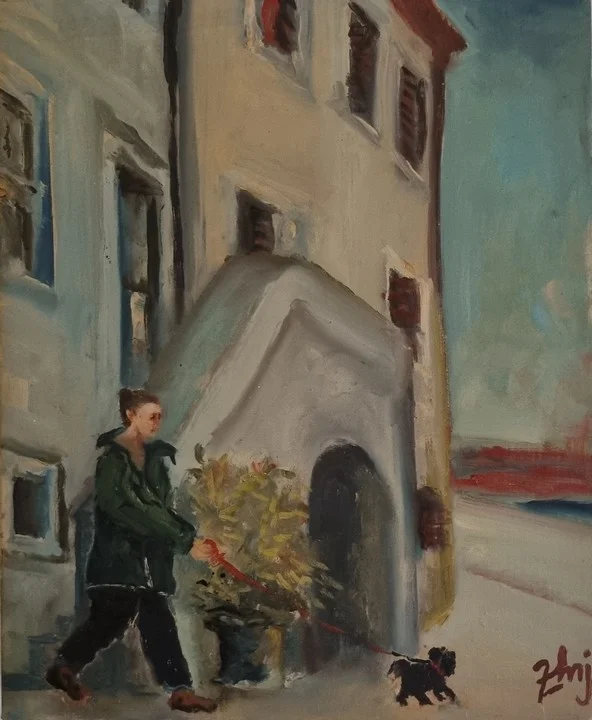
Zvonimir Smojver (early 2000s)
Marijana Popović is shown walking a small black dog on a leash. Behind her stands the artist's house, recognizable by its exterior staircase, terrace and characteristic openings. The work records an intimate scene of everyday life in Karlobag.
Source: Private collection of Ana and Marijana Popović.
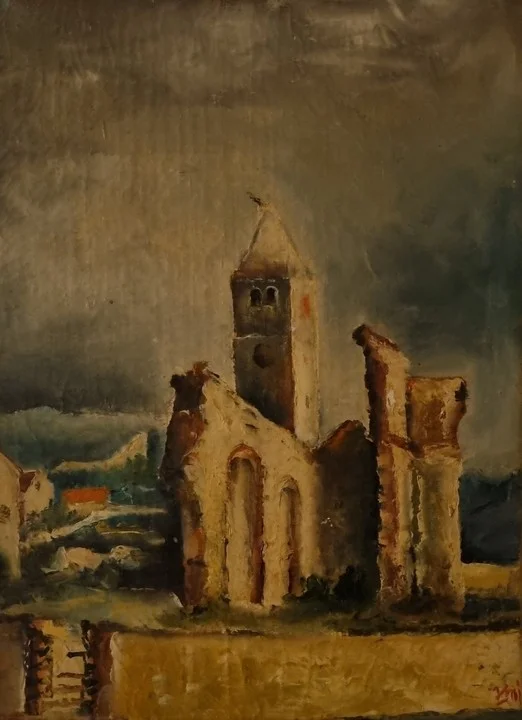
Zvonimir Smojver (early 2000s)
The ruins and solitary bell tower of the Church of St. Charles Borromeo are shown beneath a dark sky. The surviving stone walls and tower record the damaged state of this important Karlobag landmark, while the artist's signature appears in the lower right corner.
Source: Private collection of Ana and Marijana Popović.
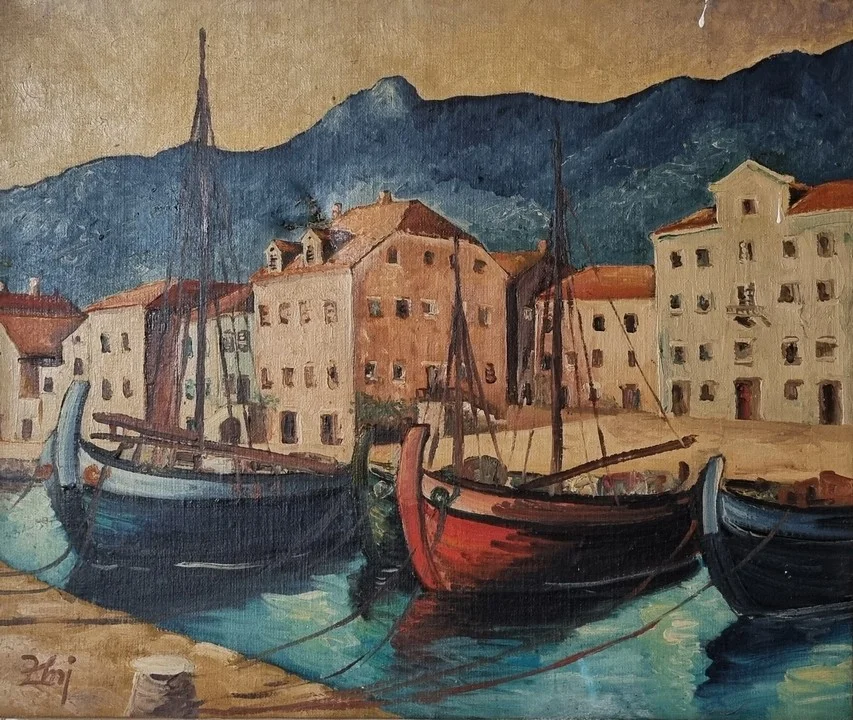
Zvonimir Smojver (early 2000s)
A view of Karlobag harbour with Karlić's braceras moored at the pier (mul). Traditional wooden vessels with high masts occupy the foreground, while coastal houses and the dark Velebit massif form the background. The painting records elements of Karlobag's former fishing and maritime life.
Source: Private collection of Ana and Marijana Popović.
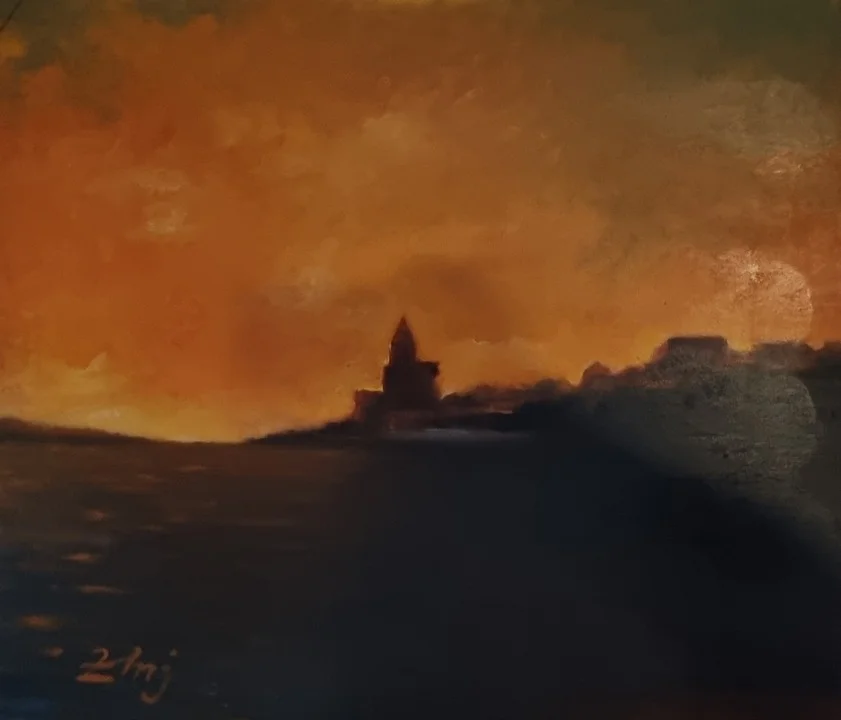
Zvonimir Smojver (early 2000s)
A view of Karlobag at twilight or dawn. The dark outline of the coast and the bell tower are silhouetted against a muted orange sky and calm sea, with the artist's signature in the lower left corner.
Source: Private collection of Ana and Marijana Popović.
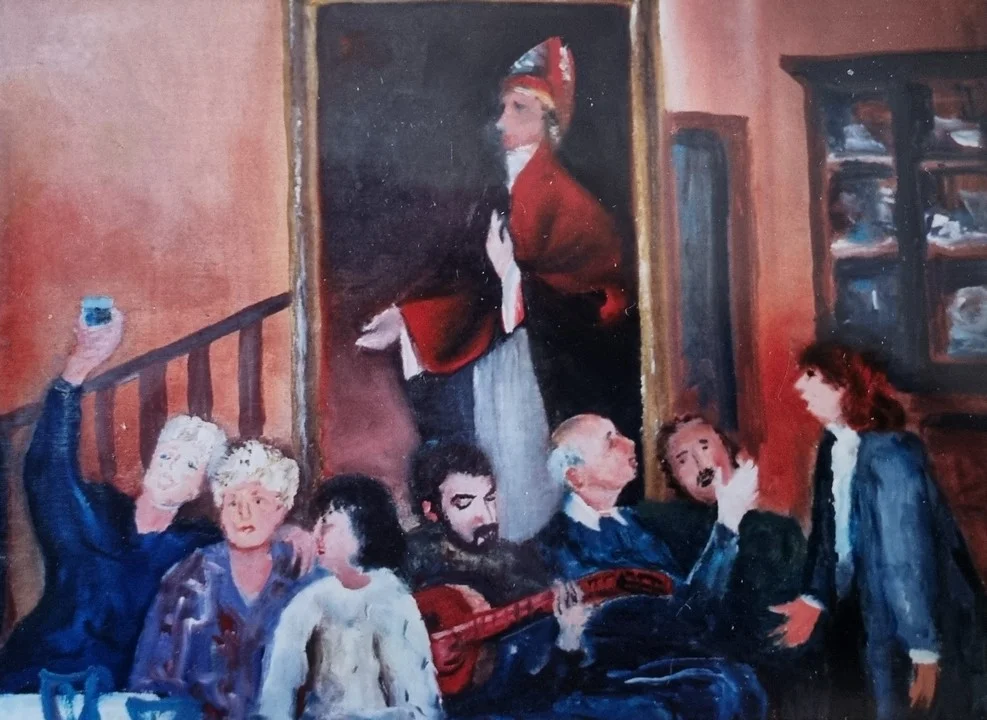
Zvonimir Smojver (early 2000s)
An indoor gathering with music and song, with one participant playing a guitar or another string instrument. A framed portrait dominates the centre of the background, while the composition records the atmosphere of a local social gathering.
Source: Private collection of Ana and Marijana Popović.
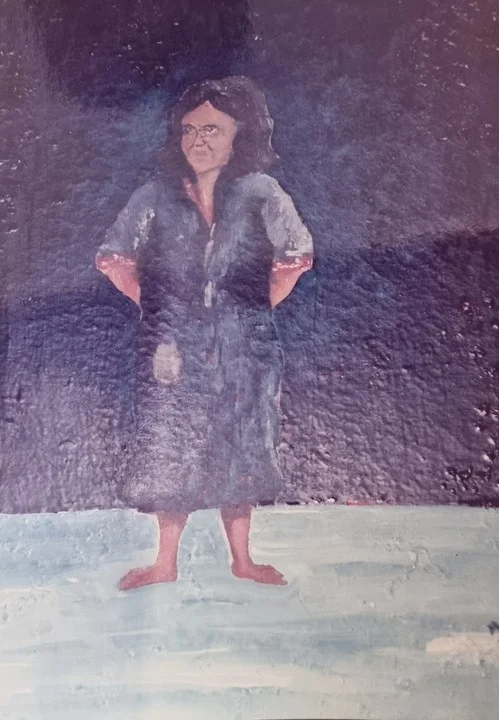
Zvonimir Smojver (early 2000s)
Portrait
Source: Private collection of Ana and Marijana Popović.
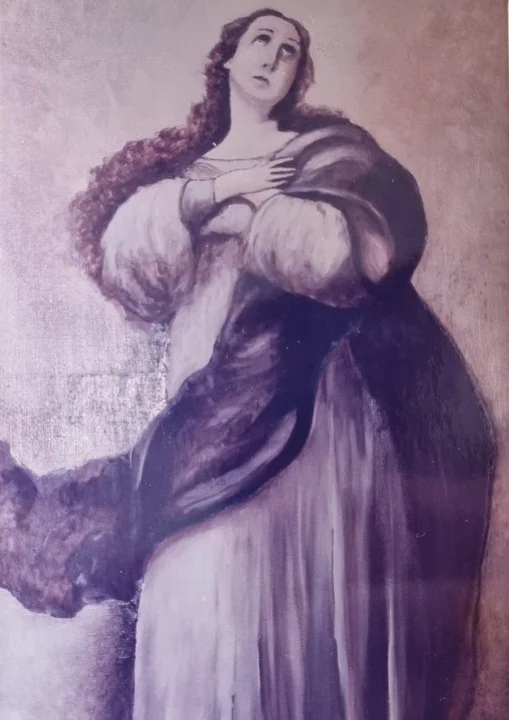
Zvonimir Smojver (early 2000s)
Portrait
Source: Private collection of Ana and Marijana Popović.
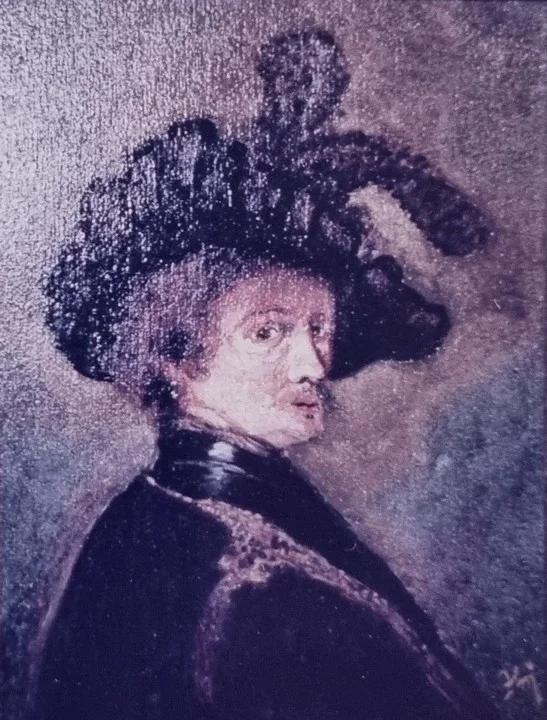
Zvonimir Smojver (early 2000s)
Portrait
Source: Private collection of Ana and Marijana Popović.
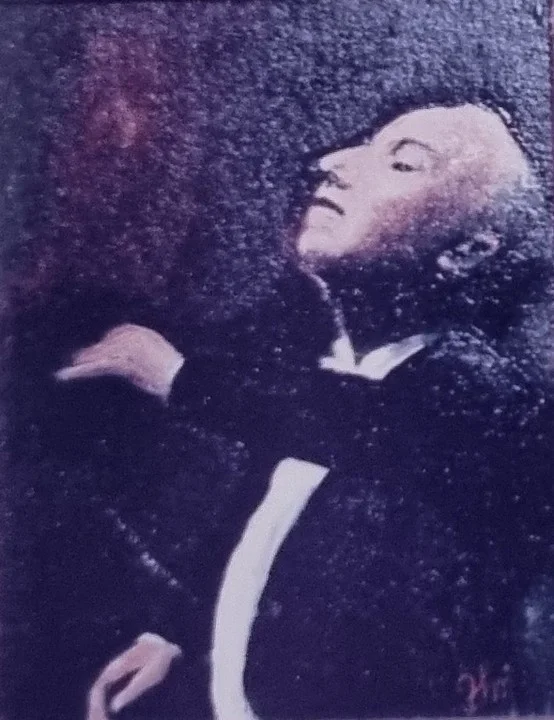
Zvonimir Smojver (early 2000s)
Portrait
Source: Private collection of Ana and Marijana Popović.
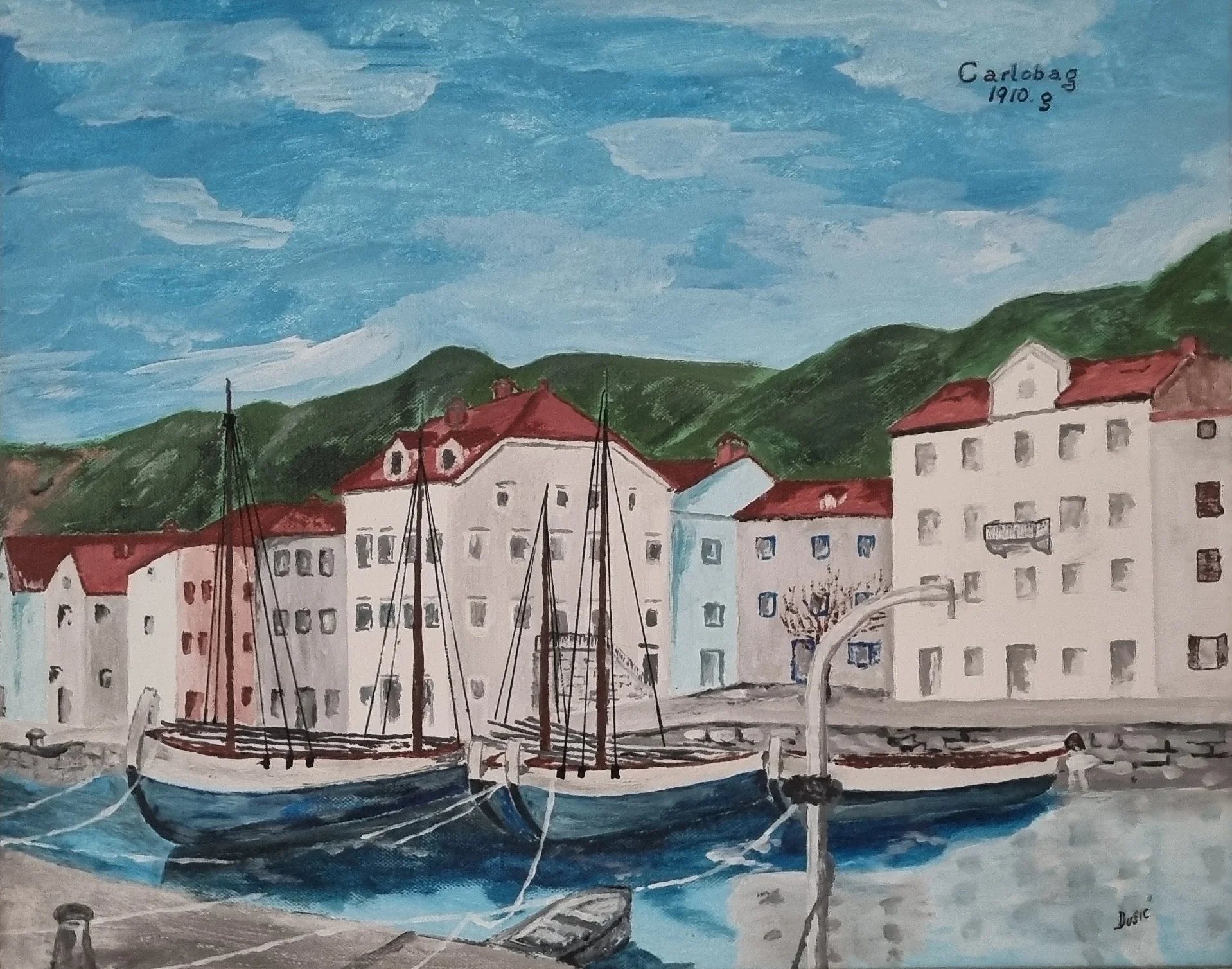
Duško Rešković – Old Karlobag with braceras (work from the early 2000s)
This painting depicts Karlobag in 1910, with traditional wooden sailing vessels (braceras) anchored along the coast, colourful houses with red roofs and Velebit in the background. A mooring bollard (bitva) is visible on the waterfront at lower left, while an iron lamp bracket appears in the foreground at right.
Source: Author's private collection.
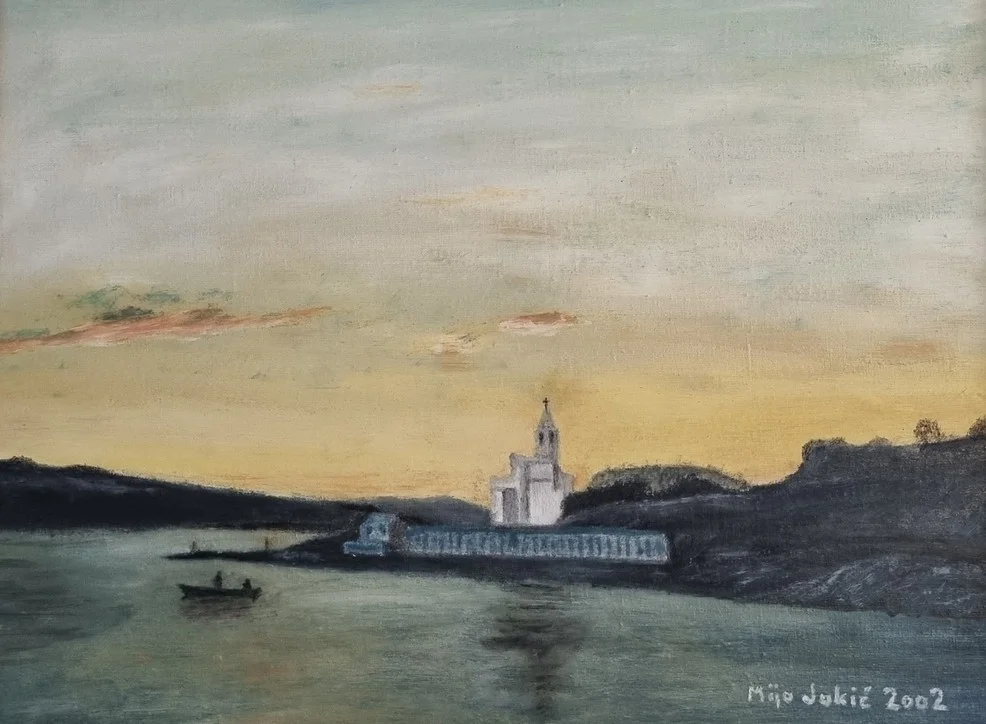
Mijo Jukić – Karlobag Town Beach (2002)
This painting depicts Karlobag's town beach at dusk. A small boat lies in the foreground, while the stone seawall follows the shoreline. In the background are the bell tower of the Church of St. Charles Borromeo and the remains of the former church, among the most recognizable landmarks of Karlobag's historic centre.
Source: Capuchin Monastery, Karlobag.
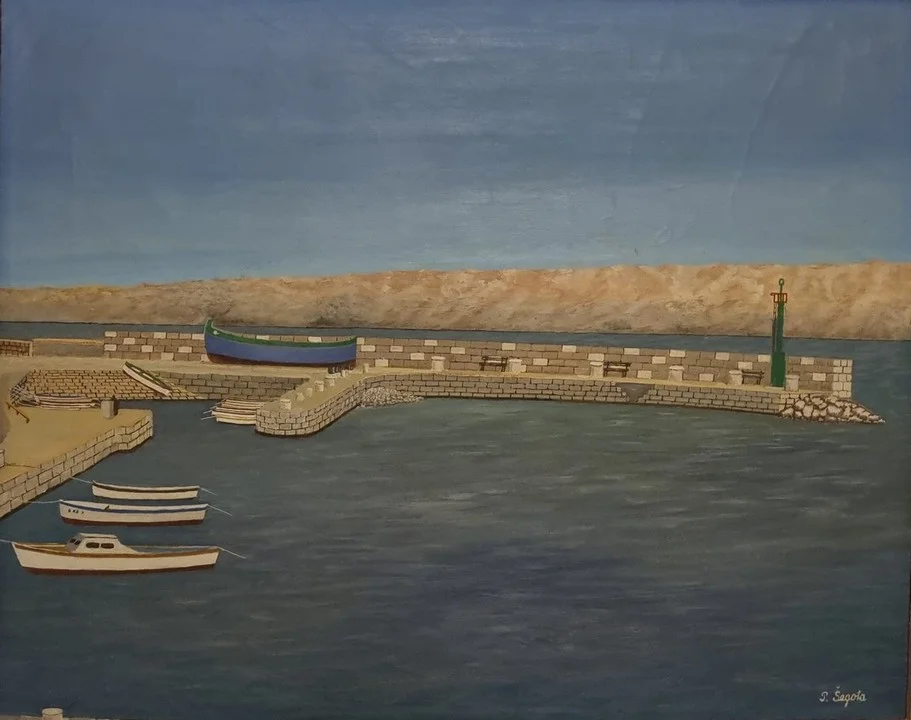
Petar Šegota – Karlobag Harbour (late 1980s)
This painting shows Karlobag Harbour from the inner side of the breakwater. Several small fishing boats are moored along the waterfront, while the stone pier and its steps occupy the centre of the composition. A traditional wooden boat rests on the breakwater, with the green harbour light at its far end. Across the Velebit Channel, the rocky coast of the Island of Pag forms the background.
Source: Private archive of Mirjana (Seka) and Mate Bačić.
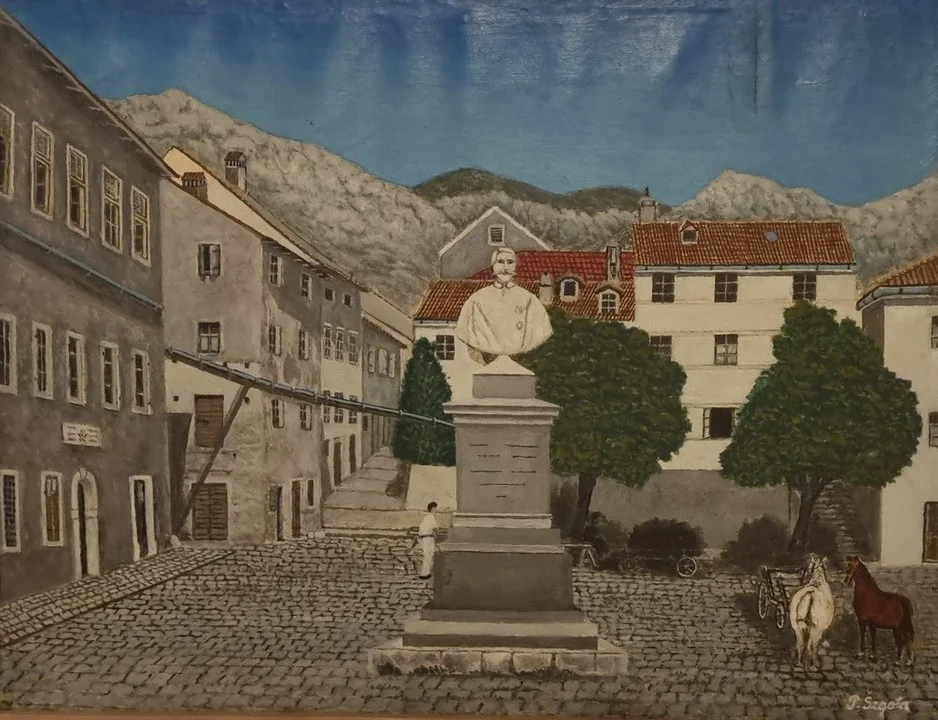
Petar Šegota – Monument to Anton Molinari in Karlobag's Main Square (late 1980s)
This painting reconstructs the former appearance of Karlobag's main square with the monument to General Anton Molinari at its centre. The bust, created by Croatian sculptor Ivan Rendić, stands on a tall stone pedestal. Historic houses, trees, townspeople and horses surround the monument, while the slopes of Velebit rise behind the town.
Source: Private archive of Mirjana (Seka) and Mate Bačić.
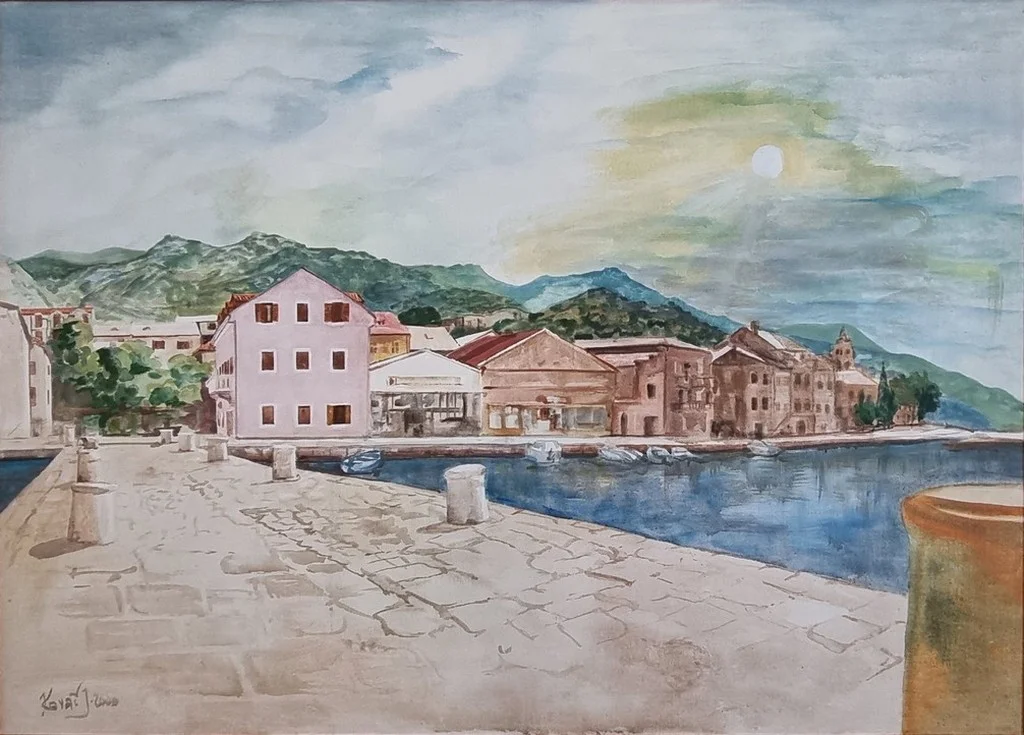
Josip Kovač – Karlobag Waterfront (2000)
The painting depicts Karlobag's waterfront and harbour with a view toward the town centre. In the foreground, the stone-paved waterfront extends along the shore with mooring bollards, while house façades and small boats line the calm sea. The slopes of Velebit rise in the background, and the subdued light and sun above the mountain landscape give the scene a peaceful atmosphere.
Source: Karlobag Municipality Archives.
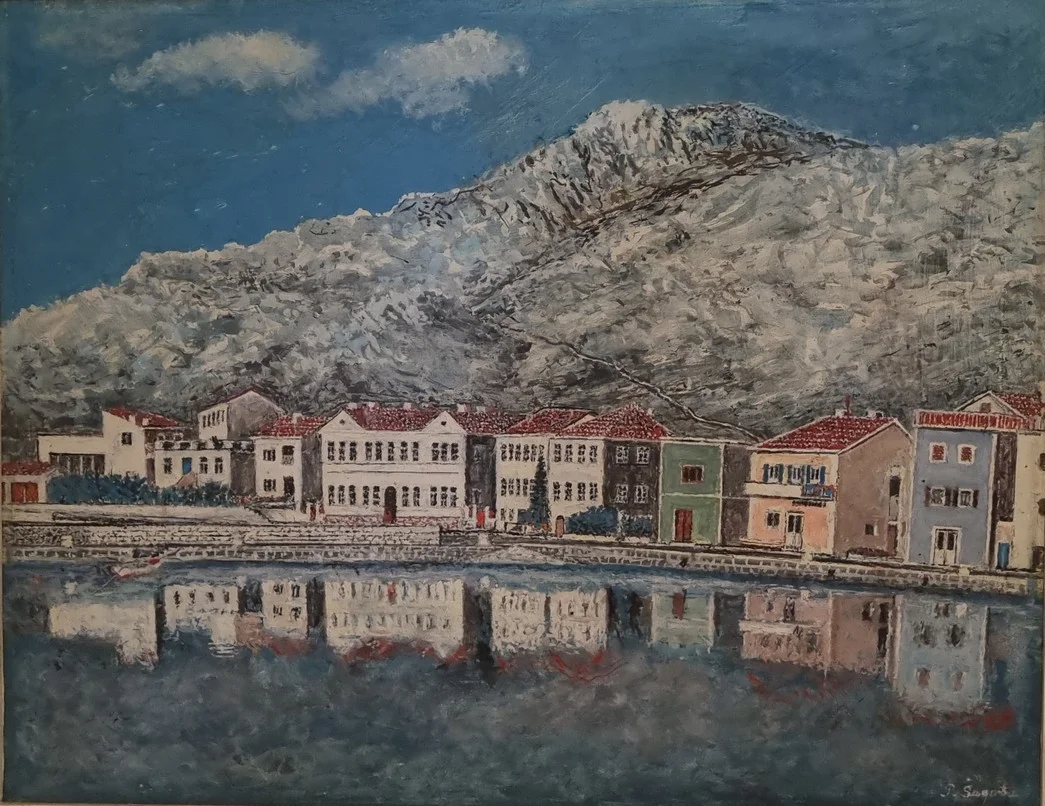
Petar Šegota – Karlobag Waterfront and Velebit (late 1980s)
The painting depicts a row of houses along Karlobag's waterfront, their façades reflected in the calm surface of the sea. Above the town, the steep and rocky slopes of Velebit dominate much of the composition, while the blue sky and clouds further emphasize the strong contrast between the sea, the settlement and the mountain. The scene captures one of Karlobag's characteristic views and its immediate connection with the Velebit landscape.
Source: Private archive of Mirjana (Seka) and Mate Bačić.