Our Lady of Sorrows
The painting, also known as Our Lady of Compassion dates from the 18th century. It is displayed on a wall altar on the first floor of the monastery and is among the finer surviving works in the Karlobag collection.


From missions across Velebit to three centuries of Capuchin life in Karlobag.
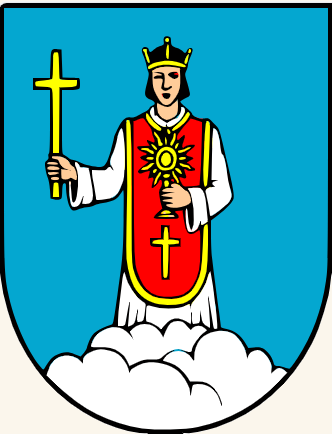
The arrival of the Capuchins in Karlobag was not an isolated event, but the outcome of prolonged warfare, displacement and resettlement across the region between the Adriatic, Velebit, Lika and Krbava.
During the Middle Ages, Karlobag—then known as Bag—was an important coastal settlement and harbour connected with the Lika hinterland. Its development was interrupted by Ottoman incursions. In the attack of 1525 the town was burned, around three hundred inhabitants were taken into captivity, and much of the Velebit coastal region gradually became depopulated. During the 16th and 17th centuries, former settlements, churches and roads suffered destruction and neglect, and the earlier way of life was almost completely disrupted.
By the late 17th century, the military situation had changed. In the war waged by the Habsburg Monarchy and its allies against the Ottoman Empire, Lika and Krbava were liberated in 1689. The end of Ottoman rule was followed by resettlement and the establishment of new military, administrative and ecclesiastical structures. Across the devastated territory, settlements and churches had to be rebuilt, parishes founded, newcomers instructed and regular religious life restored.
One of the leading figures in this early renewal was Marko Mesić, parish priest of Brinje and military chaplain, later appointed Archdeacon of Lika. Having taken part in the fighting and served as a missionary in the newly liberated territories, he knew conditions in Lika at first hand. As early as 1689, he proposed that the Capuchin Father Marin of Senj, then associated with the Capuchin monastery in Rijeka, join him in pastoral work.
The Bishop of Senj and Modruš Sebastijan Glavinić appointed Father Marin missionary to Lika and Krbava in 1695, an appointment subsequently confirmed by higher ecclesiastical and imperial authorities. Father Marin travelled through remote settlements, preaching and instructing the population and establishing small Capuchin residences in Ribnik and Perušić.
These residences were modest, while contact with the mother house in Rijeka was made difficult by the great distance, poor roads and the crossing of Velebit. The need therefore arose for a permanent Capuchin monastery closer to the mission territory.
After several possibilities were considered, Karlobag was chosen—a town accessible from the sea and situated on the natural route towards Lika. That decision would bind together the histories of Marko Mesić, Father Marin of Senj, the Capuchin Order and Karlobag for the next three centuries.
Sources: Mile Bogović, Crkva u velebitskom Podgorju u prošlosti i sadašnjosti, 2018, especially pp. 95–101; Josipa Alviž, Slikarstvo XVII. i XVIII. stoljeća u kapucinskim crkvama i samostanima u Hrvatskoj, 2015, especially pp. 26–28 and 74–77.
On the Feast of St Anne, 26 July 1710, Marko Mesić, Archdeacon of Lika, Marko Mesić laid and blessed the foundation stone of the Capuchin monastery and St Joseph’s Church in Karlobag.
Construction was supervised by Father Marin of Senj, while most of the costs were borne by the imperial authorities of the Habsburg Monarchy. The monastery complex was completed in 1713, and the Capuchins took possession of it on 26 July, once again on the Feast of St Anne.
The monastery was built in accordance with the principles of the Capuchin Order and designed for a community of twelve friars. The complex included a simple single-nave church dedicated to St Joseph.
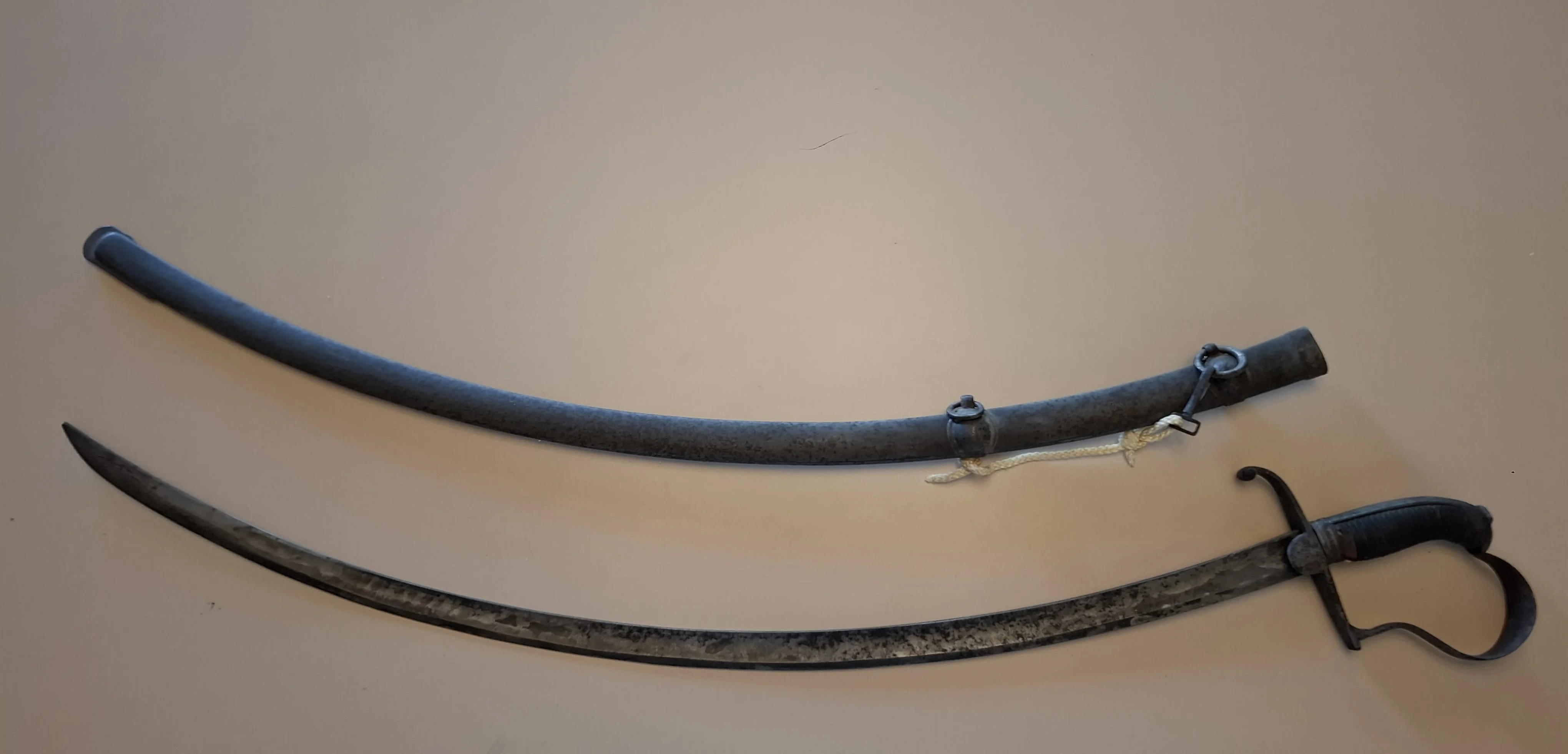
Marko Mesić died in 1713 and, according to historical sources, was buried in the church whose foundation stone he had laid. The monastery also preserves a sabre attributed to him in historical records and monastery tradition. It is one of the most important material traces of a period in which the roles of priest, soldier and missionary were closely intertwined in Lika and the Military Frontier.
St Joseph’s Church was consecrated on 27 May 1714 by Adam Ratkaj, Bishop of Senj and Modruš. From then on, the monastery became a permanent Capuchin centre, a place of prayer and a base from which the friars continued their pastoral work in Karlobag, Lika and Krbava.
For more than three centuries, the Capuchins preached, taught, conducted parish missions, cared for the faithful and safeguarded valuable books, documents and works of art. Their story is therefore not simply the history of a religious order, but an important chapter in the history of Karlobag and the wider Velebit coastal region.
With the monastery completed and St Joseph’s Church consecrated, Karlobag became a permanent centre of Capuchin activity along the Velebit coast and throughout Lika and Krbava.
The Capuchins of Karlobag did not confine their work to the monastery walls. They travelled to remote and difficult-to-reach settlements, preaching, hearing confessions, instructing local communities and helping to restore regular religious life. Their work was especially important in areas where there were still too few parish priests and no fully established parish network.
To support their work in the Lika hinterland, in 1721, a Capuchin hospice was established in Kaniža near Gospić. It was intended as a permanent residence for four friars and was administratively linked to the monastery in Karlobag. From there, the Capuchins could more easily reach settlements in Lika and Krbava without having to cross Velebit on every journey.
Alongside preaching and pastoral work, the Capuchins also developed educational activities. Over time, the monastery built up a library containing works on theology, philosophy, history, law, the natural sciences and medicine. The surviving collection shows that the monastery was not only a place of prayer, but also one of the few centres of learning and literacy in Karlobag and Lika at the time.
This way of life came under serious threat during the ecclesiastical reforms of Emperor Joseph II. In the late 18th century, monasteries considered by the state to lack a sufficiently clear pastoral, educational or charitable role were suppressed. The Capuchin monastery in Karlobag was also marked for closure as part of these reforms.
The people of Karlobag opposed the suppression. In their petition they stressed the importance of the Capuchins to the town’s religious life, declaring that their departure would feel as though God Himself had abandoned them. In the end, the closure was not carried out and the monastery continued its work.
The hospice in Kaniža met a different fate. The military authorities closed it in 1789, after which it gradually fell into ruin. Even in the mid-20th century, remains of its walls could still be seen at Tratina in Gospić. The monastery in Karlobag thus remained the only permanent Capuchin centre in Lika and along the Velebit coast.
Although it escaped closure, by the late 18th century the monastery complex was in poor structural condition. After several decades without major repairs, it became clear that its continued survival required extensive work on both the monastery and St Joseph’s Church.
Sources: Mile Bogović, Crkva u velebitskom Podgorju u prošlosti i sadašnjosti, 2018, especially pp. 97–101; Josipa Alviž, Slikarstvo XVII. i XVIII. stoljeća u kapucinskim crkvama i samostanima u Hrvatskoj, 2015.
By the late 18th century, the Capuchin monastery and St Joseph’s Church were in poor structural condition, and their future had once again become uncertain.
According to the surviving documents, no major comprehensive building campaign had been undertaken on the monastery complex since its construction in the early 18th century. Exposure to the bora wind, moisture and sea salt gradually damaged the roof, walls, windows, doors and other parts of the buildings.
For this reason, in 1795 a plan was prepared for a thorough restoration of the monastery and church. A detailed drawing of the complex was produced, showing the church, choir, sacristy, oratories, monastic rooms, refectory, cistern, pharmacy, gardens and service areas.
The plan offers a rare glimpse into the everyday life of the monastery at the time. On the ground floor, alongside the kitchen, guest room, storerooms, refectory, sacristy and monastery pharmacy, there were also three rooms for accommodating the poor. On the upper floor were the friars’ cells, the provincial superior’s room, a guest room and a space used as a chapel and library.
The planned works included repairs to the roofs of the church, sacristy and monastery, reinforcement of unstable walls with iron ties, renewal of the plasterwork, whitewashing of the interiors, and repairs to floors, doors and windows. In the church, the plan called for three new confessionals, repairs to an older confessional, restoration of three altars and the sacristy floor, the high altar and the altar of Our Lady of Mariazell.
The estimate for the planned works was prepared in Karlobag on 7 March 1795. The masonry and stonework were estimated by Vincenz Galliazia, the metalwork by Domenico Marcon, the glazing by Giorgio Miletich, and the carpentry by Johann Mayerhoffer. Galliazia and Marcon, who were unable to write, authenticated their estimates with the sign of the cross.
The total estimated cost of the works amounted to 3,205 florins and 14 kreuzer. The surviving plan and estimates are now valuable sources for studying the appearance of the monastery, the arrangement of its rooms and the way building works were planned in the late 18th century.
However, the available sources do not confirm that the planned restoration was actually carried out. The following year, an even more serious threat emerged. By an imperial decree of 24 June 1796 the monastery in Karlobag was to be sold and the friars transferred to the former Capuchin hospice in Kaniža near Gospić.
The Capuchins were required to comply with the decision, but requested that the hospice building and its chapel be repaired and enlarged before their relocation. Their interests before the authorities were represented by Ivan Krstitelj Ježić, Bishop of Senj and Modruš.
The people of Karlobag opposed the departure of the Capuchins. In their petition, they stressed the monastery’s importance to the religious life of the town and declared that its suppression would feel as though God Himself had abandoned them. In the end, the order to sell the monastery and relocate the friars was not carried out.
As a result, the Capuchins remained in Karlobag and St Joseph’s Monastery continued to function. Although it is not known to what extent the planned works of 1795 were completed, the surviving documents bear witness to the genuine need for restoration and to efforts to preserve the complex.
Sources: Ivy Lentić-Kugli, Obnova kapucinskog samostana i crkve sv. Josipa u Karlobagu potkraj 18. stoljeća, Senjski zbornik 15, 1988, pp. 121–126; Mile Bogović, Crkva u velebitskom Podgorju u prošlosti i sadašnjosti, 2018, especially pp. 99–101.
Throughout the 19th century, diocesan parish priests serving St Charles Borromeo’s Church and the Capuchins of St Joseph’s monastery and church worked side by side in Karlobag.
The Capuchins did not yet formally administer the parish of Karlobag, but they played an active part in the religious life of the town. They preached, heard confessions, led devotions, assisted parish priests and, when needed, travelled to nearby settlements along the Velebit coast.
An important figure in the religious and cultural life of Karlobag was Šime Starčević , who served as parish priest of Karlobag from 1814 until his death in 1859. In addition to his priestly ministry, Starčević became known as a linguist and author of Croatian grammars.
When he became seriously ill in 1841 and could no longer carry out all of his parish duties independently, Starčević proposed that administration of the parish be entrusted to the Capuchins. The proposal was not accepted at the time. After a partial recovery, he changed his position and opposed efforts to place the parish of Karlobag under Capuchin administration.
The question of parish administration also divided the local population. Some supported the long-serving parish priest Starčević, while others believed the parish should be entrusted to the Capuchins, who had an established religious community in Karlobag and centuries of pastoral experience.
Despite occasional disagreements, the monastery remained an important part of Karlobag throughout the century. The Capuchins continued their religious, pastoral and educational work, while safeguarding the library, archive, church furnishings and other valuable objects connected with the history of the monastery and town.
After Starčević’s death, the parish continued to be administered by diocesan priests. The last of them was Matija Grünhut, who took over the administration of the parish in 1901 and was appointed parish priest in 1907. He died in Karlobag in January 1911.
After his death, an important change took place: responsibility for the parish of Karlobag was entrusted to the Capuchins. From 1911 the parish office has been housed in the Capuchin monastery, with the friars assuming permanent responsibility, alongside their monastic duties, for the pastoral life of the parish.
Sources: Mile Bogović, Crkva u velebitskom Podgorju u prošlosti i sadašnjosti, 2018, especially pp. 101–112; Mile Bogović, Župnička djelatnost Šime Starčevića, Senjski zbornik 40, 2013, pp. 509–522.
From the late 17th century the parish of Karlobag was administered by diocesan priests. In 1911, pastoral responsibility passed to the Capuchin Franciscans of St Joseph’s Monastery.
✠Diocesan Priests
Parish Priests and Administrators, 1691–1911
Šimun Šimunović 1691–1710Anto Hreljanović Senjanin 1710–1721Juraj Ivić 1721–1723Andrija Lollekov 1723–1757Josip Suić 1757–1773Ivan Anton Ivanković 1773–1813Šime Starčević 1814.–20 Aug 1859Josip Demeli 20 Aug 1859–14 Apr 1872Mihovil Barilli 14 Apr 1872–1889.Lovro Vidas 1889–1891Nikola Martinčić 1891–1901Matija Grünhut 1901.–26 Jan 19111911. The Capuchin Franciscans Assume Responsibility for the Parish✠Capuchin Franciscans
Parish Priests and Administrators from 1911 to the Present
Fr. Josip Kolačko 30 Jan 1911–10 Jul 1918Fr. Ante Hvala 10 Jul 1918–2 Aug 1920Fr. Mihovil Hlača 2 Aug 1920–1 Jan 1922Fr. Karlo Rauch 1 Jan 1922–2 Jan 1925Fr. Nikola Sakač 2 Jan 1925–21 Jul 1927Fr. Karlo Rauch 21 Jul 1927–21 Jan 1928Fr. Josip Kolačko 21 Jan 1928–10 Dec 1938Fr. Bogomir Milinović Zvonko 10 Dec 1938–16 Nov 1939Fr. Gustav Mavrić 16 Nov 1939–3 Mar 1941Fr. Vendelin Stipčević (Ive) 5 Mar 1941–5 Jul 1941Fr. Danijel Koren 5 Aug 1941–29 Jan 1949Fr. Stanko Pečovnik 29 Jan 1949–16 Sep 1951Fr. Emilijan Zavratnik 16 Sep 1951–26 Oct 1953Fr. Ambrozije Habek (Gabrijel) 26 Oct 1953–18 Aug 1958Fr. Modesto Borak (Josip) 18 Aug 1958–9 Aug 1961Fr. Ambrozije Habek 9 Aug 1961–4 Aug 1964Fr. Modesto Borak (Josip) 4 Aug 1964–27 Aug 1970Fr. Zlatko Šafarić 27 Aug 1970–29 Aug 1973Fr. Ilija Borak 29 Aug 1973–11 Sep 1979Fr. Krsto Hrženjak 25 Oct 1979–27 Sep 1994Fr. Davor Burić 27 Sep 1994–30 May 1996Fr. Ante Logara 30 May 1996–29 Sep 2005Fr. Stjepan Bergovec 29 Sep 2005–26 Aug 2011Fr. Josip Grivić 26 Aug 2011–2021.Fr. Drago Vrhovac 2021–2024Fr. Mirko Varga Ljubić 2024.Fr. Ivan Perić 2024–presentSource: historical list of parish priests held at the Capuchin monastery in Karlobag, supplemented with information up to the present.
Photograph of the original list: Tomislav Potočnjak.
When the Capuchins assumed responsibility for the parish of Karlobag in 1911, St Joseph’s Monastery also became the seat of the parish office.
This marked the beginning of a new chapter in the monastery’s history. The Capuchins were no longer simply a religious community assisting with pastoral work; they assumed permanent responsibility for the parish, the keeping of registers and other parish records, worship, and the pastoral care of the people of Karlobag.
The most important administrative and parish registers were transferred to the monastery from the old parish office. However, part of the older parish archive has not survived. Valuable correspondence exchanged by Karlobag’s parish priests with ecclesiastical, military and state institutions during the 18th and 19th centuries has also been lost.
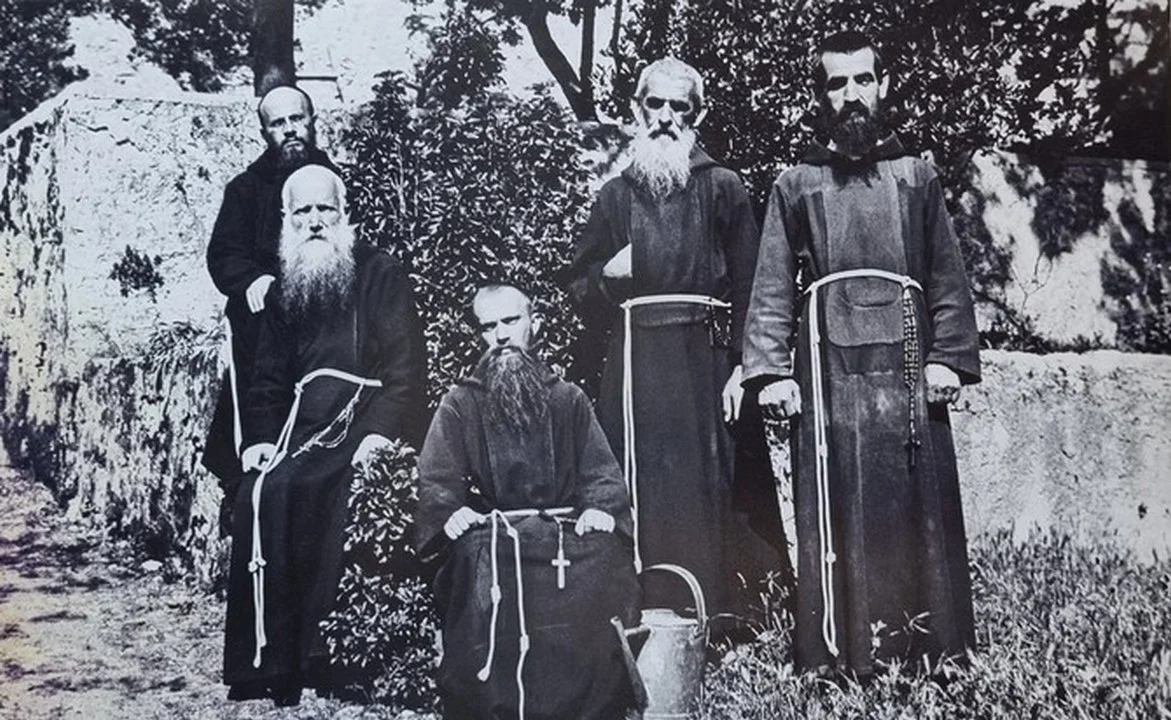
The photograph of the Capuchin community from 1923 offers a record of monastic life in the years between the two World Wars. The friars prayed and lived as a community, administered the parish, maintained the church and monastery, and carried out pastoral work among the people of Karlobag and the surrounding settlements.
A major change came during the Second World War. In an air raid, the parish church of St Charles Borromeo was severely damaged. After its destruction, the monastery Church of St Joseph assumed the role of the main church serving the parish of Karlobag.
The remains of St Charles Borromeo’s Church were not rebuilt after the war. In 1957 and 1958, most of the surviving walls were removed, while the bell tower and part of one wall were preserved as a visible reminder of the former parish church.
Since then, St Joseph’s Church has served as both the monastery and parish church. It hosts regular Masses, baptisms, weddings, funerals, feast-day celebrations and other parish devotions.
The Capuchins of Karlobag also continued to provide pastoral care for neighbouring parishes. From the monastery they travelled to Cesarica, Prizna, Lukovo Šugarje and other settlements along the Velebit coast, continuing the centuries-old tradition of itinerant Capuchin missionaries.
Sources: Mile Bogović, Crkva u velebitskom Podgorju u prošlosti i sadašnjosti, 2018, especially pp. 101–112; websites of the parish and the Capuchin monastery in Karlobag.
In the late 20th and early 21st centuries, St Joseph’s Church and the Capuchin monastery underwent a long programme of restoration that helped preserve this important monument of Karlobag’s religious and cultural heritage.
One documented intervention was carried out in 1998. At that time, the historic painting of St Joseph, which in 1912 had been replaced by a statue acquired in Austria, was returned to the high altar. The statue of St Joseph was moved to a niche behind the entrance of the church.
At roughly the same time, the monastery’s important collection of paintings was also restored. Conservation and restoration work on part of the surviving paintings was carried out from 1997 to 1999. This work helped preserve works of art that bear witness to centuries of Capuchin presence in Karlobag.
The restoration was not carried out as a single campaign. A report by the Catholic Information Agency dated 1 June 2004 confirms that building workers were still engaged in the restoration of the Capuchin monastery at that time. The works took place during the ministry of Fr. Ante Logara, who made an important contribution to the restoration of Karlobag’s religious heritage and that of the surrounding area.
The available evidence therefore points to a long-term restoration process carried out in several stages from the late 1990s into the early 2000s. The exact scope of the works on the church, monastery, access route and surrounding area still remains to be established through study of the monastery chronicle for the period from 1984 to 2003 and the surviving architectural and conservation documentation.
Sources: Mile Bogović, Crkva u velebitskom Podgorju u prošlosti, 2018, p. 98, note 213; Josipa Alviž, Slikarstvo XVII. i XVIII. stoljeća u kapucinskim crkvama i samostanima u Hrvatskoj, 2015; report by the Catholic Information Agency dated 1 June 2004.
Behind the restrained exterior of the church and monastery lies an important collection of sacred paintings dating from the 17th to the 19th century. For generations these works formed part of worship, prayer and the daily life of the religious community; today they are an important part of Karlobag’s cultural heritage.
St Joseph’s Church and the Capuchin monastery were designed in accordance with the architectural principles of the Capuchin Order. The simplicity of the buildings reflected the monastic way of life as well as the distinctive natural conditions of Karlobag, especially the powerful bora wind.
The church occupies the northern side of the complex, while the eastern, southern and western monastery wings together enclose a square inner courtyard with a cistern for collecting water. The raised northern wall also served the practical purpose of protecting the monastery from the force of the bora.
The exterior of the church is restrained, with no elaborate architectural decoration. The interior consists of an elongated single-nave space, separated by a high screen from the friars’ choir reserved for the Capuchin community.
At the consecration on 27 May 1714 the church, the high altar, the side altar of the Blessed Virgin Mary and the chapel dedicated to St Francis, St Anthony and St Felix were consecrated.
The parish chronicle of 1852 records three altars. A later arrangement lists the high altar of St Joseph, the altar of St John of Nepomuk, the altar of the Blessed Virgin Mary and the altar of St Anthony of Padua in the side chapel.
The church interior changed over the centuries. Some paintings were moved, altars restored, and part of the earliest furnishings was lost. The present appearance is therefore the result of several phases of construction, furnishing and restoration.
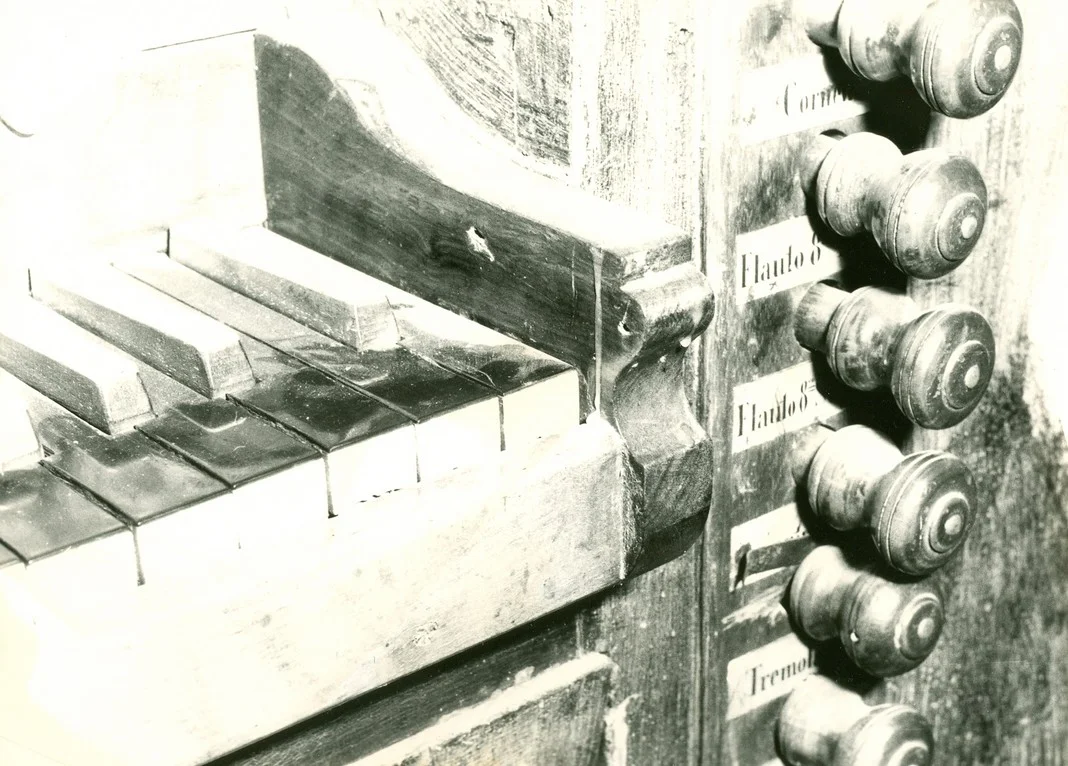
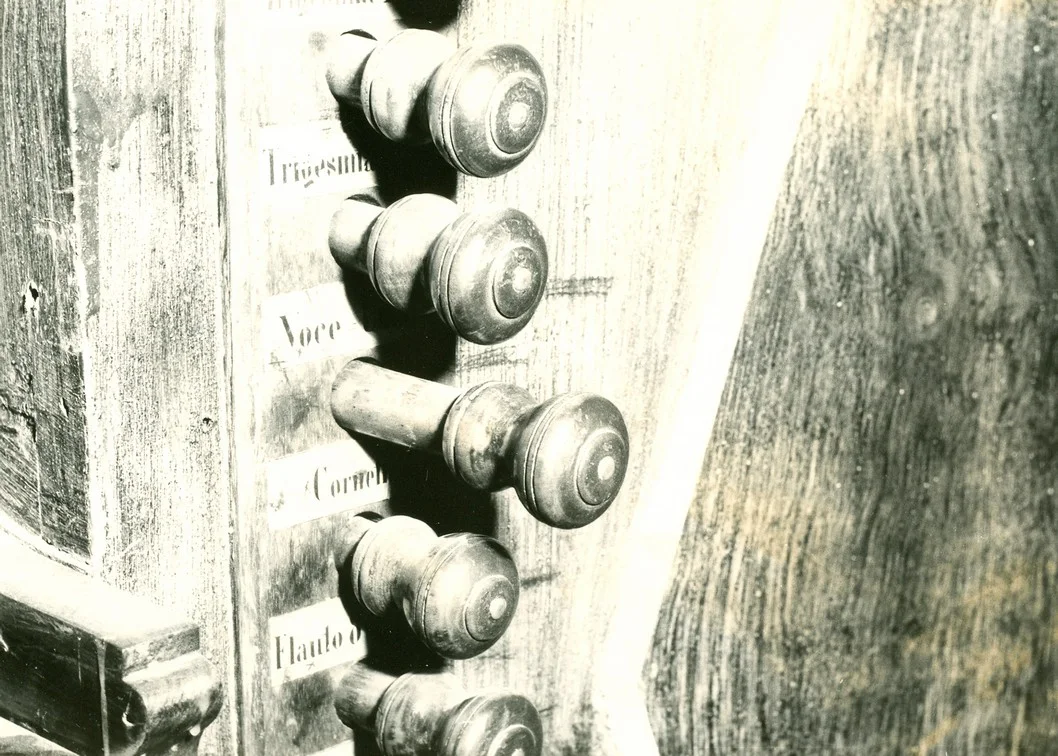
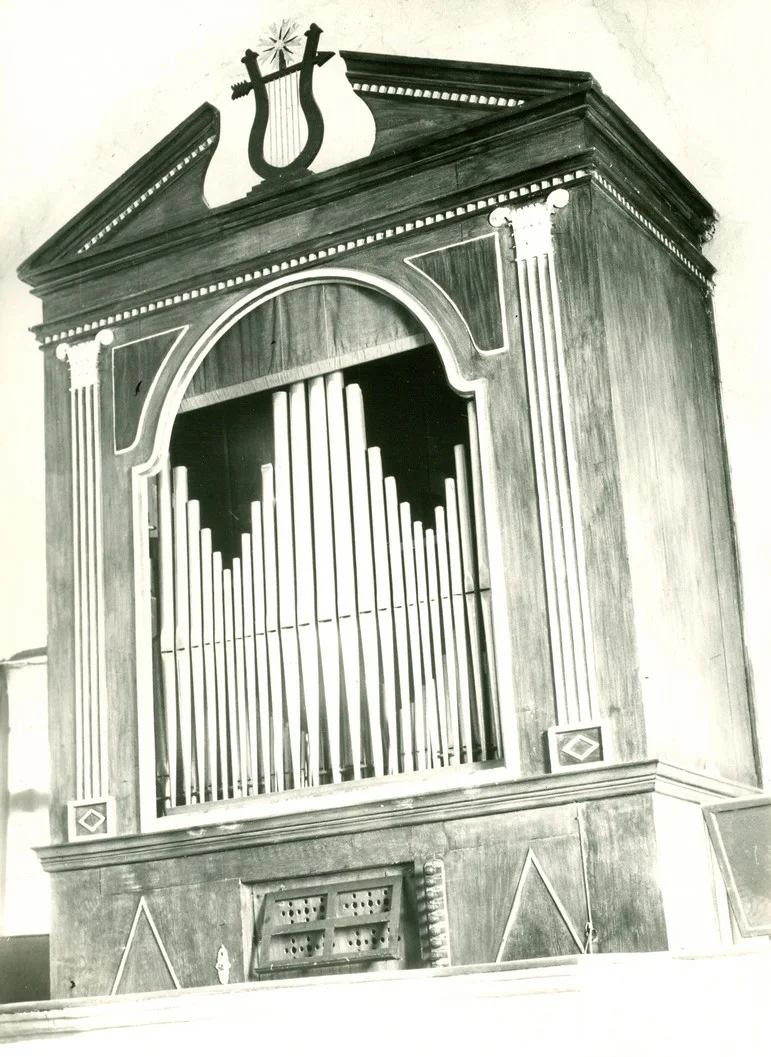
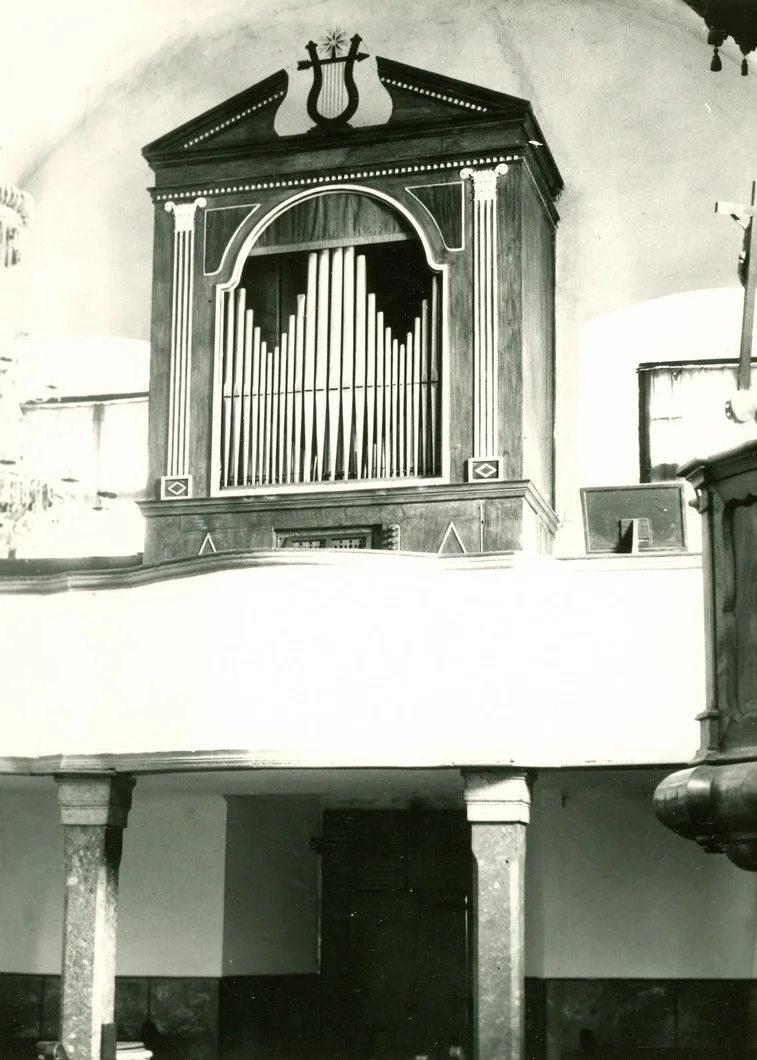
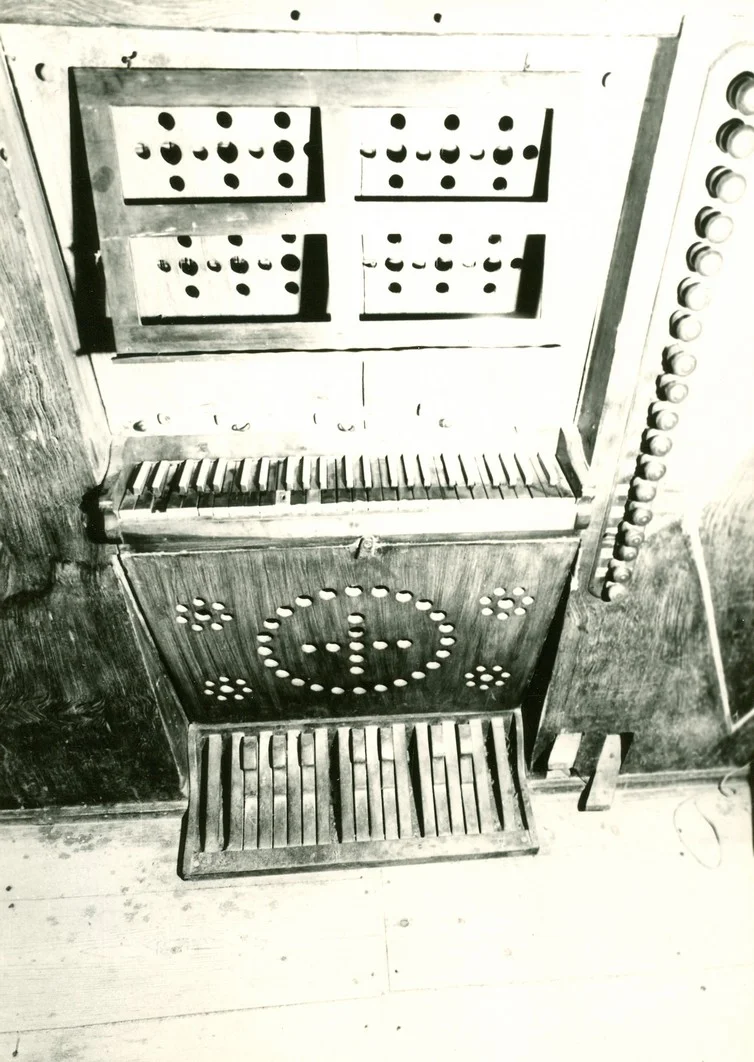
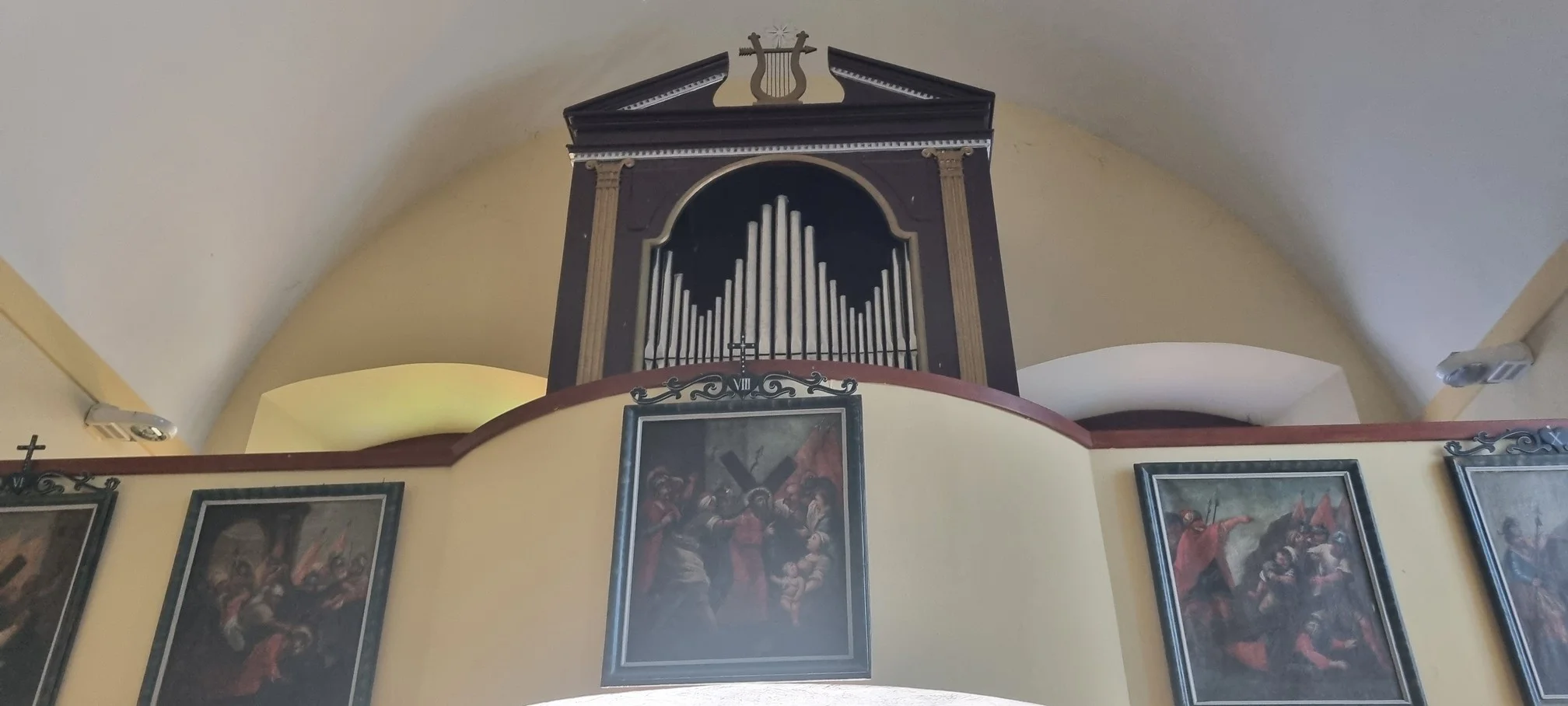
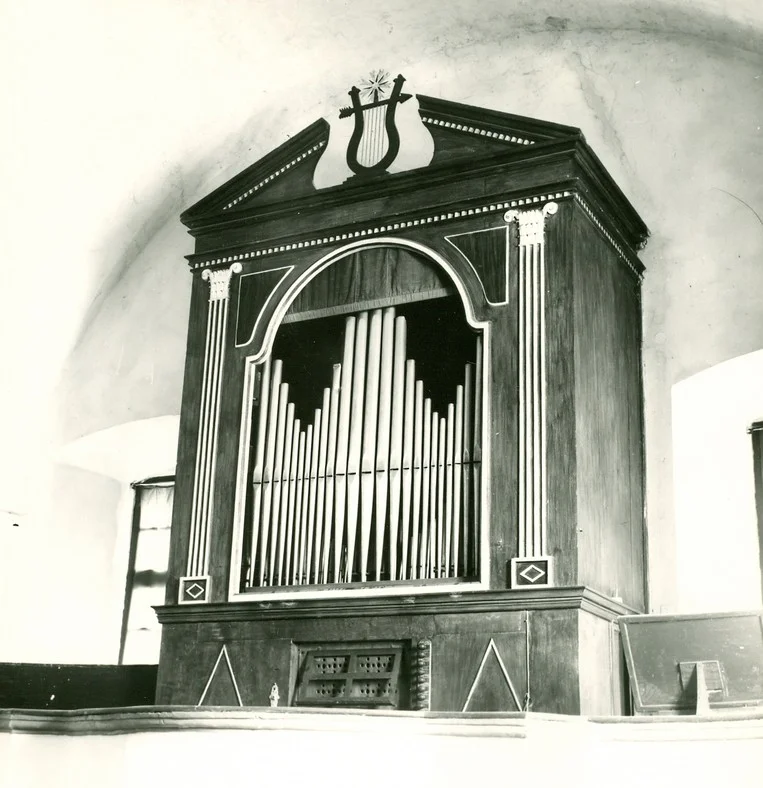
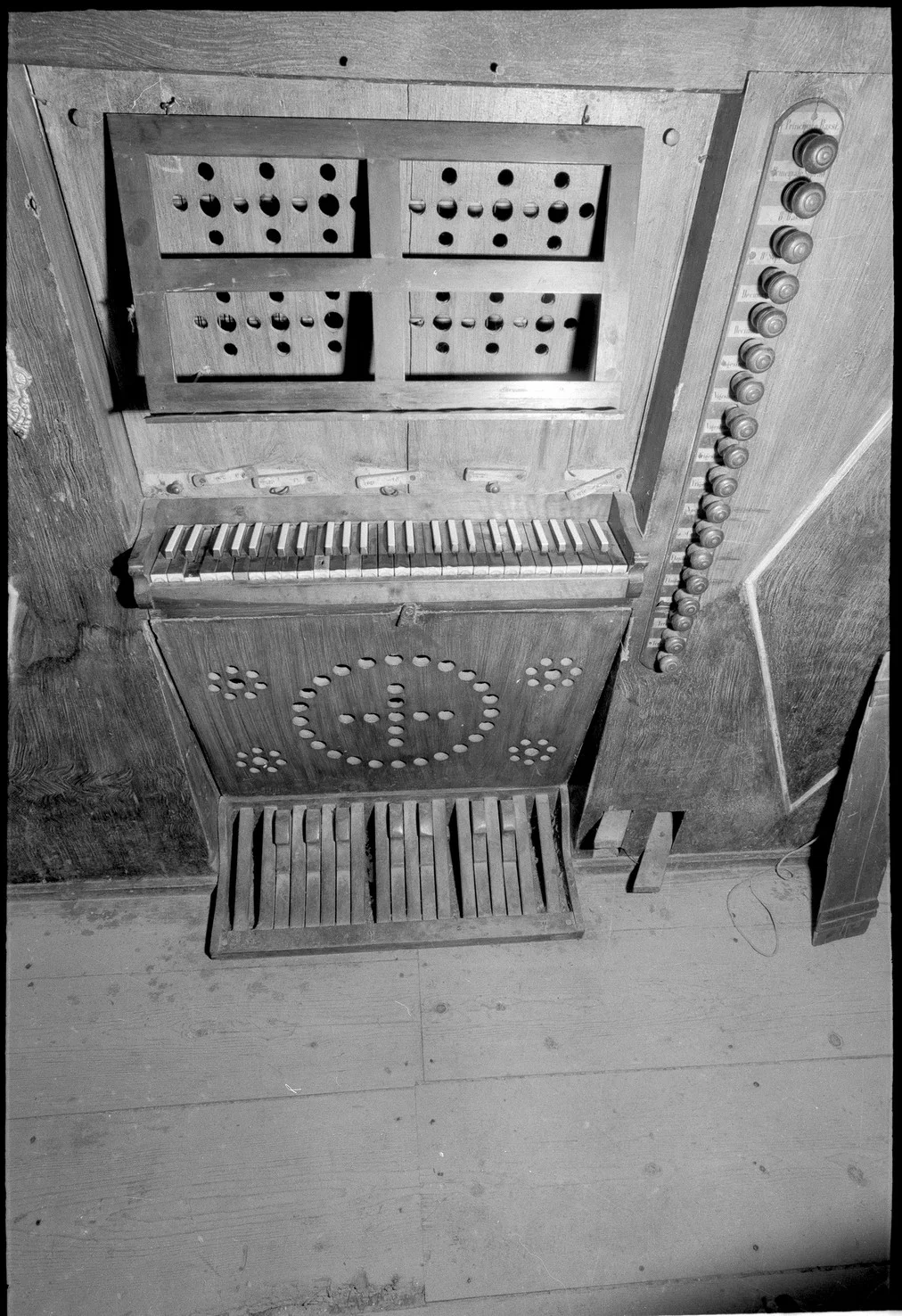
The choir loft of St Joseph’s Church preserves a historic organ of the Italian-Dalmatian type, built by an unknown maker around the mid-19th century. The instrument has a mechanical action, one manual and a pedalboard, and today represents an important part of Karlobag’s musical and sacral heritage.
The organ case has a closed cubic form and stands on a high base with a broad opening for the pipes. Above the straight entablature rises a broken pediment containing a large decorative lyre. The prospect is framed by two narrow fluted pilasters, while the contrast between brown and white elements gives the case its distinctive appearance. The organ is protected as an individually protected movable cultural property of the Republic of Croatia under registration number Z-4223.
Source: Private Archive of Tomislav Potočnjak.
Data source: BUS.hr – Cultural Heritage of the Municipality of Karlobag. Historic photographs: Ministry of Culture and Media of the Republic of Croatia.
Source: Private Archive of Tomislav Potočnjak.
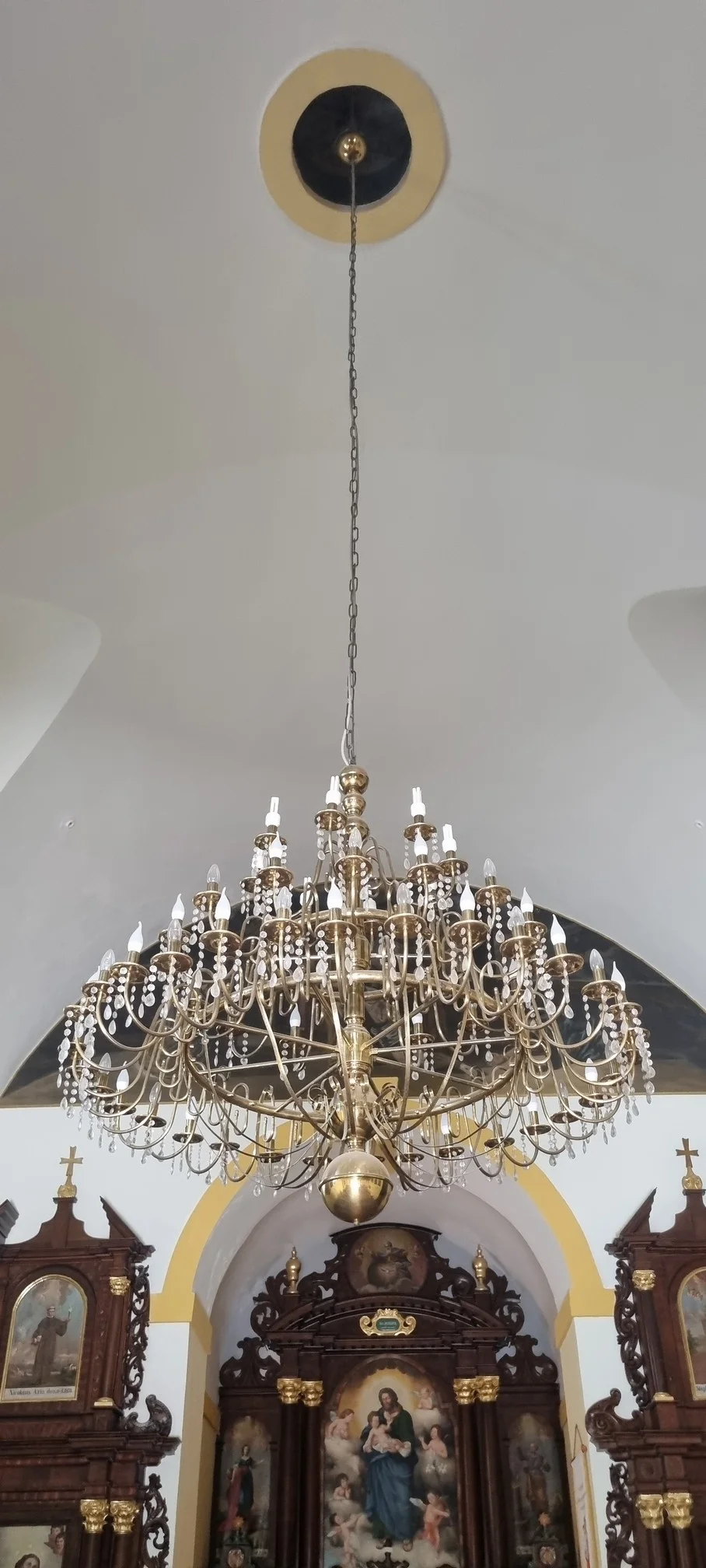
According to preserved local tradition, the large chandelier now hanging in St Joseph’s Church came from the former parish church of St Charles Borromeo. According to the same tradition, it was the smallest of the chandeliers once installed in that church. This information has not yet been confirmed by written documentation and is therefore presented here as part of local tradition.
Source: Private Collection of the Capuchin Monastery in Karlobag.
The Capuchin Monastery in Karlobag preserves a sabre attributed to Father Marko Mesić (c. 1640–1713), a priest, military chaplain, and one of the most important participants in the liberation of Lika and Krbava from Ottoman rule at the end of the 17th century.
The best-known painting in the monastery is the monumental Last Supper, painted by Cristoforo Tasca in 1712. The work is oil on canvas and measures approximately 400 × 170 centimetres.
The work was commissioned in Venice during the initial furnishing of the newly built monastery. According to a record quoted in 1887 by the then guardian Leopold Potočnik, Father Marin was sent to Venice to acquire church furnishings and paintings, with the costs covered by the imperial treasury.
The painting hangs on the western wall of the monastery refectory, opposite the entrance. Christ is shown at the moment of the institution of the Eucharist, while the apostles react in gesture and expression to His announcement that one of them will betray Him.
Art historians have regarded the Karlobag Last Supper as one of the finest and most representative paintings preserved in Croatian Capuchin monasteries.
Also associated with the church’s original furnishings is the Annunciation, executed as two separate paintings: The Archangel Gabriel and The Virgin of the Annunciation. Both are attributed to Cristoforo Tasca and dated to around 1712.
The ensemble also includes a circular painting of God the Father, also attributed to Tasca. The figure’s gaze and gesture are directed towards the Virgin, suggesting that the painting originally formed part of the same artistic ensemble.
Cristoforo Tasca is also credited with paintings of St Bonaventure, St Clare of Assisi and St Nicholas. Their original arrangement has not been securely established. Some of the paintings may have formed part of the furnishings of the high altar or the friars’ choir, but the original appearance of the ensemble can no longer be fully reconstructed.
The painting, also known as Our Lady of Compassion dates from the 18th century. It is displayed on a wall altar on the first floor of the monastery and is among the finer surviving works in the Karlobag collection.
This painting from the first half of the 18th century is displayed in the corridor of the monastic enclosure. It represents a Marian type that spread through Central Europe through Capuchin networks.
On the screen wall of the friars’ choir hangs a large painting of the Crucifixion of Christ. The Crucifixion held an important place in Capuchin spirituality, which placed particular emphasis on daily meditation on the Passion and death of Christ.
The church also preserves a cycle of paintings of the Stations of the Cross, while the monastery cloister corridor contains a painting of the Death of St Joseph, probably painted in the late 18th century.
A distinct group consists of paintings of notable members of the Capuchin Order. The portraits of Friar Bernardino of Balvano and Father Angelus of Joyeuse are dated 1724. Their iconography draws on well-known Capuchin graphic and written sources.
These two paintings may be surviving elements of a once larger cycle devoted to prominent Capuchins. This, however, remains an art-historical hypothesis, since the complete original cycle has not survived.
The monastery also preserves depictions of St Bernard of Corleone and St Crispin of Viterbo, attributed to the Venetian painter Giuseppe Diziani and dated to around 1768. In older literature, the second painting was identified as a depiction of St Seraphin of Montegranaro, while more recent analysis identifies the friar shown as St Crispin.
The walls of the monastery refectory display formal portraits of the Habsburg emperors Leopold I, Joseph I and Charles VI They recall the role of the Habsburg rulers in the foundation, construction and furnishing of the Capuchin monastery in Karlobag.
According to Josipa Alviž, these are the only examples of donor portraits in Croatian Capuchin painting of the 17th and 18th centuries. The portraits are not merely representations of rulers, but also historical documents of the monastery’s ties with the imperial court in Vienna.
The art collection of the church and monastery bears witness to the almost uninterrupted presence of the Capuchin community in Karlobag. Each surviving painting forms part of a wider story of faith, religious life, patronage and Karlobag’s cultural links with Venice and Central Europe.
Source: Josipa Alviž, Slikarstvo u kapucinskim crkvama i samostanima u Hrvatskoj, chapters devoted to the Capuchin church and monastery in Karlobag.