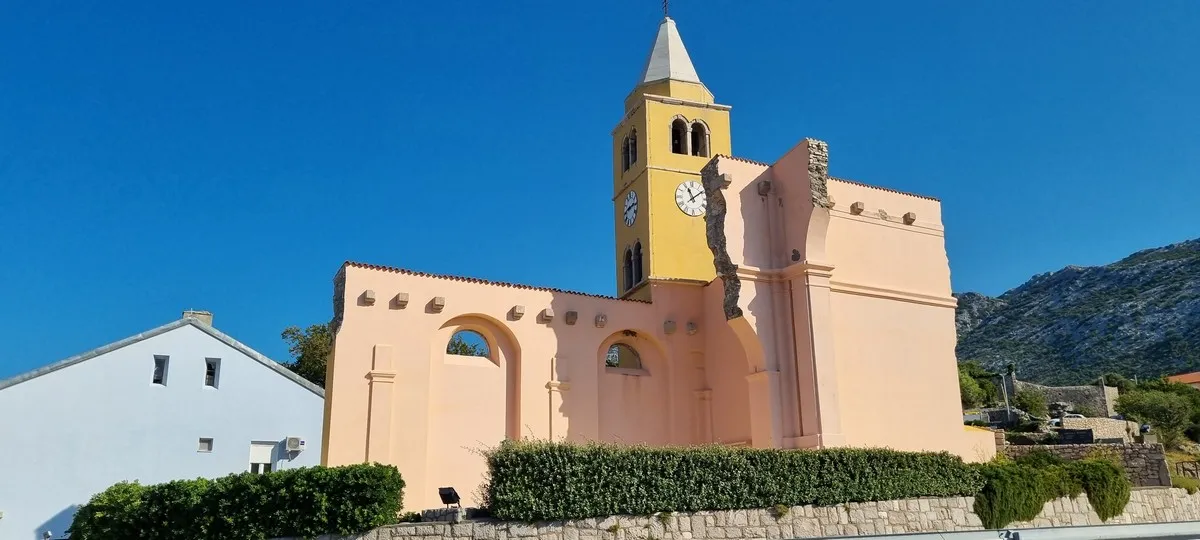
Church of St. Charles Borromeo


The Bell Tower as a Witness: Restoration, Memory and Cultural Heritage
The Church of St. Charles Borromeo was built in 1710 on the foundations of the older Chapel of St. John. It was severely damaged during the Allied bombing of 1944. When construction of the new coastal highway began in 1958, the church’s outer walls were demolished and most of its remains were removed. Only the bell tower and a section of wall survived. They were later restored and formally reopened on the Feast of St. Charles in 2000. Today they form a memorial site protected as cultural heritage.
Church of St. Charles Borromeo
Source: Private Collection of Tomislav Potočnjak, Karlobag.
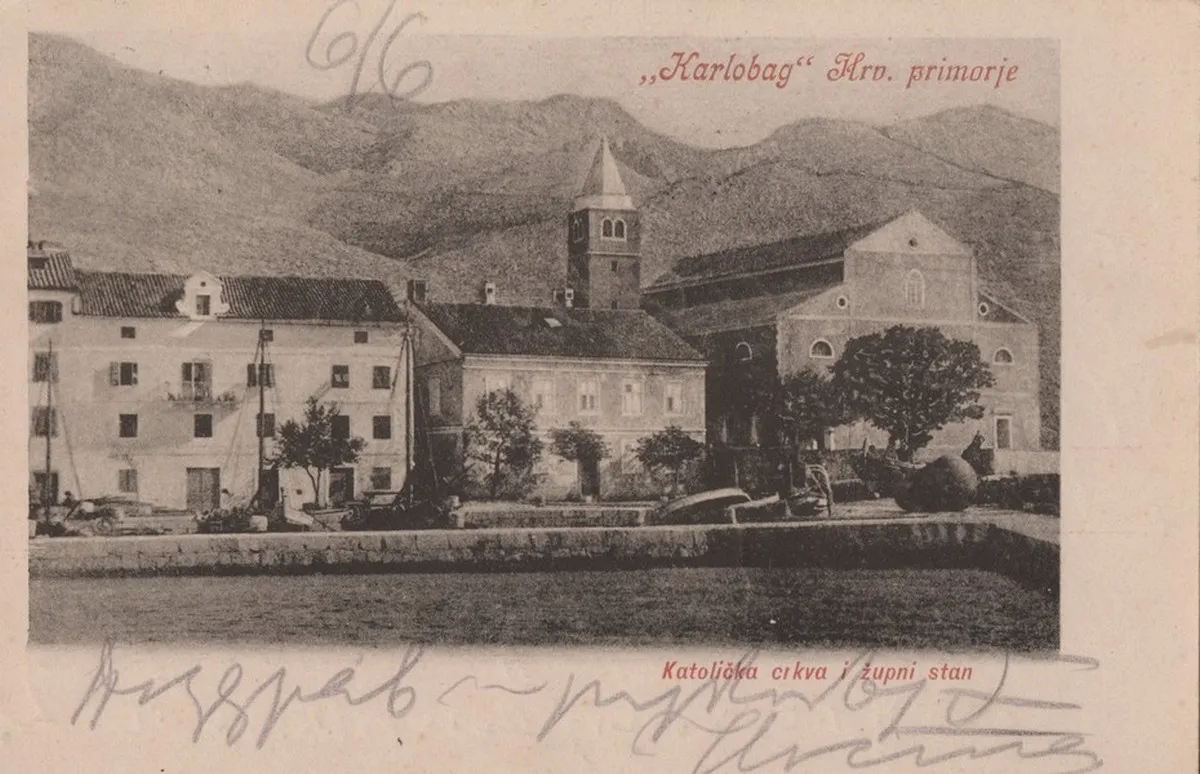
View of the church and parish house on a postcard from 1900.
Source: T. Potočnjak Collection / Inv. No. ZTP-KB-1017.
The church is first mentioned in 1680. Before it, a wooden Church of the Holy Trinity stood on the site; locally it was known as the Church of the Holy Spirit and eventually collapsed after falling into disrepair. The Chapel of St. John was subsequently erected there, while the Church of St. Mary stood a short distance away. Parish registers have been kept since 1691, indicating that regular ecclesiastical administration was already established by then. A new church was built in 1703, with the priest Marko Mesić playing a particularly important role in its construction. The Church of St. Charles was subsequently repaired and remodelled on several occasions.
During his visitation in 1723, the church was consecrated by Nikola Pohmajević, Bishop of Senj and Modruš, who also recorded several details about its appearance and furnishings.
At that time the church had three altars. On the high altar was St. Charles kneeling beside the cross, with the heads of four angels above him. The altar had two tiers of saints. In the first tier, statues of St. Peter and St. Bartholomew stood on the right, and St. Paul and St. Simon on the left. In the second tier, an image of the Holy Trinity occupied the centre; statues of St. Sebastian and St. George stood on the right, and St. Roch and St. James on the left. The altar had a fine tabernacle in which the Blessed Sacrament for the sick was always reserved, with a lamp burning continuously before it. There were four brass candlesticks on the altar and a fine gold-coloured antependium bearing an image of the Blessed Virgin Mary with the Christ Child.
The right-hand side altar had an image of the Blessed Virgin holding the Child Jesus, with images of St. John the Baptist and St. James below it; statues of St. Augustine and St. Nicholas stood on the right, while the second tier (continuatione) depicted the Holy Family. This altar had two brass candlesticks and a fine antependium with an image of the Blessed Virgin Mary, beneath which were images of St. James and St. John the Baptist. The altar had been consecrated by the late Bishop Ratkaj. It was erected by Dujam Kovačević, Ivan Krušić, Lesse (?) Lukotelić and Mate Matausić.
On the left was the Altar of the Holy Cross, beneath which the following figures were depicted: the Blessed Virgin Mary and two angels representing the souls of the dead in Purgatory. In the first tier, a statue of St. Peter stood on the right and St. Michael the Archangel on the left; in the second tier, St. George stood in the centre, with St. Simon on the right and St. Nicholas on the left. This altar also had an antependium similar to the preceding one. A lamp before the altar was lit on major feast days. The founder of this altar was Nikola Kerpan.
The church contained eight new pews, two on each side of the altar, as well as a pulpit and choir loft. It had two doors: the main entrance in the façade and a slightly smaller door on the right. There were two processional canopies: the larger belonged to the Confraternity of the Most Holy Body of Christ, while the other belonged to the municipality. The sacristy was unvaulted. Its cupboard contained three chalices, two monstrances—one unusable and one new—a fine gilded ciborium, seven chasubles of different colours and a white cope, two Croatian and one Latin missal, and two Latin missals for the dead.
There were five bells in the bell tower.
The church was well roofed and whitewashed, and the cemetery in which it stood was enclosed. There was no parish house; the parish priest lived in a rented house for which he paid twelve ducats a year. Registers were kept of marriages, baptisms, deaths and confirmations, and there were a Croatian ritual book and a Croatian breviary. The parish was said to contain no prostitutes, usurers, thieves, concubinaries or persons inclined to magic. The parish priest was instructed not to perform marriages in private homes and not to celebrate Mass in unconsecrated churches. The parish comprised 112 houses and 400 communicants. The bishop remained there for three days and stayed with the Capuchins.
In 1733 Bishop Benzoni stated that the church building and its structure were in good condition, but that it lacked the necessary liturgical vestments. In 1752 Bishop Čolić ordered that anyone wishing to bury their dead inside the church should construct a proper tomb with a stone covering rather than simply covering the grave with earth, as had previously been customary; otherwise, the dead were to be buried outside the church. The following year he ordered the entire church to be restored. He noted that the church had three crypts in which strangers who died in Karlobag were buried, while local inhabitants were buried beside the church.
As the old parish church had become dilapidated and was in very poor condition, a decision was made in 1764 to demolish it and build a new church better suited to the needs of the growing settlement. A detailed design for the new building was prepared as early as 1765, defining the Baroque form it was to take.
The architectural plan of 1765 is an important document from the period in which Karlobag was developing as an administrative and military centre of the Monarchy. The plan bears the title “Parochiale Chima”, while its proportions and the design of the bell tower reveal links with architectural solutions found in Michelazzi’s work of 1757.
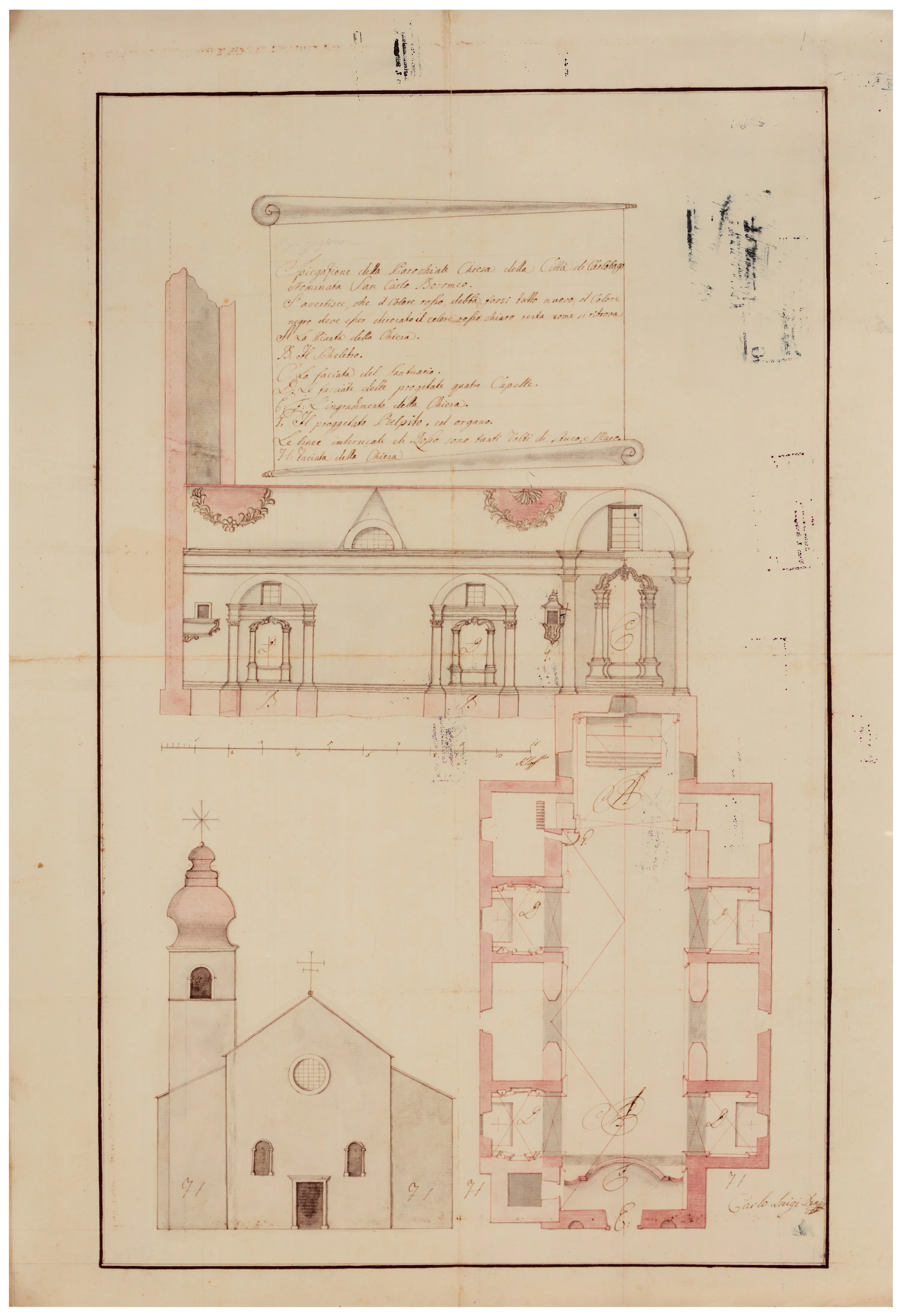
The architectural plan shows not only the walls of the church, but also how its interior and its position within the urban fabric were conceived.
Source: Austrian State Archives, Vienna.
The old parish church was demolished in 1767. The work was directed by Giovanni Battista Baccini of Cividale, Italy, and the local craftsman Ivan Lenac, who was fatally injured during the demolition. That same year, on the Feast of Our Lady of Mount Carmel, Ivan Krstitelj Kabalin, Archdeacon of Lika-Krbava, blessed the foundation stone in the presence of numerous priests and dignitaries. Parish priest Josip Suvić was also present, although Antun Ivanković had already assumed administration of the parish. During the laying of the foundation stone, ceremonial mortars were fired, bells rang and ships in the harbour sounded their horns. Once the north wall had already been raised, a violent storm on 25 September and a lightning strike brought down the sanctuary columns, leaving the work in ruins. As the architect Baccini was not sufficiently skilled for the task, he turned to the contractor Roko Stuparić of Veli Lošinj to build the church. Yet another severe storm caused extensive damage. The Viennese court repeatedly came to the rescue with further donations, and the then bishop, Pijo Manzador, also provided assistance. The church was finally completed, and Mass began to be celebrated there on Easter Sunday, 11 April 1773. Bishop Kabalin consecrated it on 11 June of the same year.
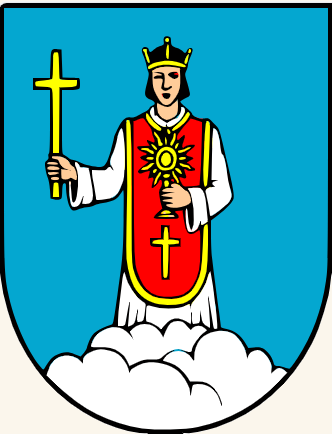
The church was 26 metres long and 16 metres wide. The sanctuary was 7 metres deep and as wide as the main nave. The sacristy (now used as a mortuary) measured 6.5 × 4.5 metres. The church was deliberately designed to resemble the basilica in Milan as closely as possible, and the altar was conceived in the same spirit. It received particular support from Empress Maria Theresa, all the more so because St. Charles was her father’s patron saint. Under a charter issued by the Empress in 1760, the figure of St. Charles appeared on Karlobag’s seal. Work continued even after the consecration, since records from Joseph II’s visit in May 1775 state that the church was still unfinished. The organ was acquired in Venice in 1774, a clock was installed on the church tower in 1777, and the tower was raised in 1786. The Slovenian craftsman Ivan Conti made the pulpit in 1781.
By 1789 the church had a completely different arrangement from that recorded in Pohmajević’s time. In addition to the high altar of St. Charles, painted by Ivan Stimer, there were four side altars: St. John of Nepomuk (erected in 1783), St. Margaret of Cortona (consecrated in 1781), St. Joseph (painted by Ivan Stimer in 1783), and St. Nicholas (erected by Nikola Grkinić of Karlobag). In 1792 the Slovenian gilder Ivan Banko gilded the high altar, organ and baptismal font. The statue of St. Charles was made by the Slovenian sculptor Marko Layer. Bishop Ježić visited the parish in 1795 and recorded that, besides the high altar, there were side altars dedicated to St. Joseph, St. Nicholas and St. Margaret of Cortona. The altars were consecrated on 3 June. He found the church in excellent condition, with everything well ordered and maintained.
During the 18th century, the parish acquired valuable liturgical vessels for the parish church and its outlying chapels. The church, naturally, also required periodic repairs.
One bell was acquired in Ljubljana in 1881, while a record from 1917 notes that the church still had a bell dating from 1722.
During the war against the Ottomans in 1788, the church served for four months as a storehouse for food and other military supplies. In 1862, Grgur Pančić, Archdeacon of Lika, wrote that he had seen with his own eyes that the church was in such a condition that it would become a ruin unless the roof was repaired without delay. The church was completely restored in 1876.
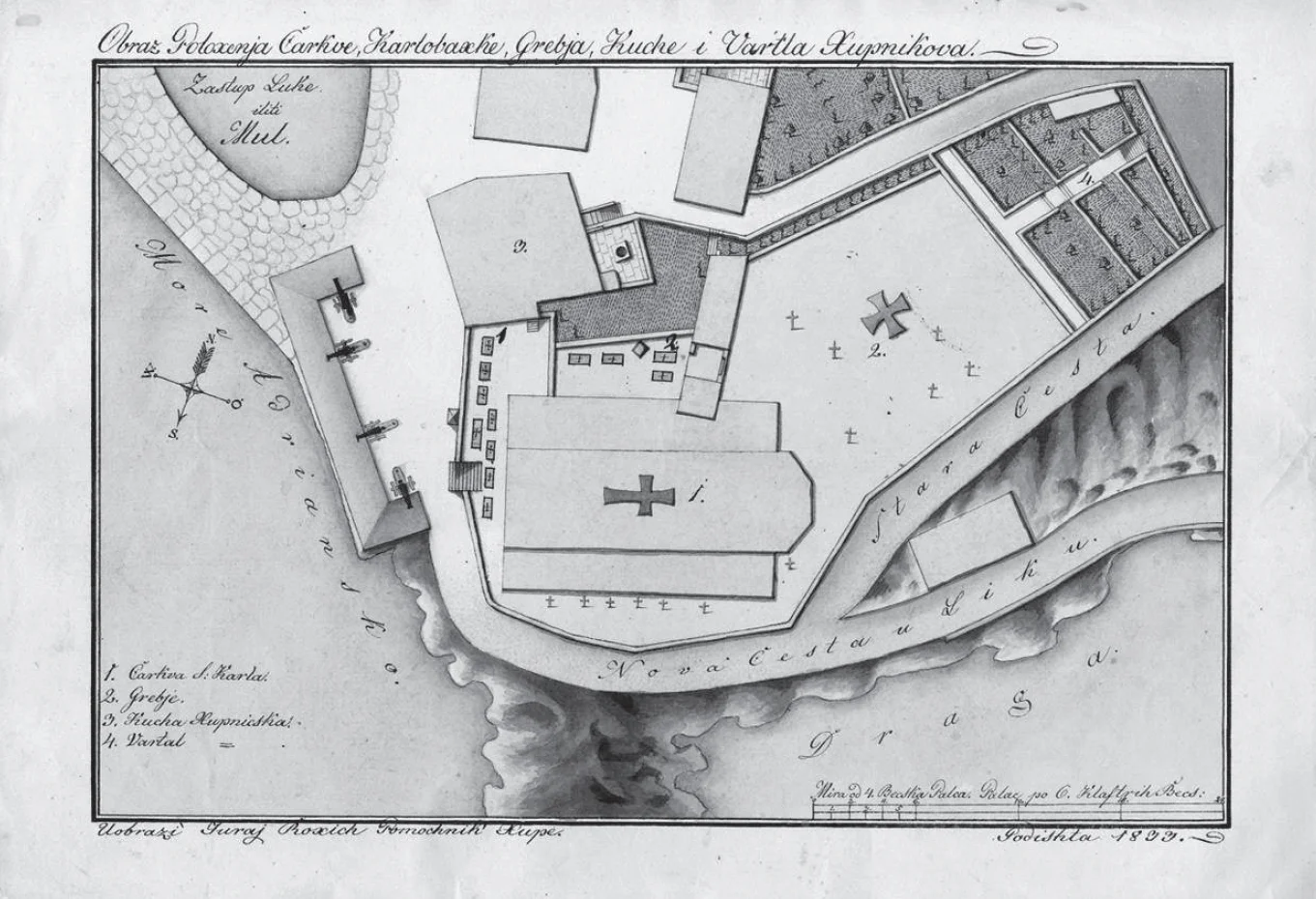
View of the church ground plan, cemetery, gardens and parish house. The plan dates from 1833.
Source: Austrian State Archives, Vienna.
Source: Mile Bogović, The Church in Velebit Podgorje: Past and Present.
In January 1873, Karlobag parish priest Josip pl. Demelli sent a reply to Zagreb in response to an inquiry from Ivan Kukuljević Sakcinski. In his letter he recorded funerary inscriptions, historical figures and other traces of the past that he encountered within his parish, leaving a valuable record of the heritage of Lika and the Velebit coast.
The letter was written at a time when information important to the development of Croatian archaeology, epigraphy and art history was beginning to be systematically collected and recorded.
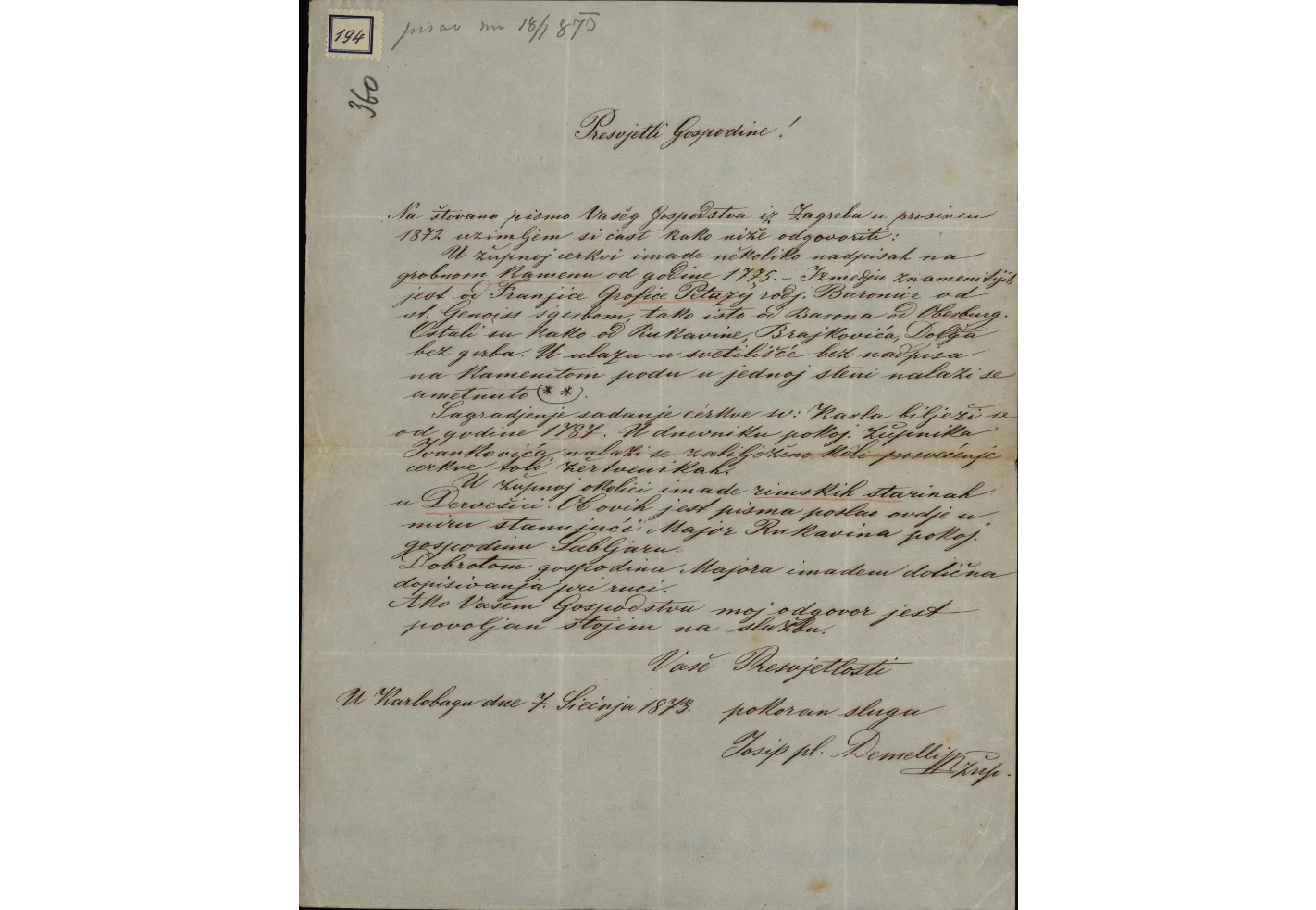
Letter from Parish Priest Josip pl. Demelli to Ivan Kukuljević Sakcinski.
In reply to your esteemed letter sent from Zagreb in December 1872, I have the honour to respond as follows:
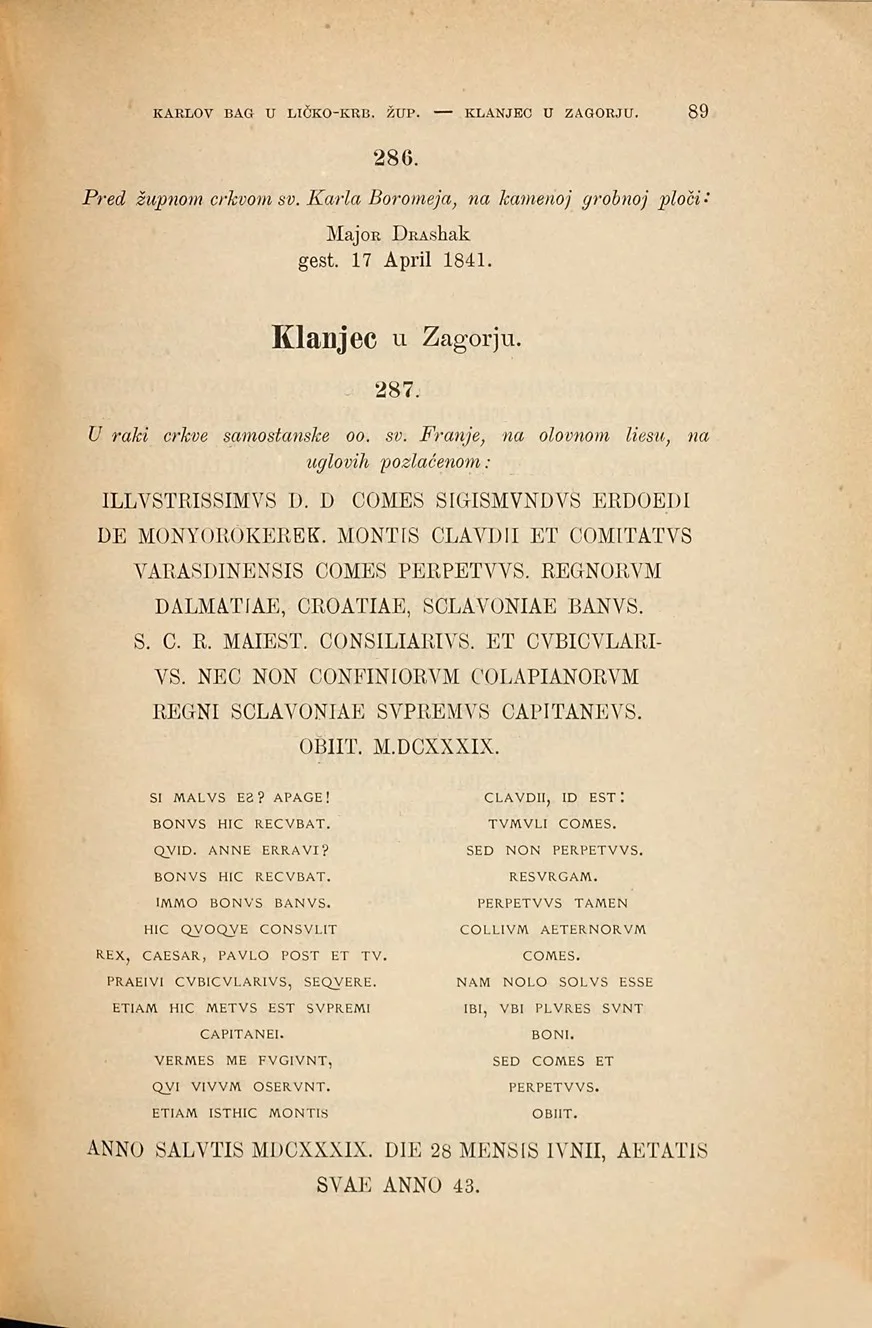
The parish church contains several inscriptions on gravestones dating from 1775. Among the most notable are that of Countess Franjica Petazzi, née Baroness St. Genois, together with her coat of arms, and the inscription of the Baron of Oberburg. The remaining slabs belong to the Rukavina, Brajković and Dolac (or Doljac) families, but bear no family coats of arms. At the very entrance to the sanctuary, set into the stone floor, there is also an uninscribed slab.
The construction of the present Church of St. Charles is recorded as dating from 1787. The diary of the late parish priest Ivanković contains records of the consecration of the church itself and of its altars.
In the vicinity of the parish there are sites containing Roman antiquities at Dervešica. Major Rukavina, who resides here in retirement, sent letters about them to Mr Sabljar. Through the major’s kindness, that correspondence is available to me.
If this reply is of use to Your Lordship, I remain at your service.
Your Most Illustrious Lordship’s obedient servant,
Josip pl. Demelli, parish priest
Karlobag, 7 January 1873
Ivan Antun Ivanković was born in Karlobag in 1733 and ordained a priest in 1761. From late 1773 until September 1813 he served as parish priest of Karlobag. During his ministry he began writing the parish chronicle, an invaluable source for local history. In 1803 he became an apostolic protonotary, and he died in his native town on 23 September 1813.
Franjica barunica od St. Genois, whose full name was Maria Francisca (Franziska) de Paula de Saint-Genois, came from an old Belgian (Flemish) noble family. Members of the family were known as loyal subjects of the Habsburg Monarchy and served as senior officers and diplomats. Through her marriage to Count Adalbert (Vojteh) Petazzi (1734–1818), a senior military commander within the Military Frontier system, Franjica became a member of one of the families most influential in the history of Lika and Gorski kotar. Her husband was the son of the renowned Count Benvenuto Petazzi, a key figure in the development of Karlobag and the surrounding road network. The year 1775 mentioned in the funerary inscription marks the year of her death (18 October 1775).
Barun od Oberburga belonged to the Apfaltrern family, one of the oldest noble lineages in this part of Europe, with roots extending back to the 12th century. Members of the family were particularly active in the Military Frontier, serving as senior officers—captains, majors and colonels—in the Lika and Otočac regiments. As Karlobag was a strategically important port and a seat of military command in the 18th century, the baron mentioned in the letter was probably one of the senior imperial officials who died while serving in the town.
Source: State Archives in Varaždin.
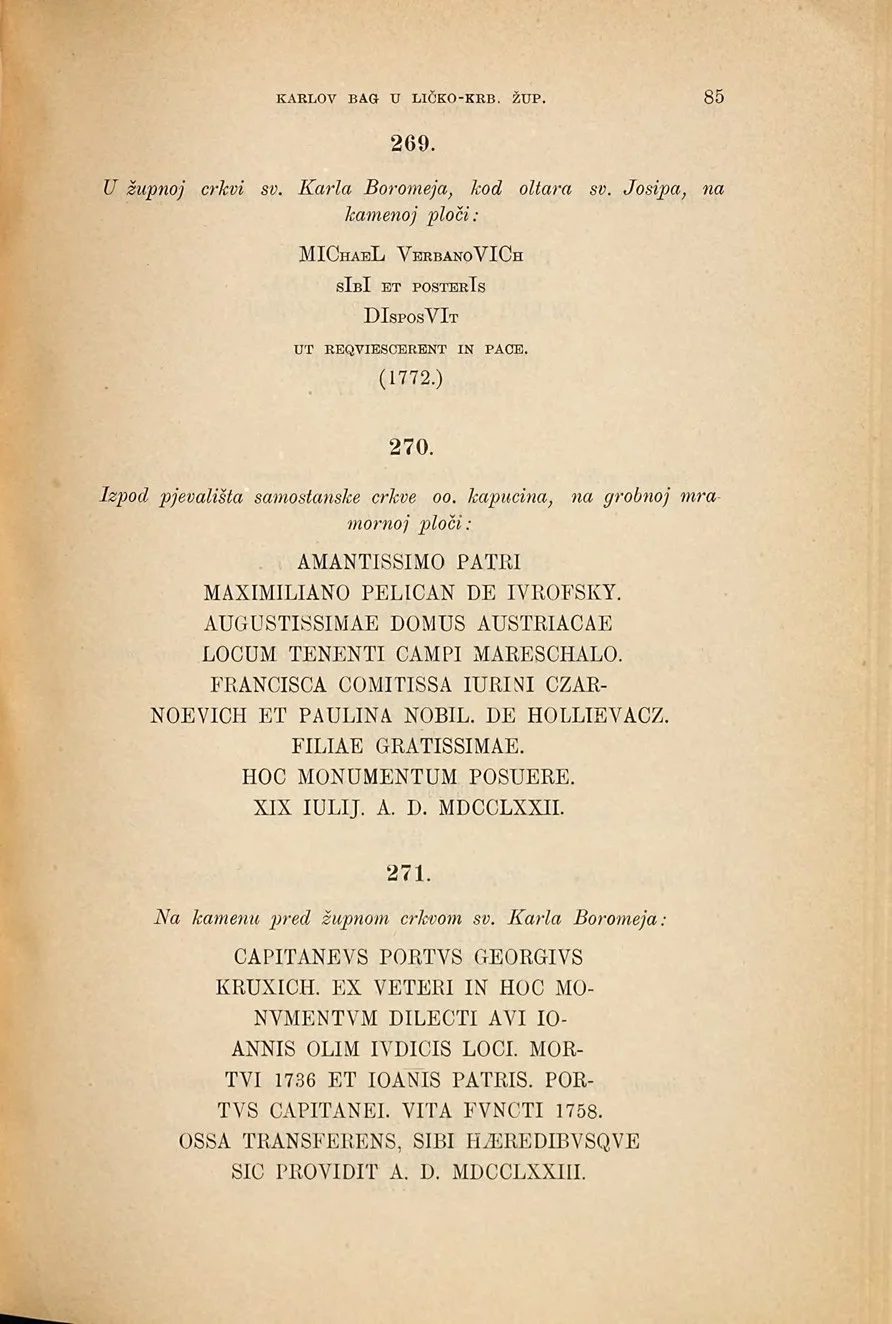
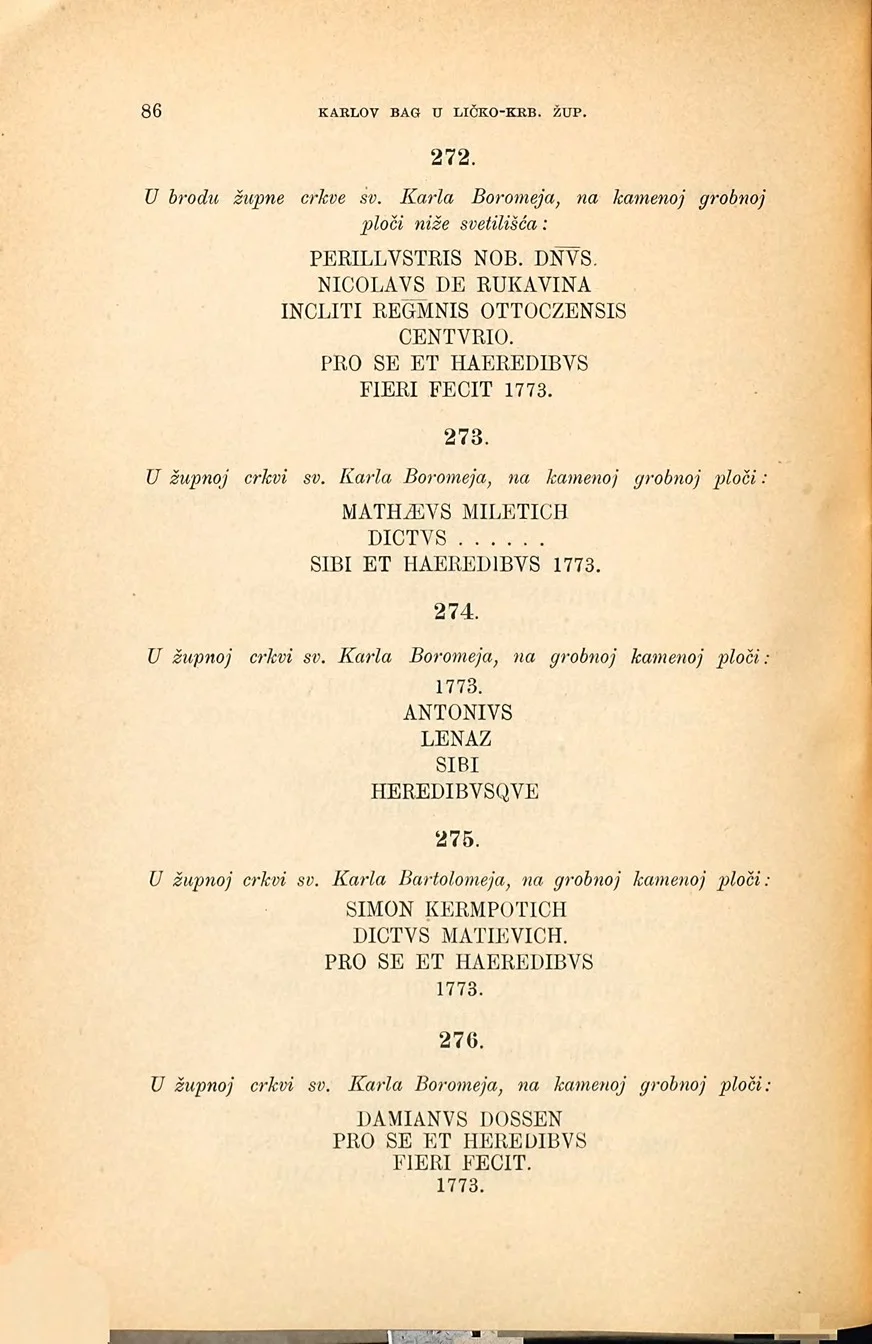
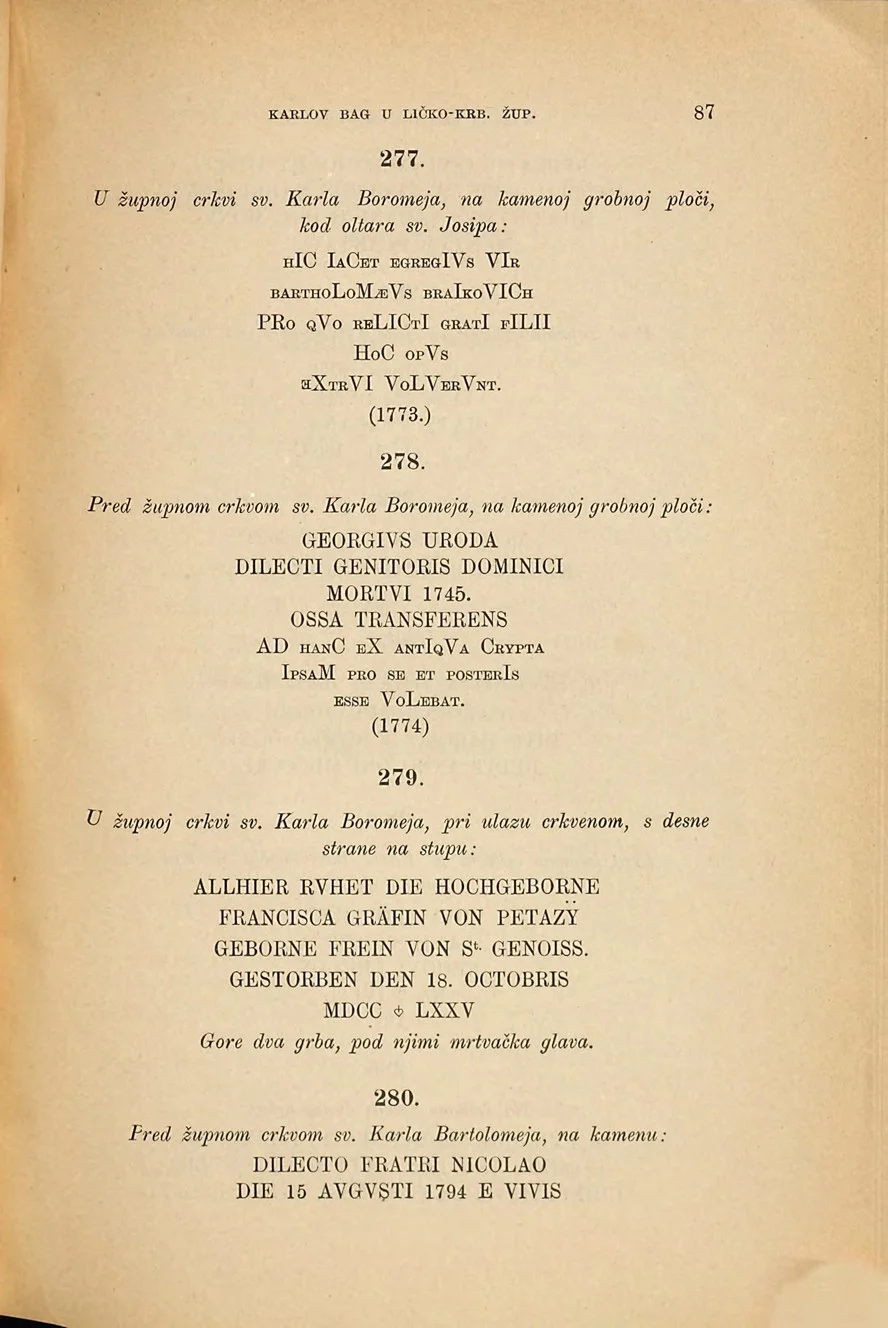
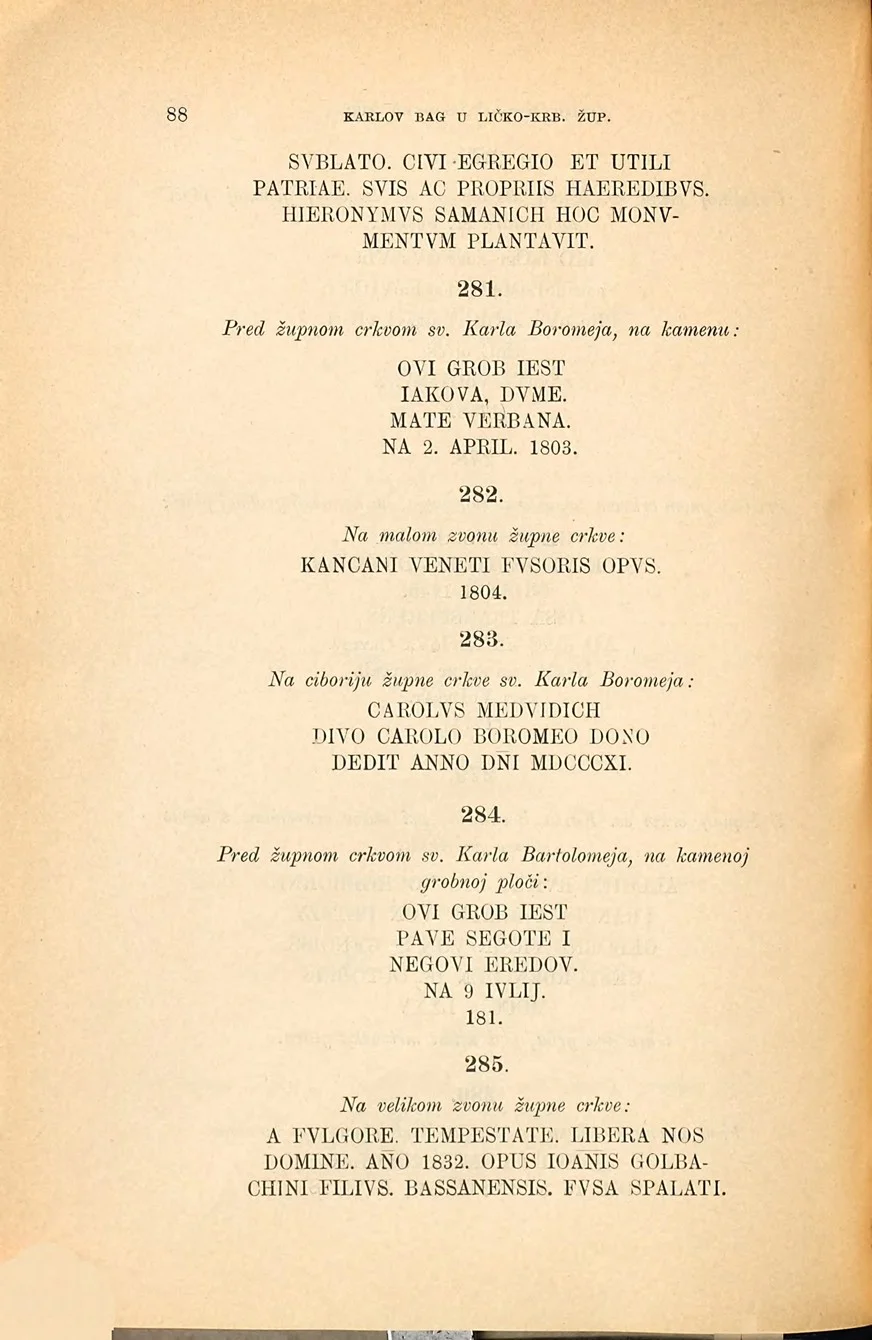
Ivan Kukuljević Sakcinski’s Report of 1891
Presented here is one of the most important works of Croatian epigraphy and art history—the volume
"Medieval and Modern Inscriptions on Churches, Public and Private Buildings, etc., in Croatia and Slavonia".
This valuable book, printed in Zagreb in 1891 and published by the Bookshop of the Yugoslav Academy, is the result of many years of work and research by Ivan Kukuljević Sakcinski, a founder of modern Croatian historical scholarship and archaeology.
Because many buildings and monuments were damaged or destroyed during the past century—including numerous sites in Velebit Podgorje—this work often serves as the only surviving written record of certain inscriptions and historical figures.
For researchers of local history, genealogists and heritage enthusiasts, "Nadpisi" is an indispensable source of information, linking architecture with the written word and preserving the identity and memory of Croatian lands.
Source: Munich Digitization Center (MDZ), Munich.
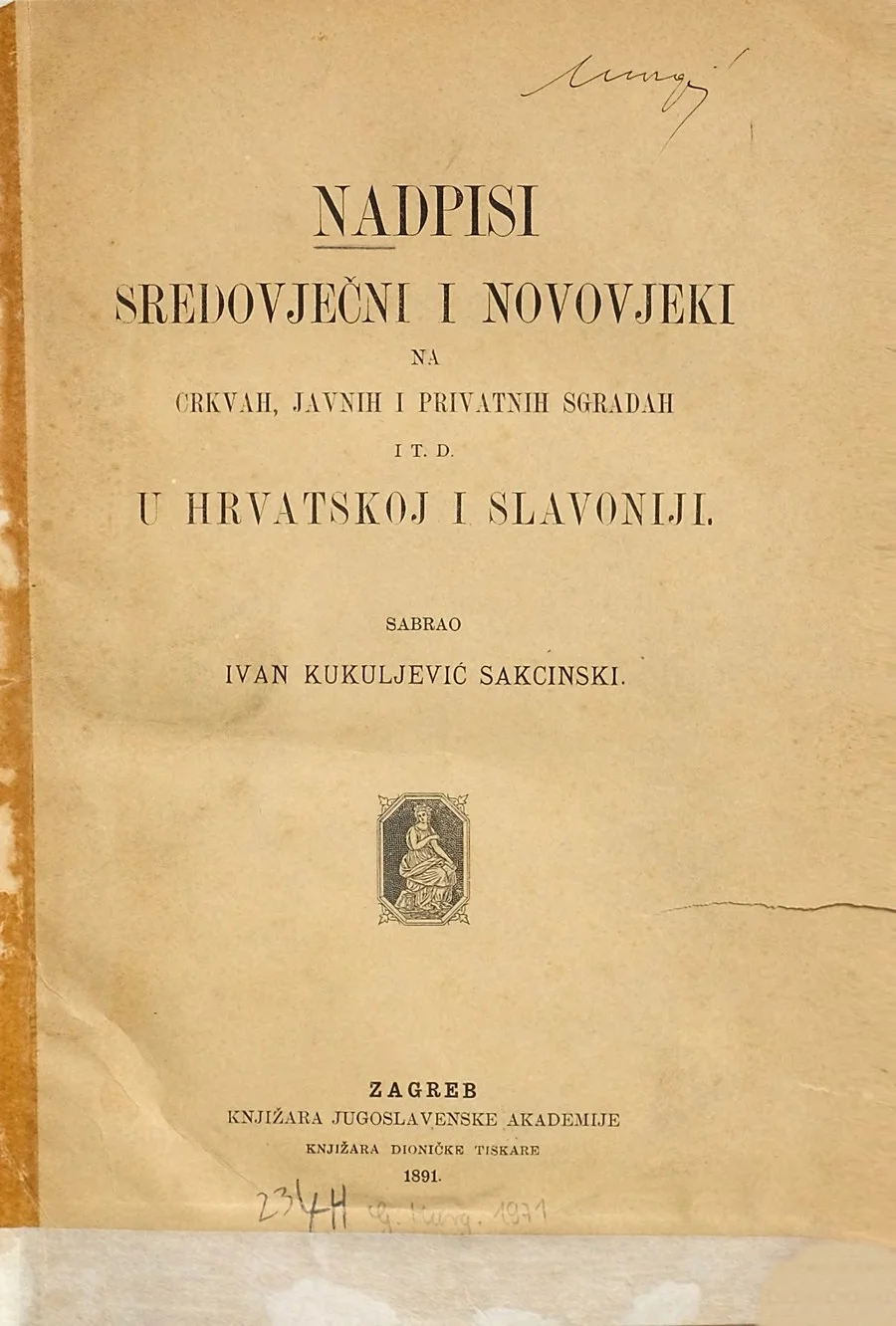
Page 1
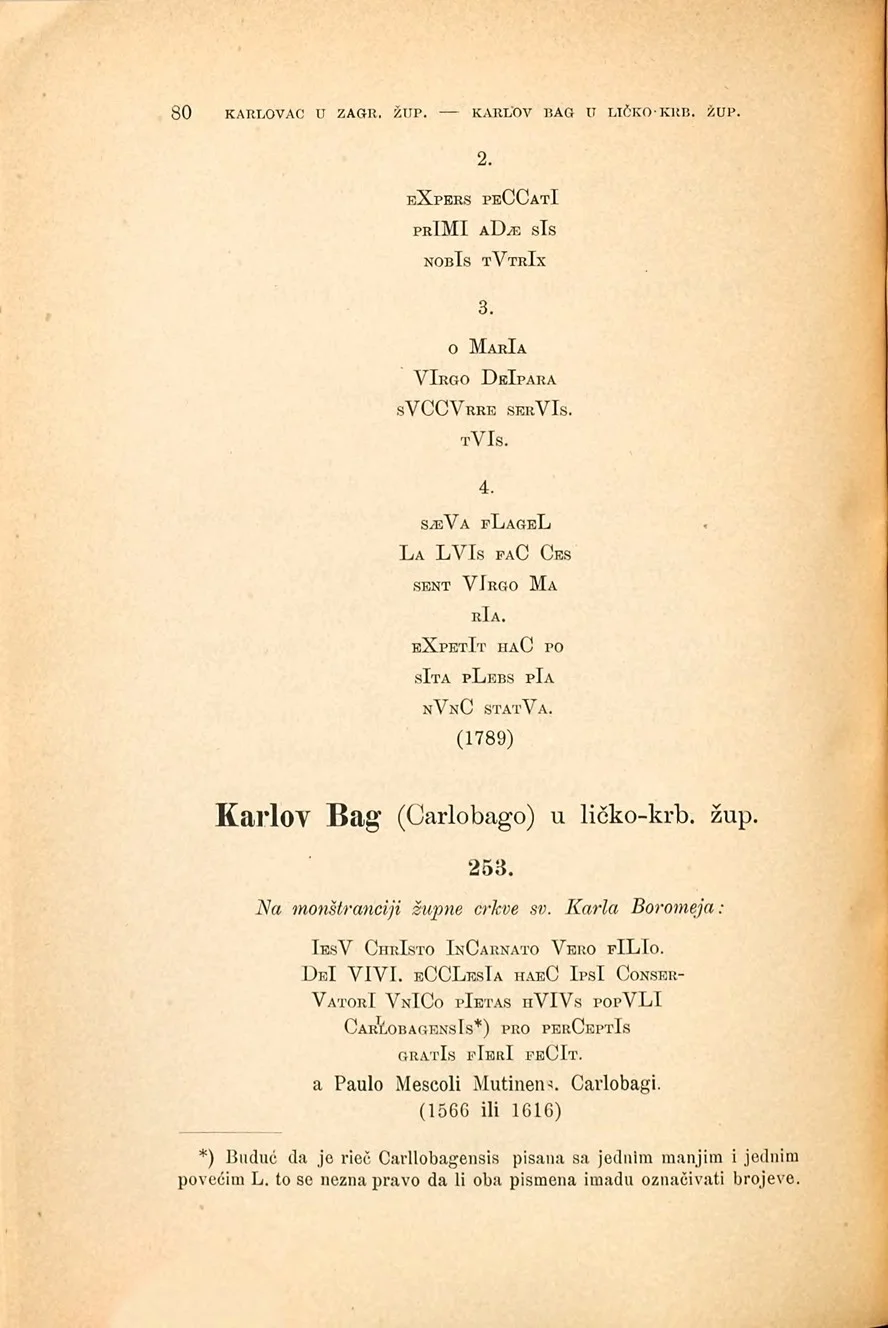
Page 2
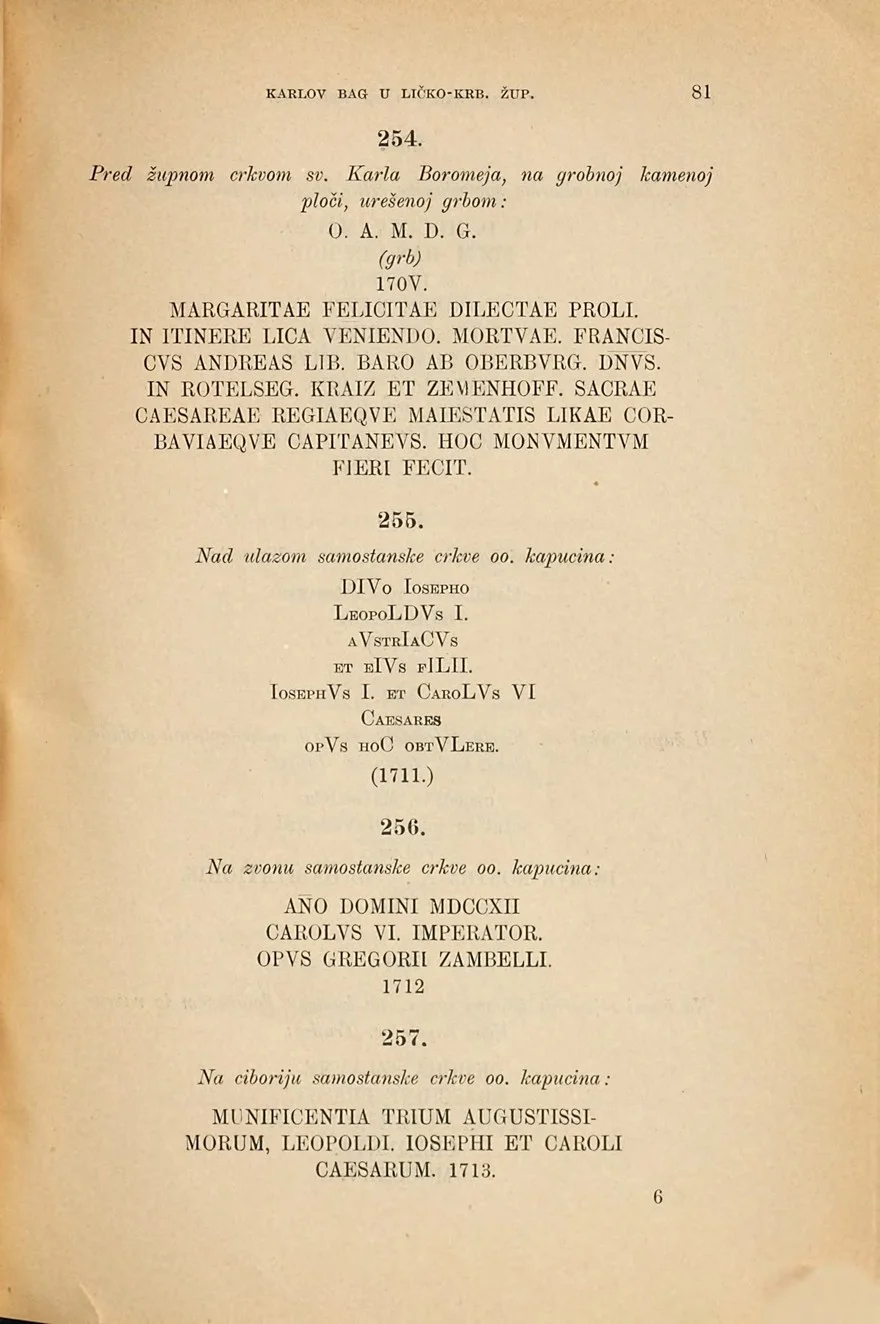
Page 3
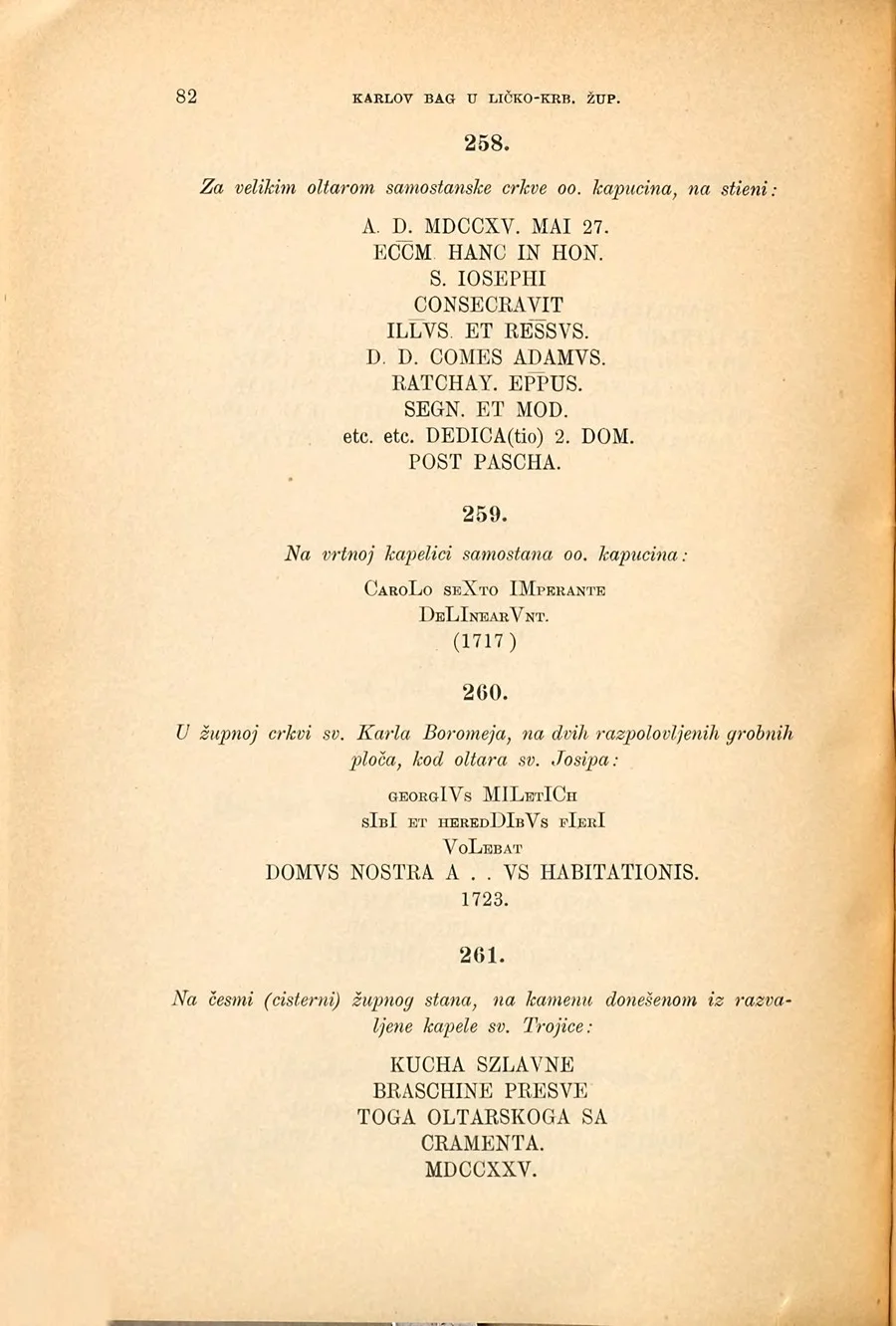
Page 4
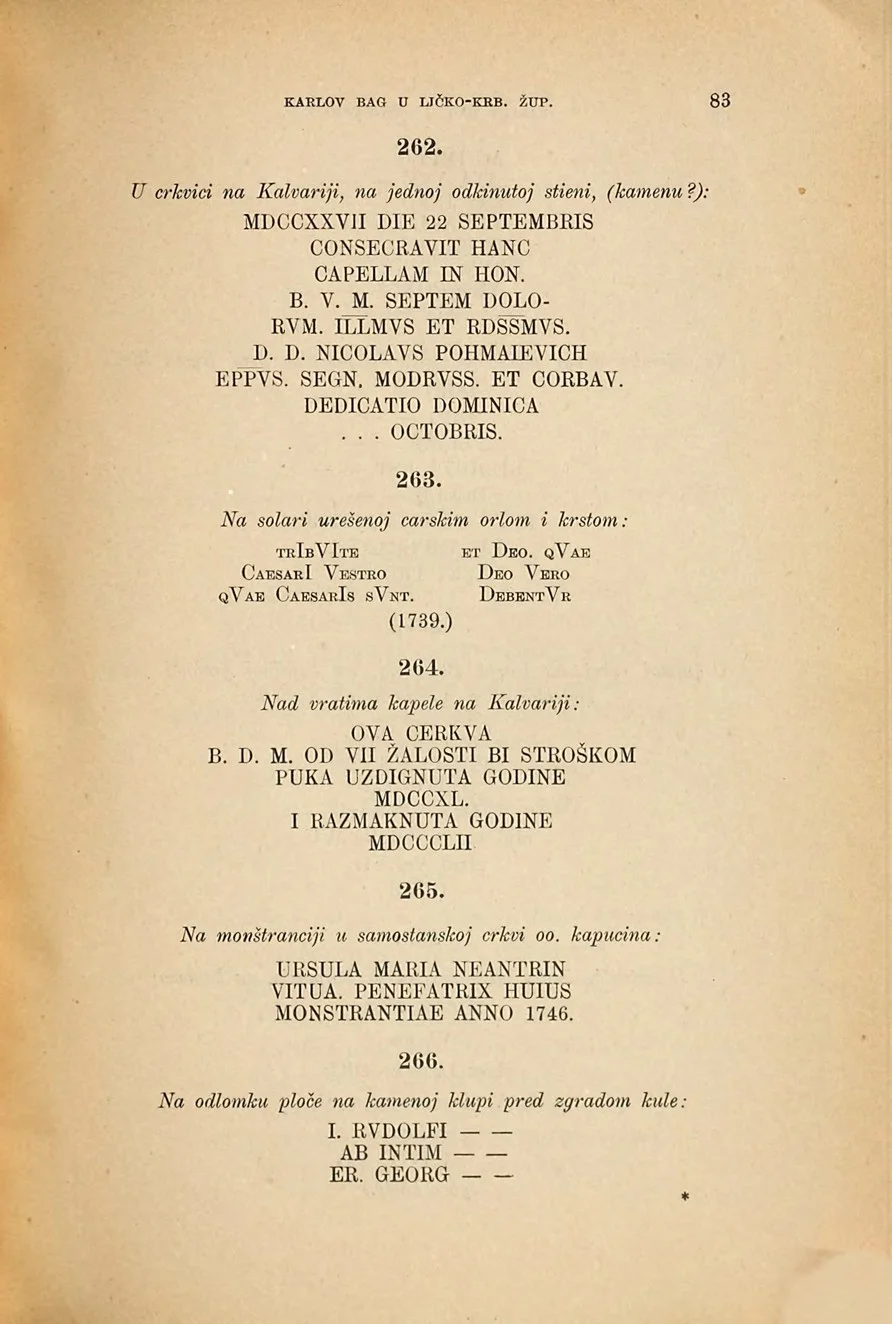
Page 5
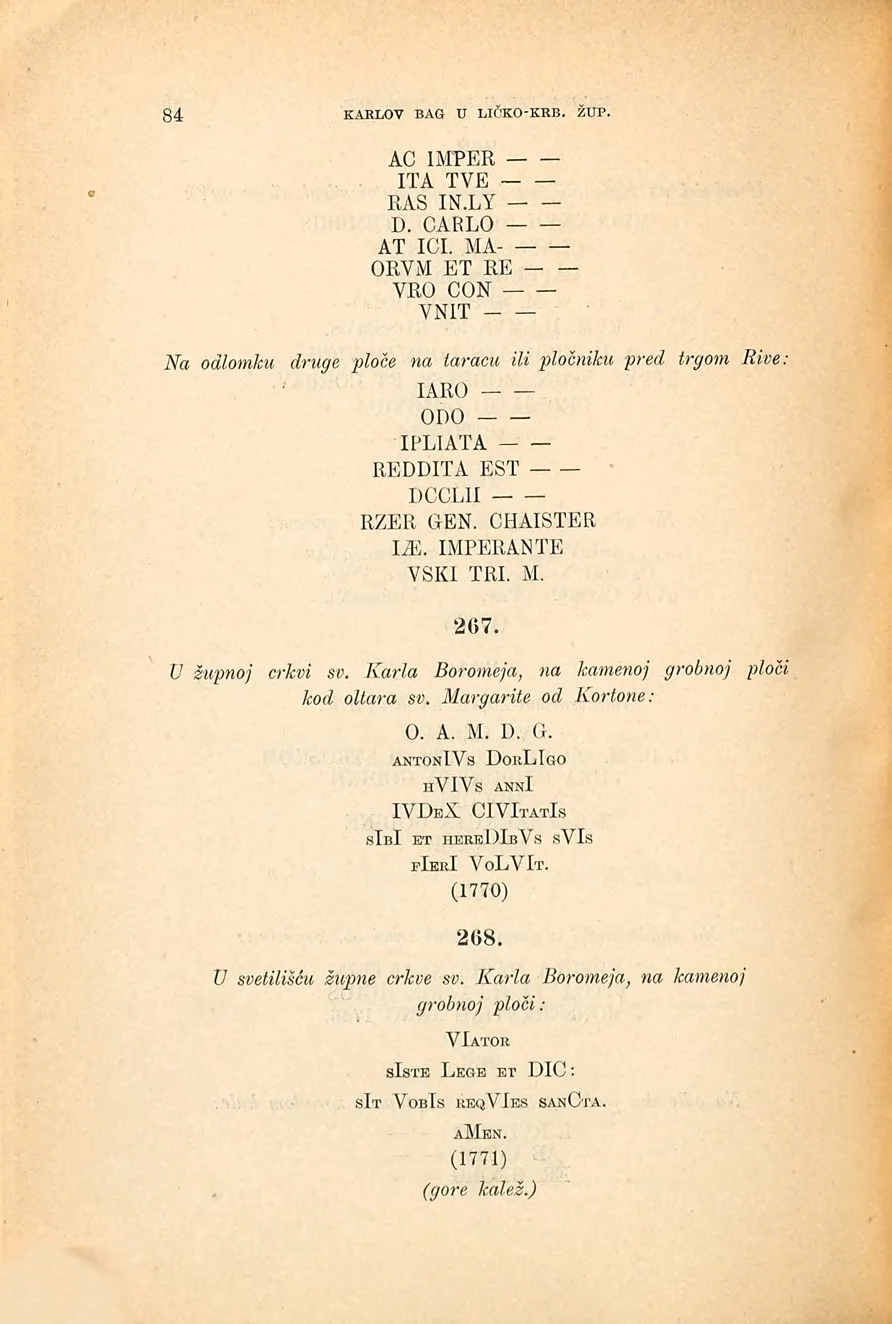
Page 6
Page 7
Page 8
Page 9
Page 10
Page 11
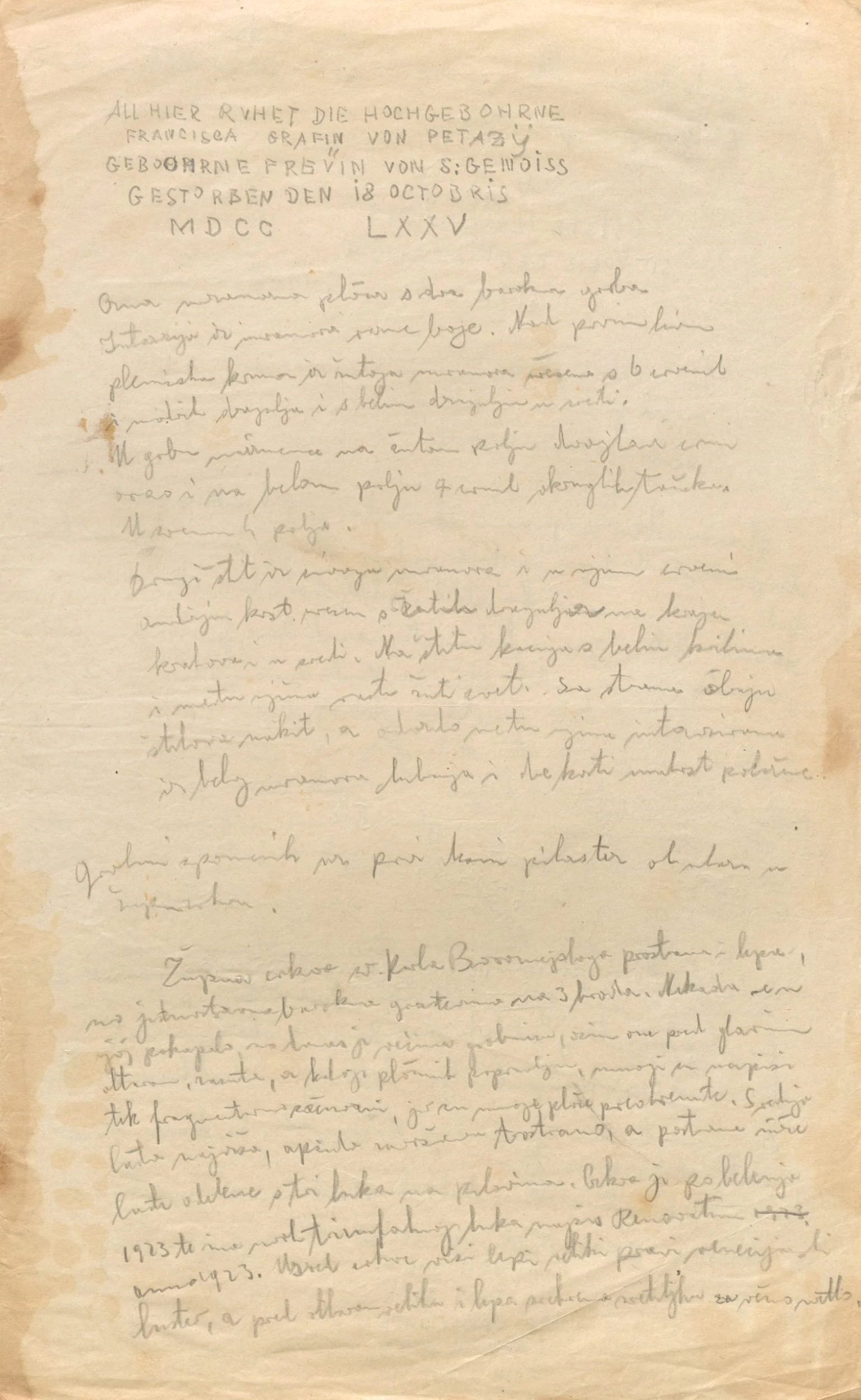
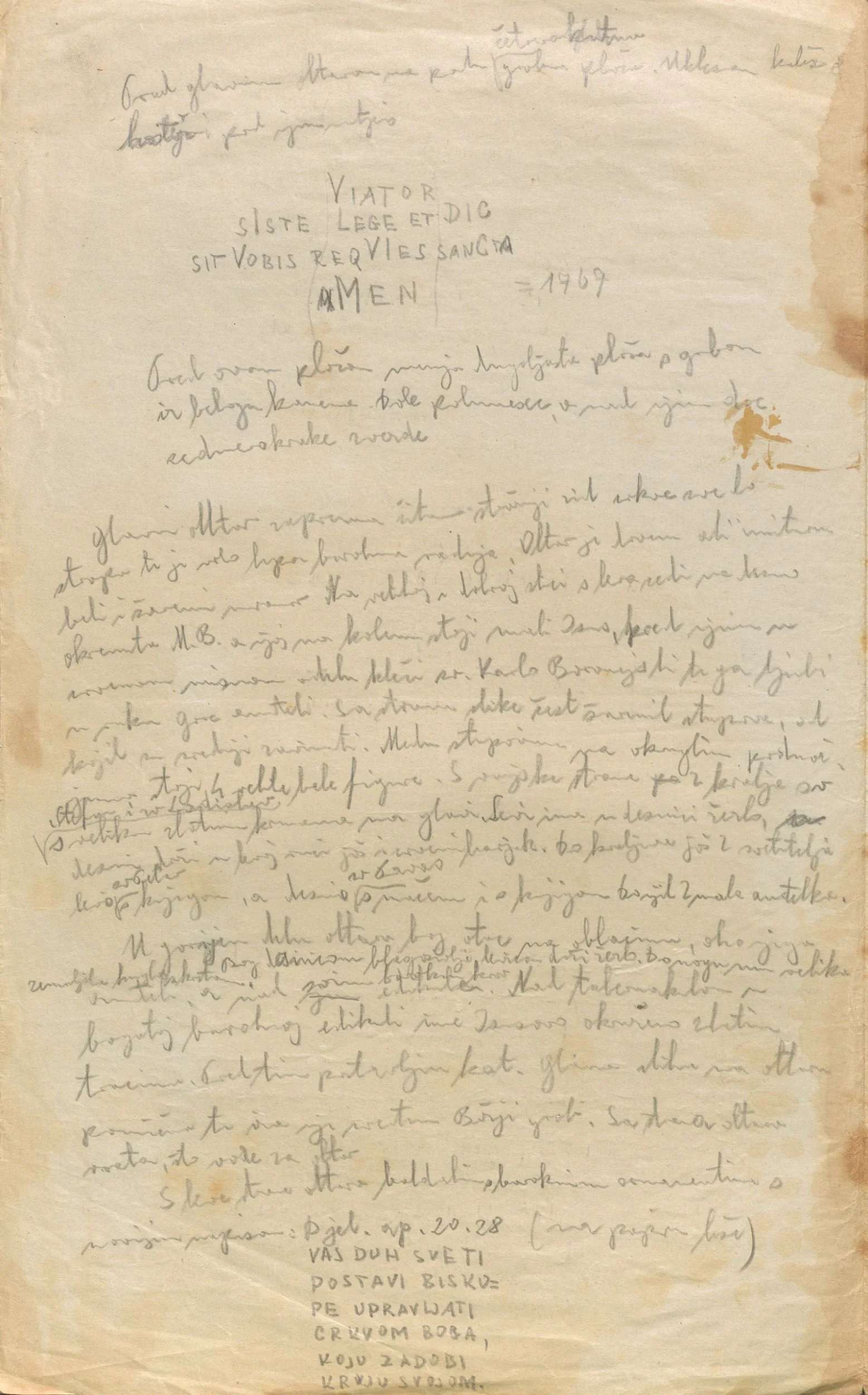
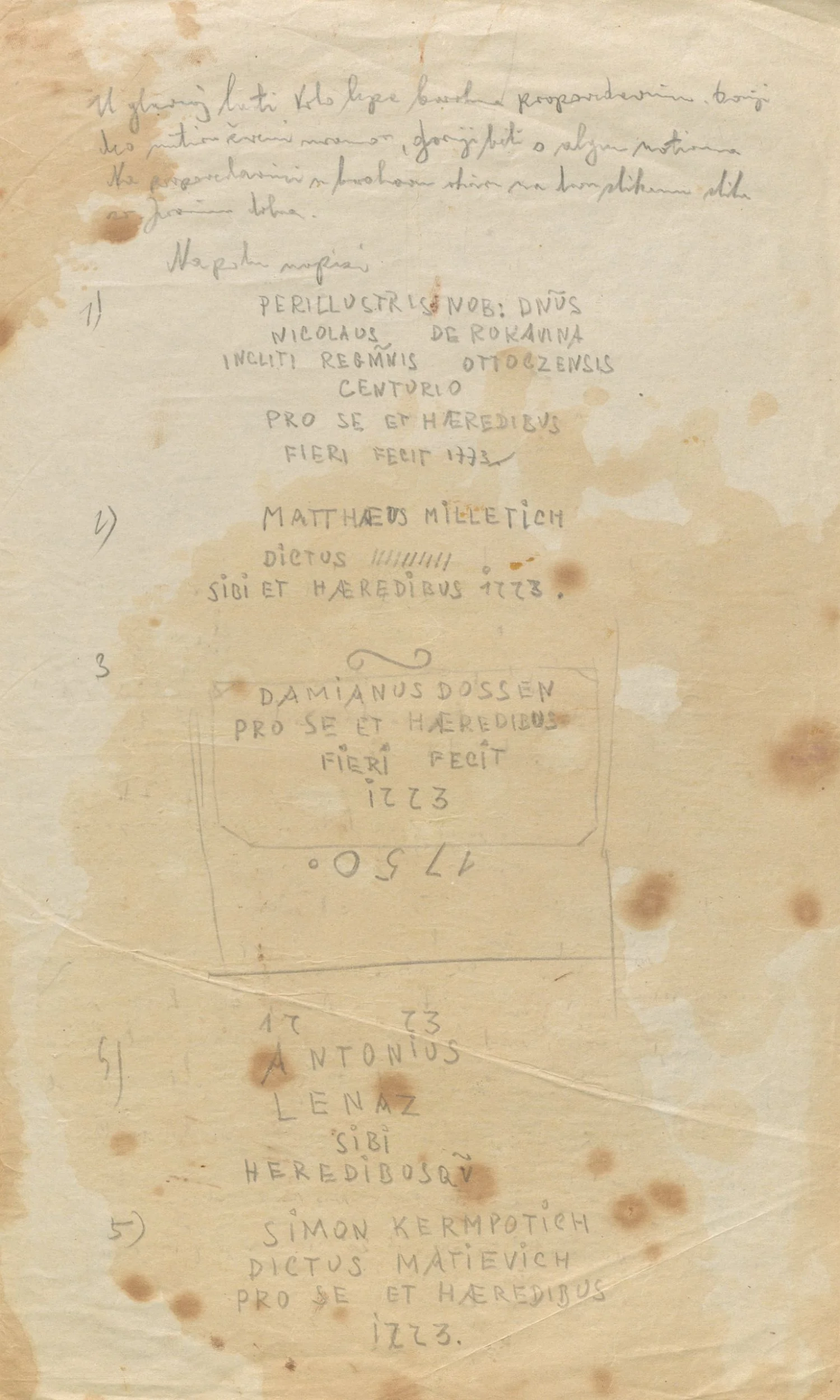
Većeslav Henneberg’s Report, 1925
From 30 September to 16 December 1914, and again from 19 to 28 July 1925, Većeslav Henneberg carried out field surveys and prepared architectural records in Karlobag. He devoted part of his work to the Church of St. Charles Borromeo, documenting and describing its interior in detail.
Source: Ministry of Culture and Media of the Republic of Croatia.
Page 1
Page 2
Page 3
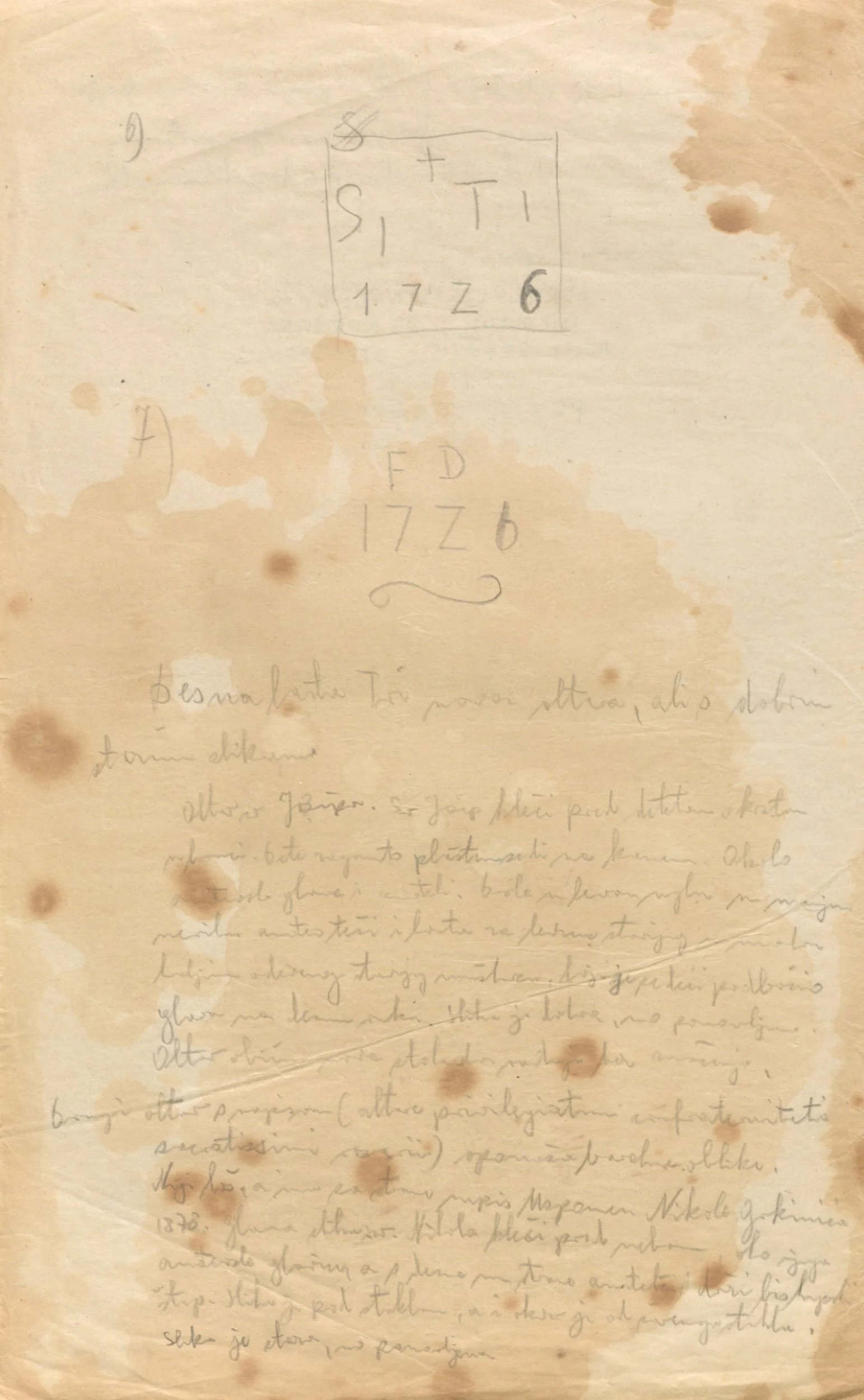
Page 4
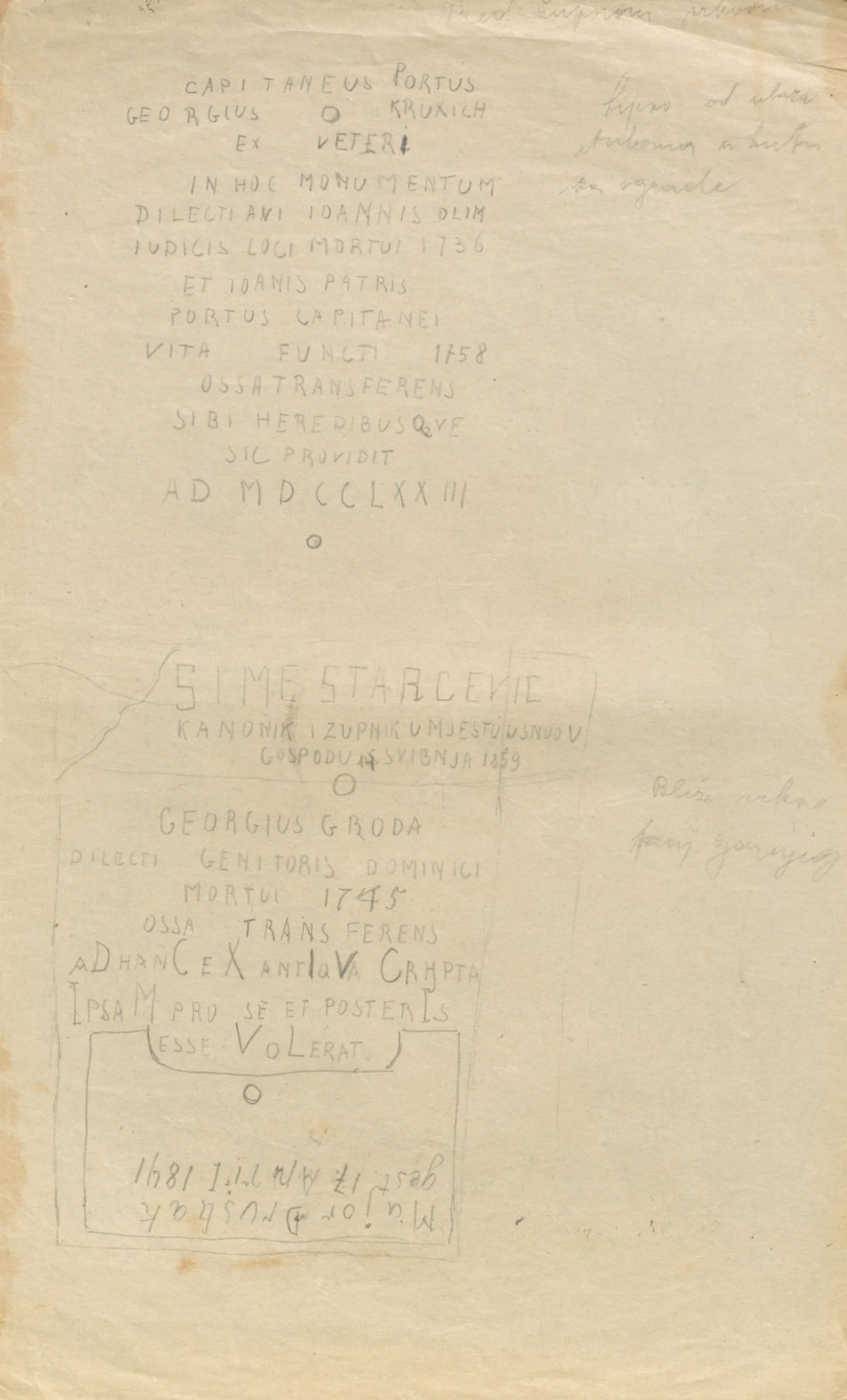
Page 5
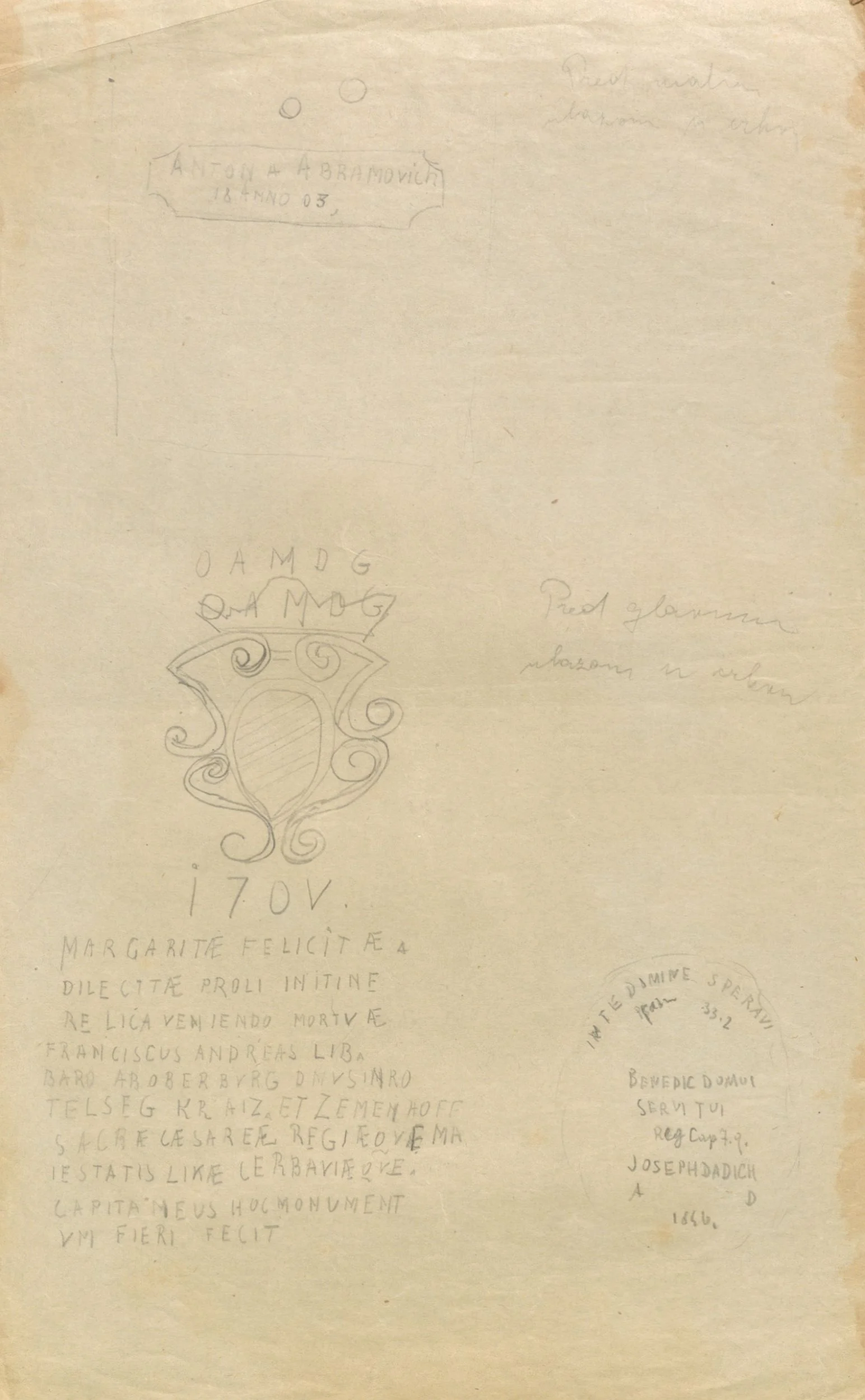
Page 6
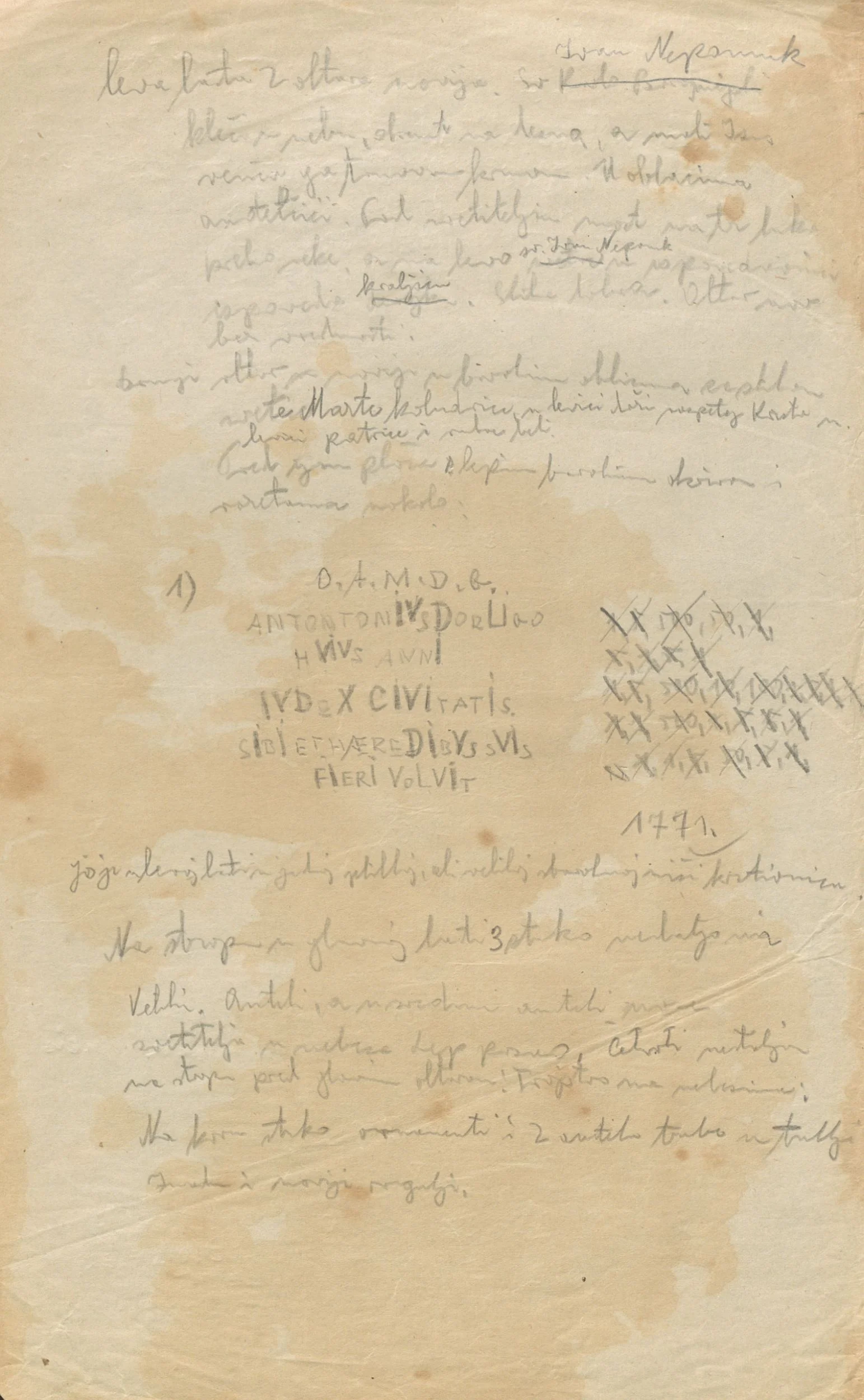
Page 7
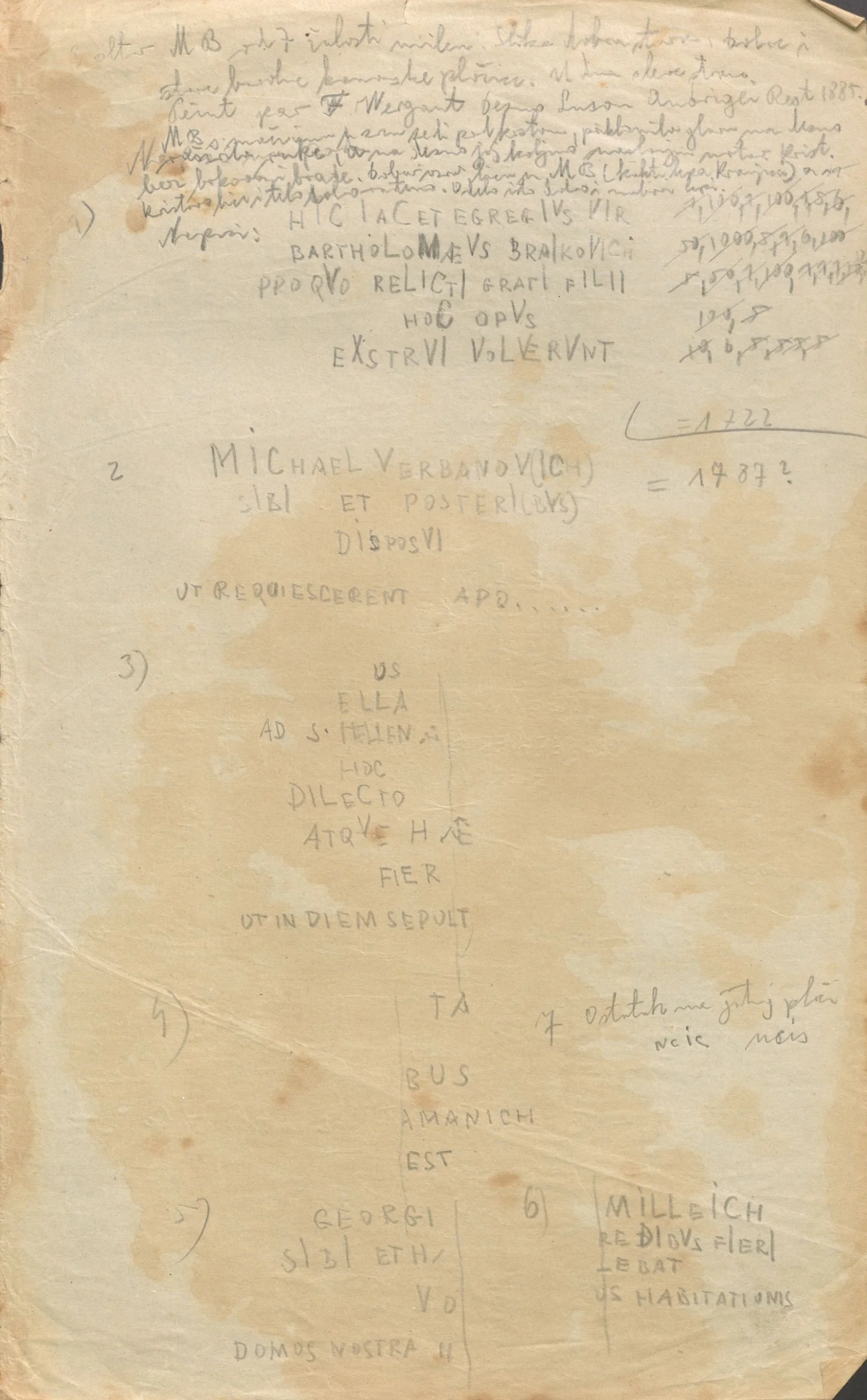
Page 8
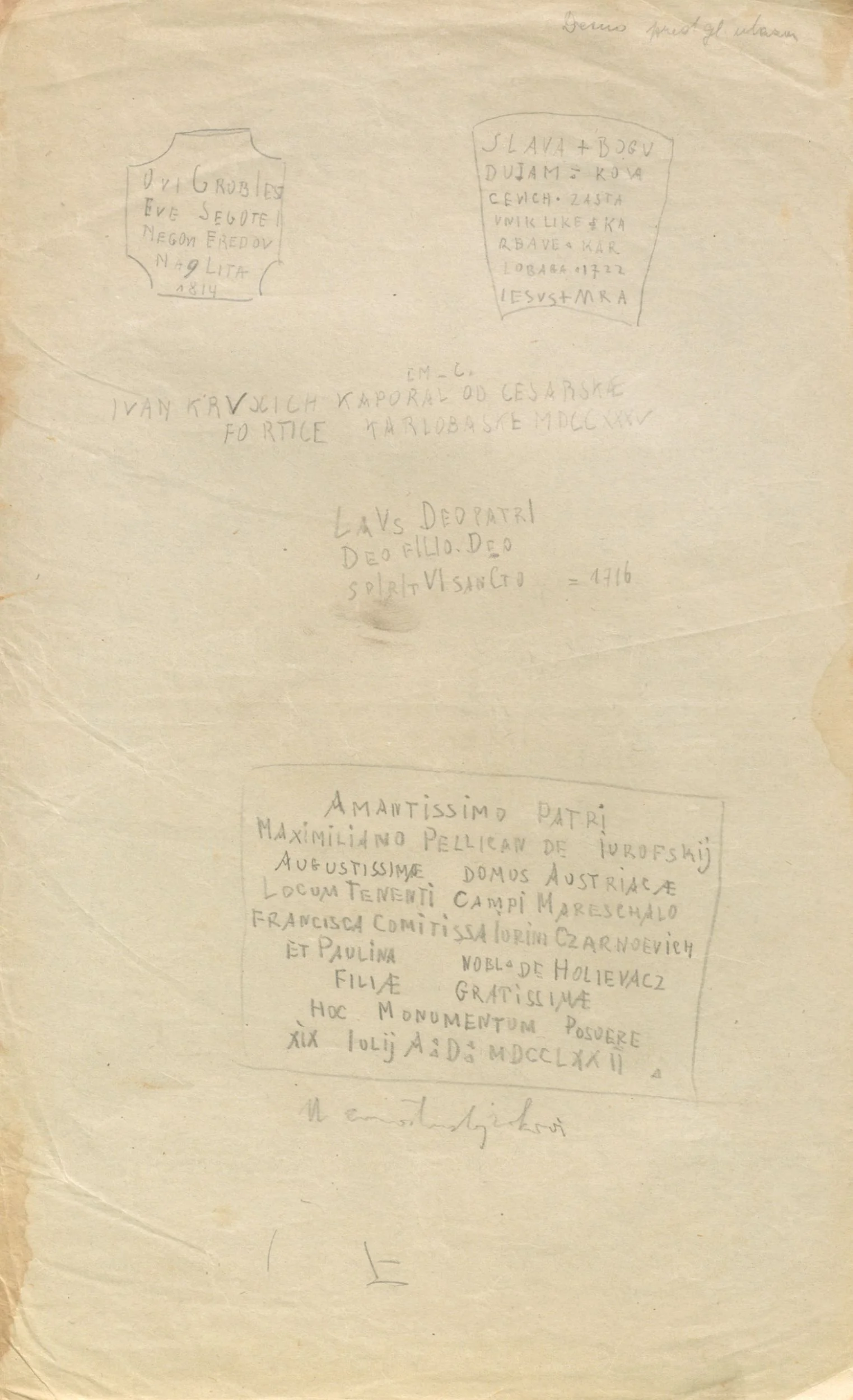
Page 9
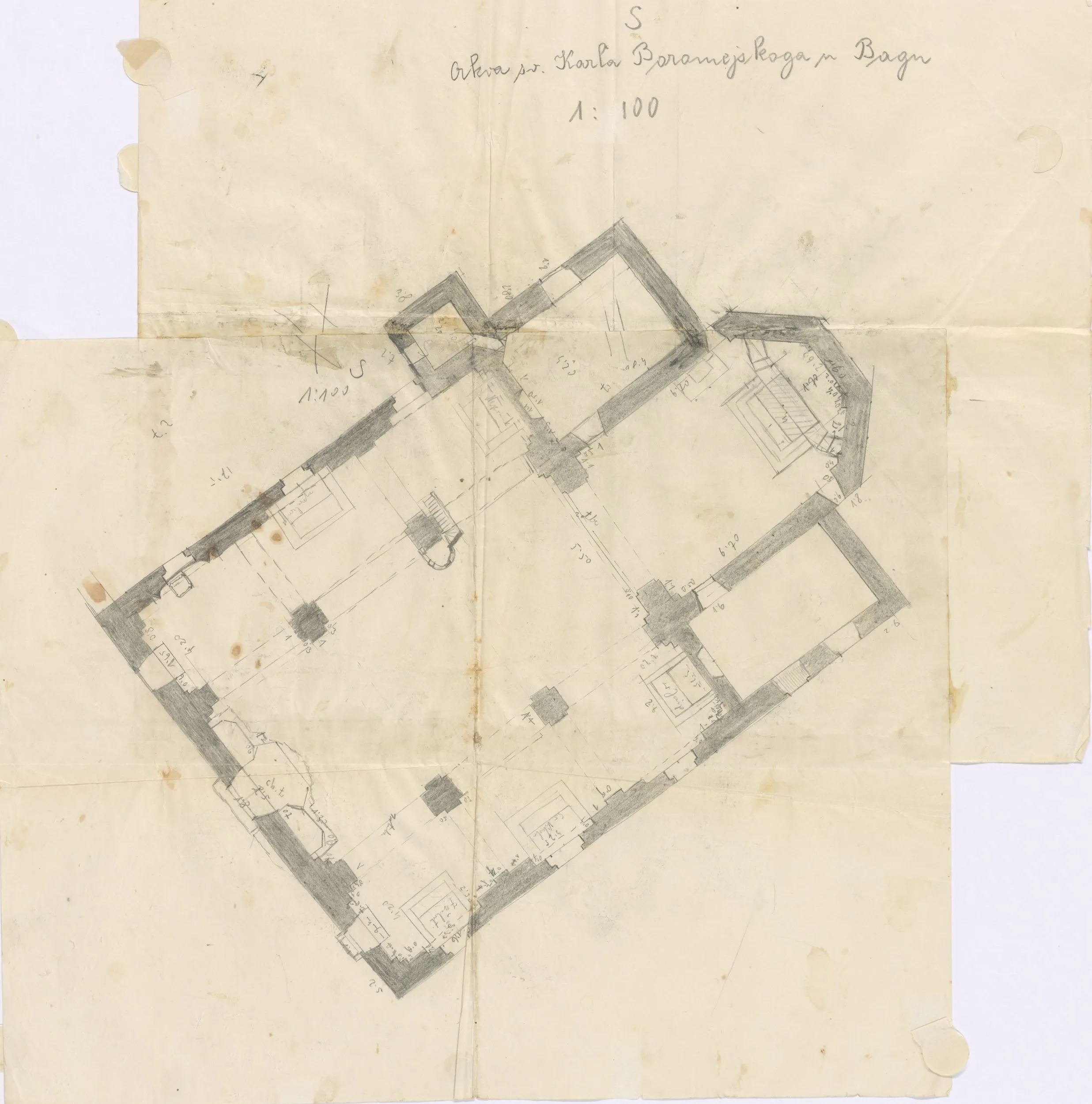
Page 10
Page 11
Because of the deteriorated roof, the church was taken out of use in 1922, but restoration work enabled it to reopen by 9 April 1923. The roof was damaged again in a storm in 1927, and the following year the church was described as being "generally in a dilapidated condition". A more thorough restoration was sought. Fundraising for the restoration began in 1939. The Banovina of Croatia approved 25,000 dinars for the purpose, but wartime events interrupted the initiative. A special building committee was appointed, and contributions continued to be collected until the end of 1943.
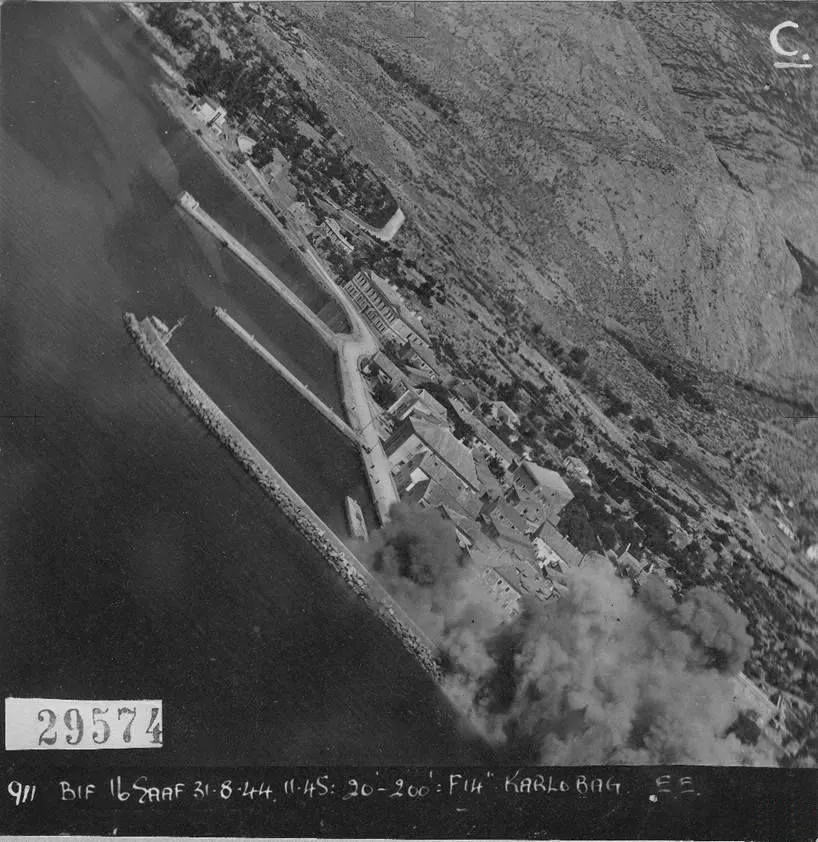
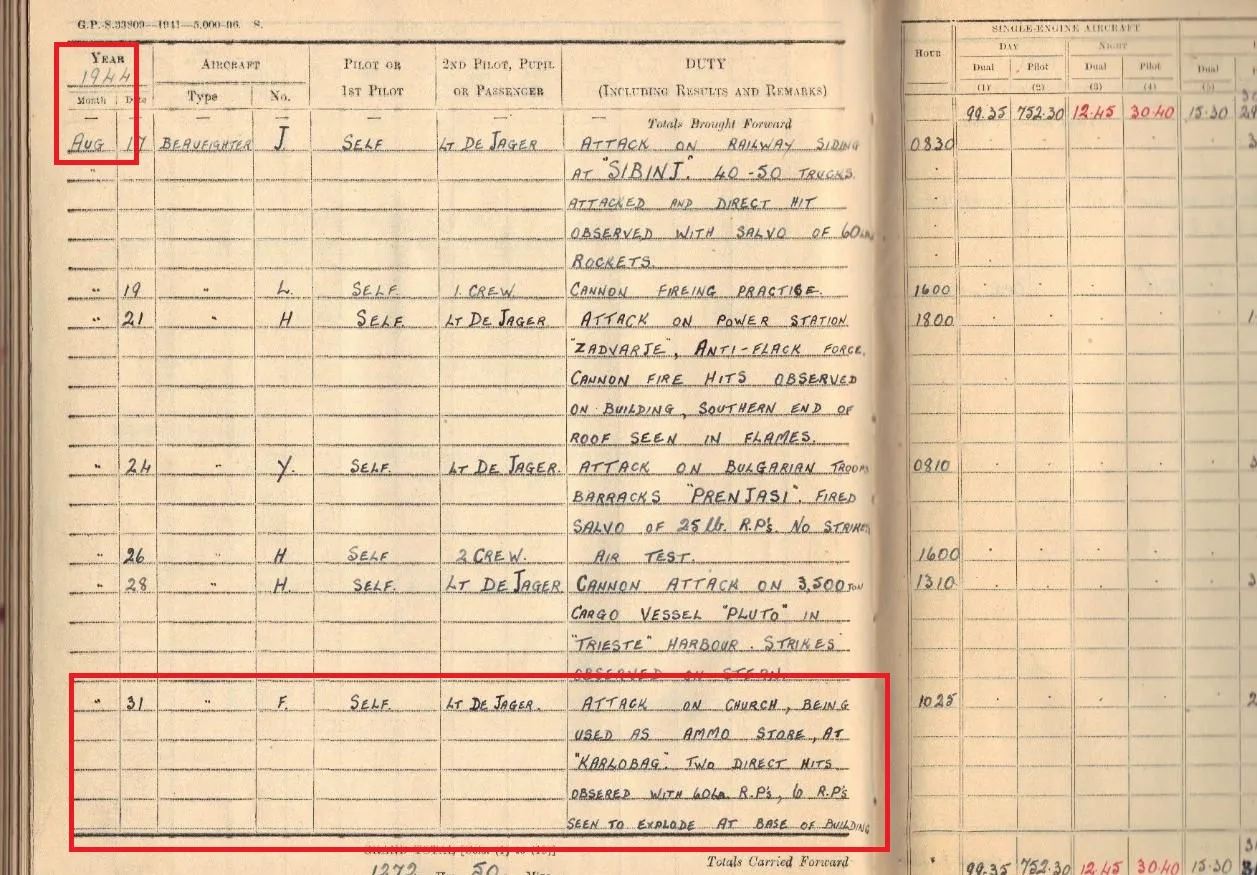
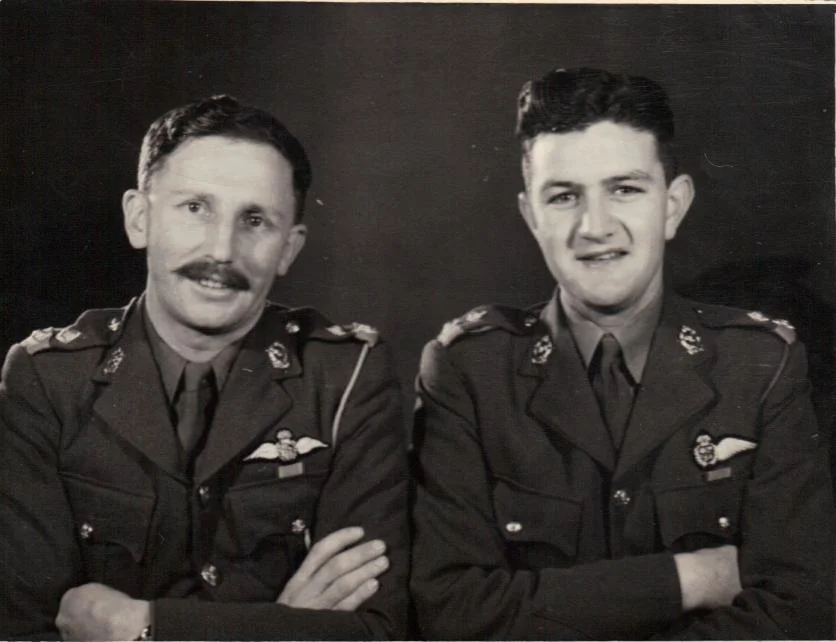
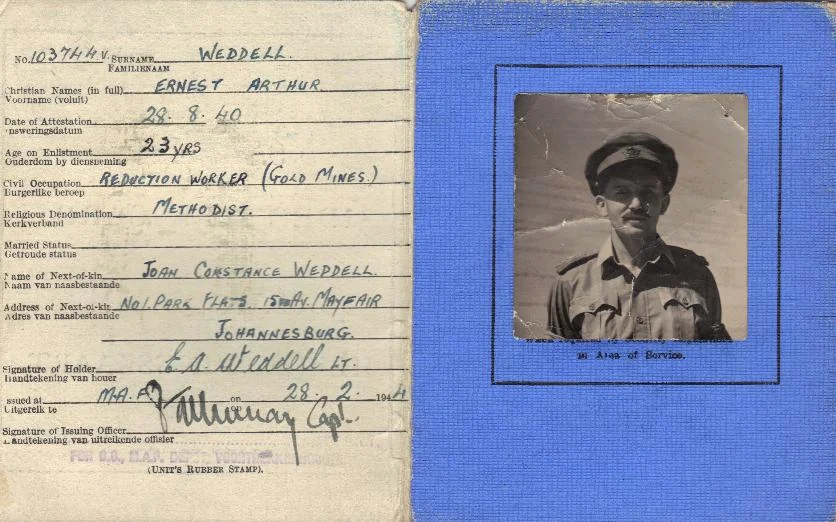
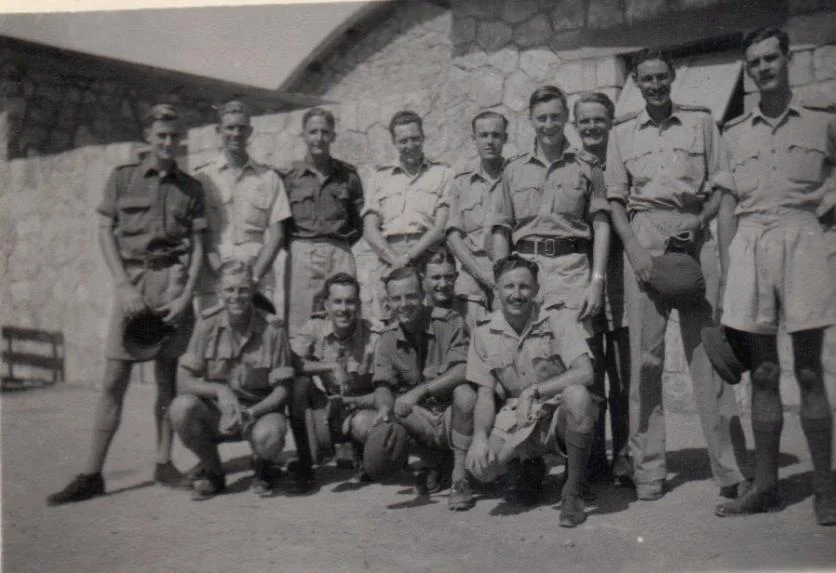
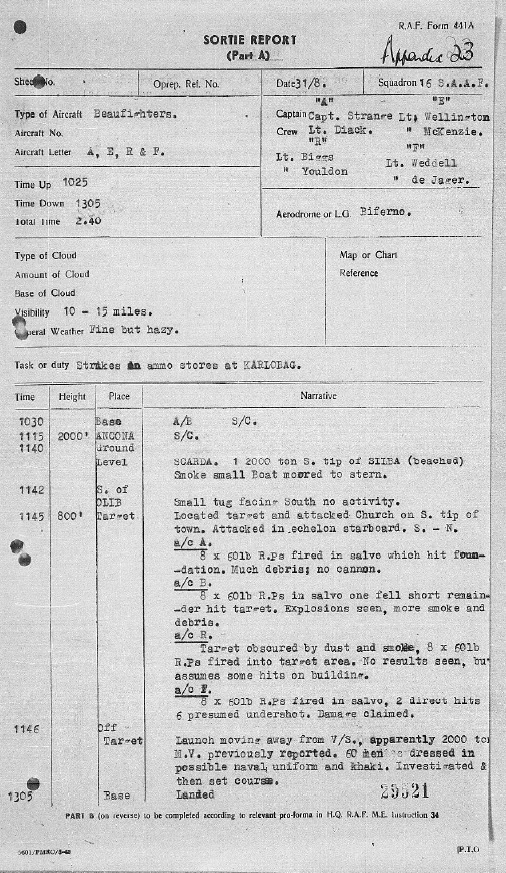
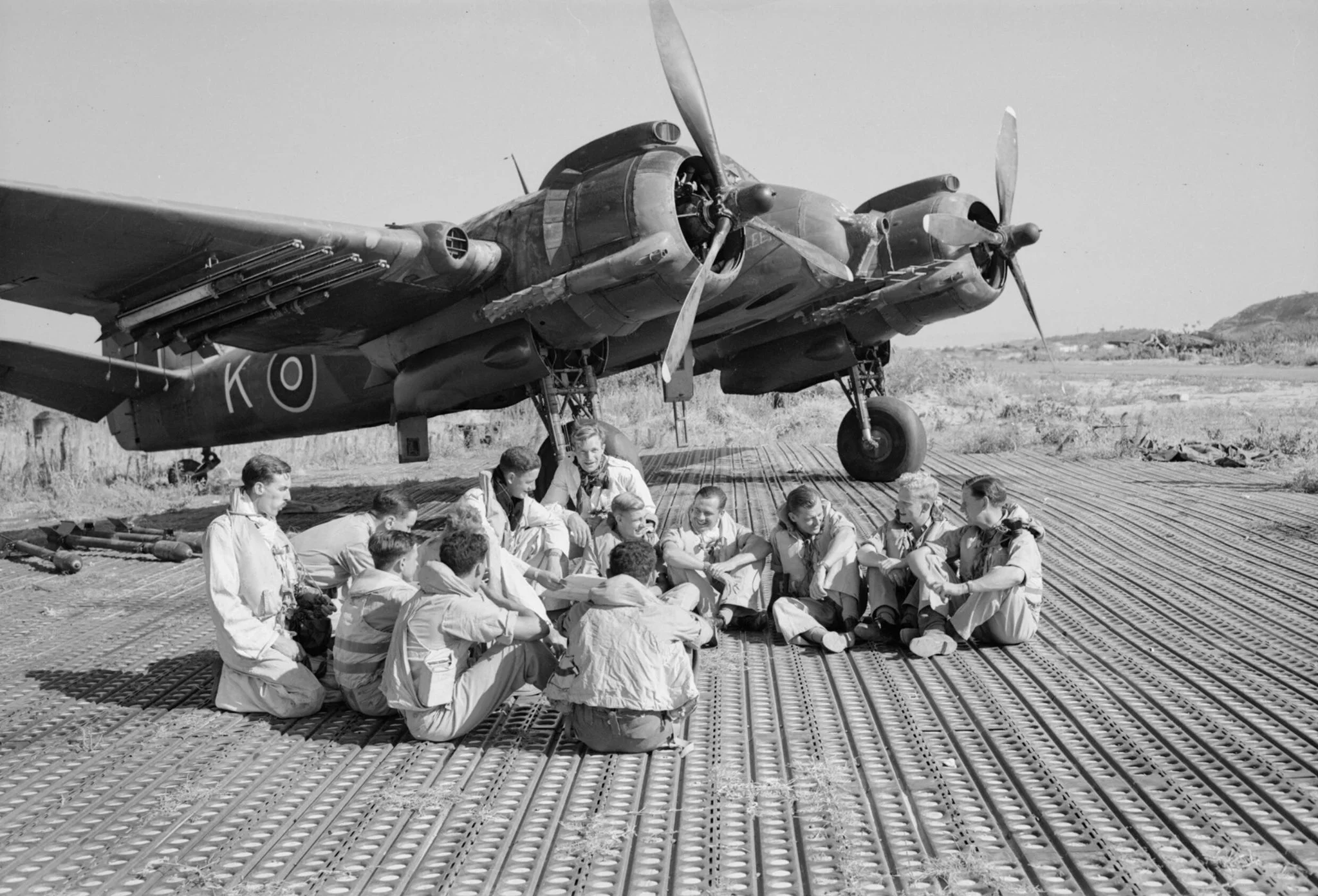
The fate of the church was decisively shaped by the attack of 31 August 1944. On that day, No. 16 Squadron of the South African Air Force (SAAF), operating as part of the Allied air forces, attacked the church following information and a request from Partisan sources alleging that a German ammunition store was located inside.
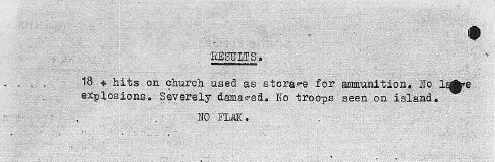
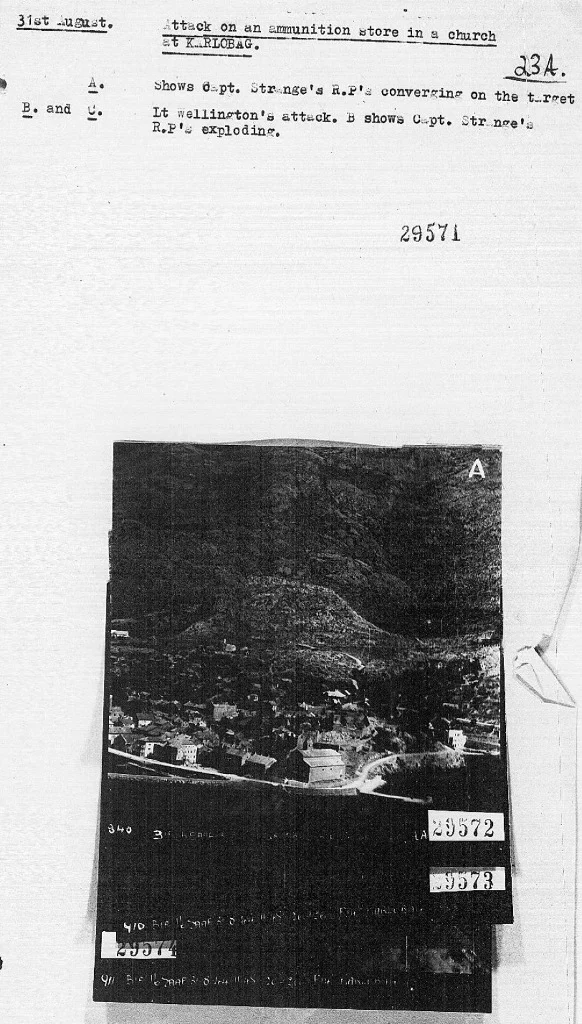
At 11:45, four aircraft, identified as A, E, R and F, fired rockets at the church one after another. Each aircraft launched eight rockets, a total of 32, of which 18 struck the target. The remaining rockets hit the nearby cemetery, Fortica and houses in Karlobag. As there was no ammunition in the church, no major secondary explosion occurred; nevertheless, the building was severely devastated, with the bell tower remaining its most prominent surviving element.
The German army had stored only food and cigarettes in the church, and only for two days. Witnesses also stated that the church had been bombed by Italian forces a year earlier. After the 1944 rocket attack, smouldering fires developed into a major blaze in which everything combustible was destroyed. Little remained apart from the stone walls, while some liturgical vestments were rescued from the sacristy.
Bombing of the Church on 31 August 1944
During the Second World War, the Allies carried out reconnaissance and gathered intelligence on Italian, German and Ustaša positions in Dalmatia. Following Italy’s capitulation in 1943, German forces took control of key facilities and transport routes. The intelligence collected, together with information supplied by the Partisans, indicated that ammunition and military materiel were being stored in the church at Karlobag, as recorded in the air operations diaries.
Source: Imperial War Museums, United Kingdom.
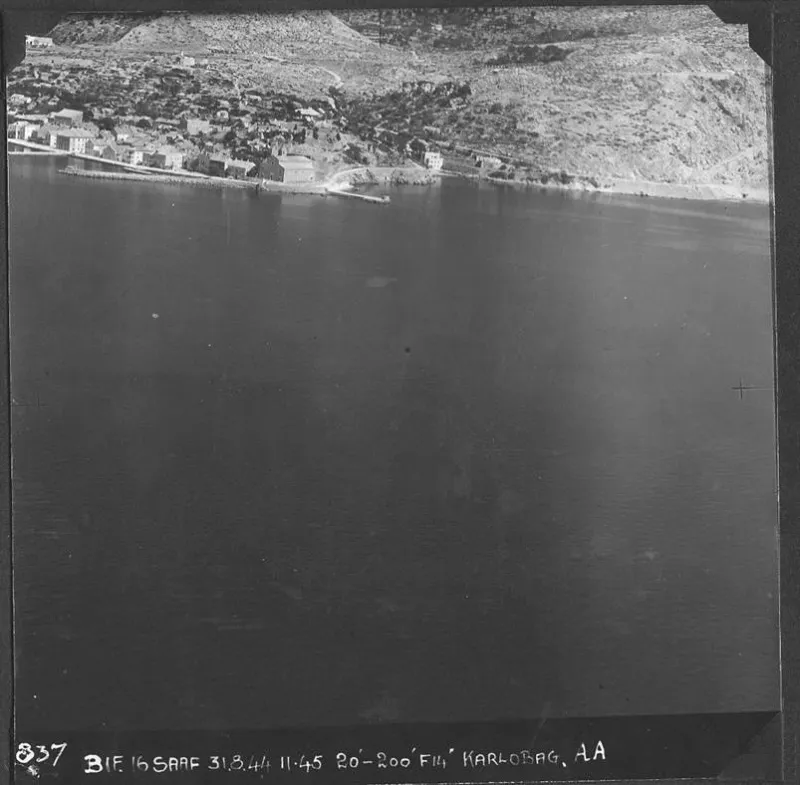
Page 1
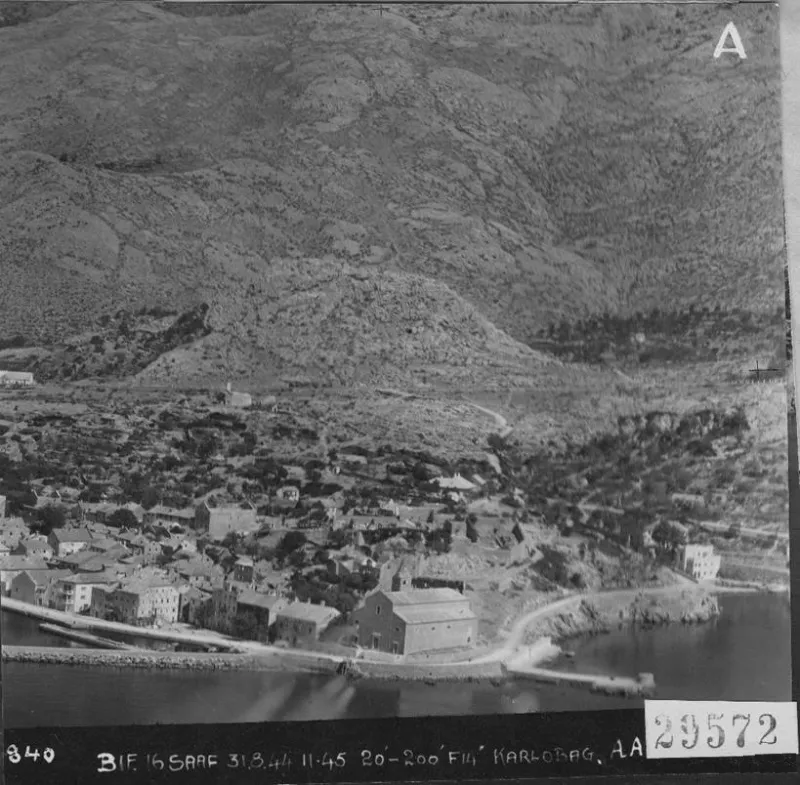
Page 2
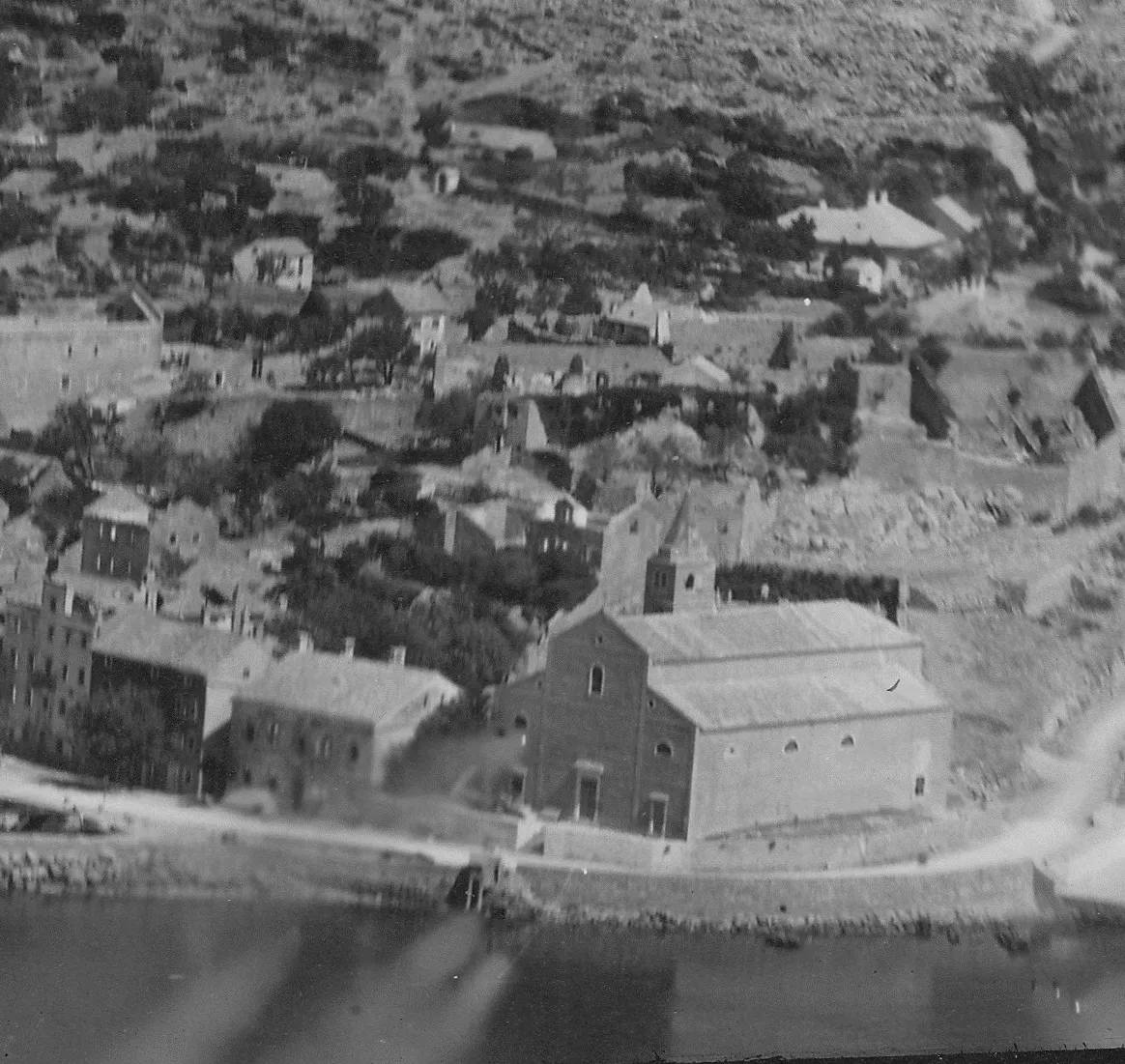
Page 3
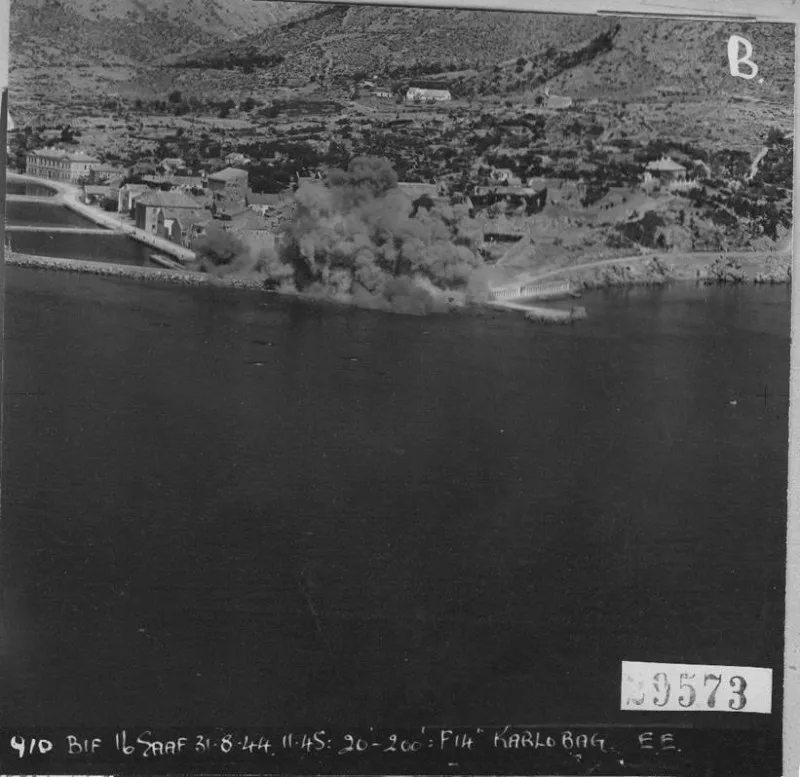
Page 4
Page 5
Page 6
Page 7
Page 8
Page 9
Page 10
Page 11
Page 12
Page 13
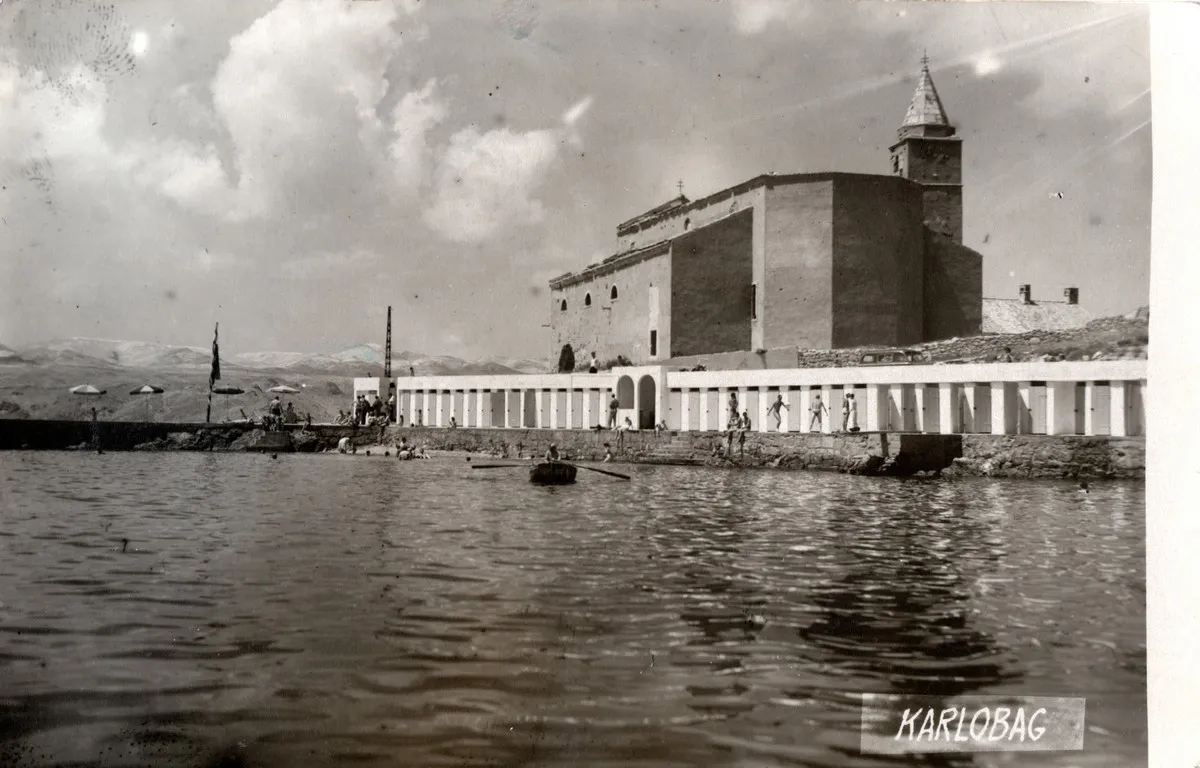
View of the bathing area and the Church of St. Charles Borromeo after the rocket attack.
Source: T. Potočnjak Collection, Inv. No. ZTP-KB-1219.
After the war, Mass was celebrated in the church on several occasions, but there were no means to restore it. The Capuchins could no longer use it for parish purposes, and it was eventually abandoned.
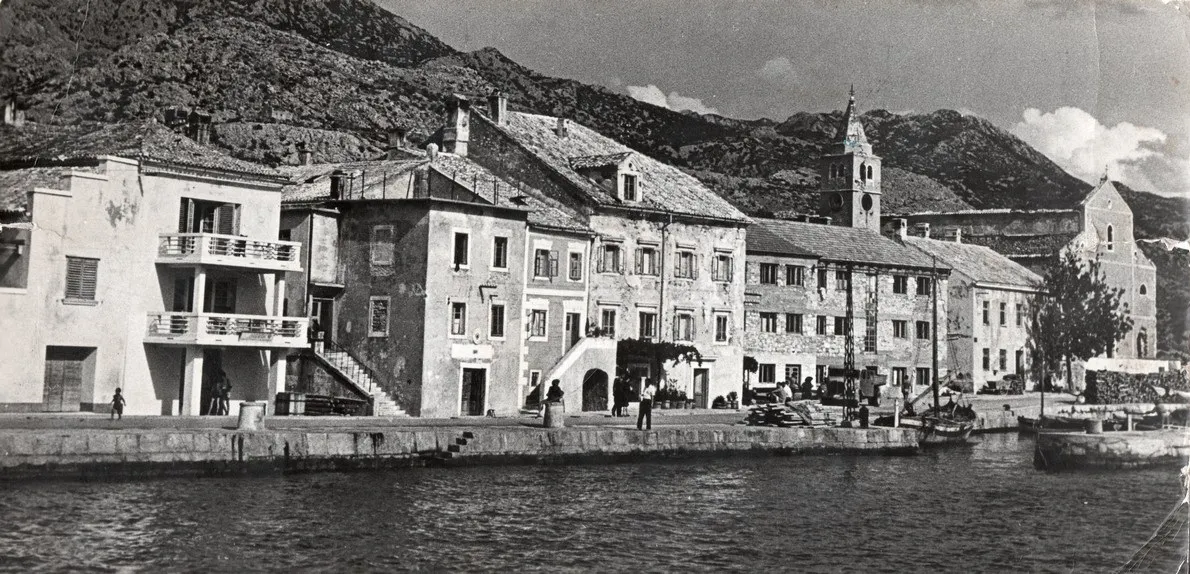
View of the old town and the Church of St. Charles Borromeo after the Second World War.
Source: T. Potočnjak Collection, Inv. No. ZTP-KB-1222.
While restoration was still awaited, a decision was made to demolish the church. When the route of the Adriatic Highway was being laid out in 1957, the bend at the edge of Karlobag was considered too sharp, and it was thought that it could be eased if the road crossed the site of the damaged church. A plan was prepared accordingly, compensation was determined, and the responsible parties were summoned for an inspection before demolition. The Conservation Institute in Zagreb agreed to the demolition, but required an architectural survey to be made beforehand, all gravestones to be preserved, and the bell tower to be retained and restored. The Diocese opposed the demolition to the end, arguing that the church was not only a religious monument but also a cultural one. On 7 October 1957, the Diocese wrote to the Conservation Institute in Zagreb stating that the "baptismal artistic ensemble, the most valuable in Karlobag" should be preserved. It stressed both its right and its duty to protect and defend it. On the 16th of the same month, a brief reply arrived, reproduced here in full: Through you we return the document of the Episcopal Ordinariate of Senj and Modruš in Senj, No. 943/1957, which, because of its untruthfulness, insinuations and style, we were unable to take into consideration. Death to Fascism – Freedom to the People!
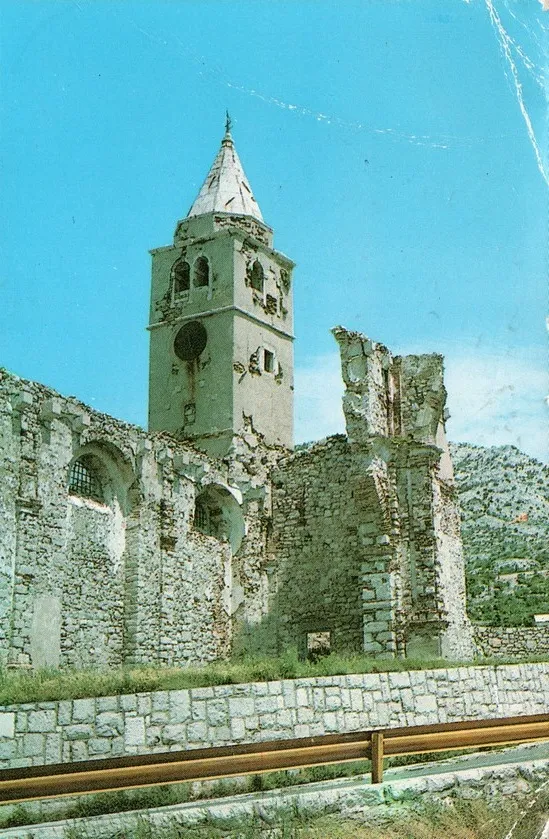
Remains of the church after its demolition in 1958 during construction of the new coastal highway.
Source: T. Potočnjak Collection, Inv. No. ZTP-KB-1433.
Reading the text signed by Bishop Burić, it is difficult to understand how the letter could not even be "taken into consideration". The local committee requested that one of its members be present during the demolition in case gold was discovered, since such gold would be public property. It showed no other concern. As the church authorities would not accept the demolition, it was decided to expropriate the plots on which the church stood, with compensation. Local residents, and even other workers, refused to demolish the church, so prisoners were brought in to carry out the work. Most of the bones from the tombs inside the church were placed in a chest and buried beside the Capuchin tomb not far from the church itself. A smaller portion may have ended up in the embankment along the shore or in the sea. A few of the grave slabs that had filled both side aisles were saved in the monastery, but most were broken and discarded. The Diocese was represented by the then parish priest, Fr Ambrozije Habek, whom we also consulted regarding the information given above. The chances of saving the church were slight, because at that time there was little prospect of preserving a church cultural monument if it stood in the way of the authorities. It was particularly objectionable to the authorities in Gospić.
In fairness, neither the parish nor the Diocese was in a position to restore the church and thereby preserve this cultural and religious monument; at the time, it was difficult to expect a church cultural monument to be preserved if it stood in the way of the authorities. In Senj, too, the 18th-century Church of St. Ambrose was dynamited for the same Adriatic Highway. Thus, in the following year, 1958, the Baroque Church of St. Charles in Karlobag was demolished so that vehicles could travel faster along the highway at that point. As the Diocese pointed out, a different approach was taken to a bend 150 metres farther down the road: it remained at a right angle in order to preserve several poor dwellings. In this way, three church naves, five chapels and 38 tombs—parts of what had once been a very large Baroque church—were erased. Among those buried there were the priest Marko Mesić (1713), Juraj Kružić (1773) and Dominić (1745). Mladen Fučić arranged for the bell tower to be stabilised. In the spring of 1960, the doorway leading from the sacristy into the sanctuary was walled up, while an opening was made where the altar had previously stood. Under a bequest made by Marko Mesić, Archdeacon of Lika, a Mass was celebrated for him in the church every week. As Mesić left such a bequest only to this church, this may indicate that he was also buried there.
Following the establishment of an independent Croatia, greater opportunities emerged for the restoration of church buildings. The parish administrator, Friar Ante Logara, initiated work on the surviving walls of the former parish church.
In 1999, the surviving remains of the church—the tower and north wall—were restored with assistance from the Ministry and benefactors, and above all through the efforts of the Capuchins and their superior, Friar Ante Logara. The church bell tower is used as the mortuary of the town cemetery, and today the bells, silent for many years and now electrified, can once again be heard from the restored tower. The tombs were carefully inspected before the floor of the surviving church area was concreted, but nothing of particular note was found in them. St. Charles Borromeo is the patron saint of Karlobag and is celebrated on 4 November in the monastery Church of St. Joseph.
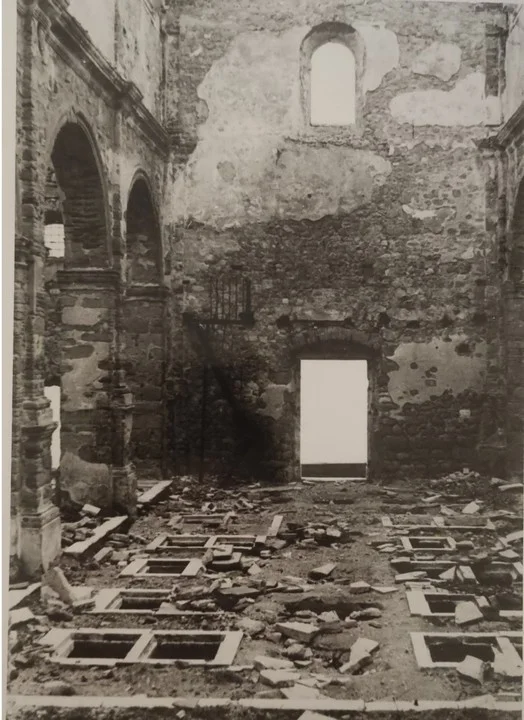
Interior of the former Parish Church of St. Charles Borromeo before its demolition in 1958.
Source: Private Collection of the Capuchin Monastery, Karlobag.
On the Feast of St. Charles in 2000, the restored church walls and bell tower were formally reopened. At 4:30 p.m., a procession set out from the bell tower to the Church of St. Joseph, where Mass was celebrated by Tomislav Rogić, Vicar General of the Diocese of Gospić-Senj, together with numerous priests, representatives of the Ministry of Culture and other guests.
Source: Mile Bogović, The Church in Velebit Podgorje: Past and Present.